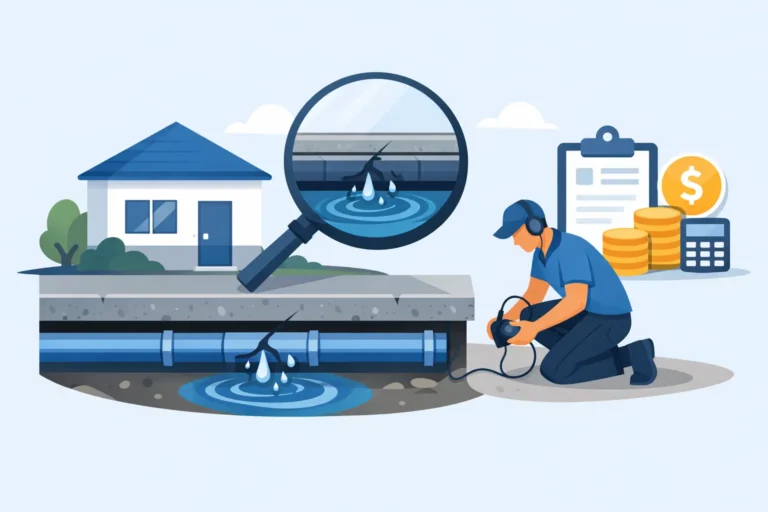
Slab Leak Detection Cost: What to Expect
If your water bill suddenly jumps, you hear running water when everything is off, or warm spots start showing up on your floor, the next question is usually immediate: what is slab leak detection cost, and how much more will the repair add? That concern is real, especially in Southern California, where homes often sit on concrete slabs and small plumbing problems can turn expensive if they go unchecked.
A slab leak happens when a water line under the concrete foundation develops a leak. Finding it is not always simple. Unlike a dripping faucet or a visible pipe leak, the plumbing is hidden below the floor, so detection takes specialized tools, trained technicians, and a careful process. The good news is that paying for accurate detection early is often much cheaper than waiting for foundation damage, flooring replacement, mold issues, or a major pipe failure.
What affects slab leak detection cost?
Slab leak detection cost usually depends on access, technology, and how difficult the leak is to pinpoint. In many cases, homeowners can expect a few hundred dollars for standard detection, but that number can rise if the property is larger, the plumbing layout is complex, or multiple tests are needed.
One major factor is the type of leak. A pressurized water line leak is often easier to isolate than a slow drain line issue. Hot water slab leaks may leave clearer clues, such as warm flooring, but they can still require confirmation with acoustic listening equipment, pressure testing, or thermal imaging.
The size and layout of the property also matter. A single-story home with clear plumbing access is usually more straightforward than a large custom home, a commercial suite, or a property with additions and rerouted lines. If cabinets, flooring materials, or finished spaces make access more difficult, the diagnostic process may take longer.
Location matters too. Pricing can vary by region, and in Orange County and the Inland Empire, labor rates and response times may be different from national averages you see online. Emergency service, after-hours calls, and same-day dispatch can also affect the final price.
Typical slab leak detection cost range
For many homeowners, slab leak detection cost falls somewhere between $150 and $600 for a standard residential diagnostic visit. In more complex situations, especially when advanced equipment or extended testing is needed, the price can move higher.
That range is broad because detection is not a one-size-fits-all service. Some leaks are obvious once pressure testing starts. Others require a more layered approach, using electronic amplification equipment, infrared tools, line tracing, and experience to separate a true slab leak from other plumbing issues.
A lower-cost visit may cover a straightforward inspection where the source is found quickly. A higher-cost diagnostic may involve a larger structure, multiple possible leak locations, or the need to rule out irrigation lines, wall leaks, or fixture-related problems before confirming the issue under the slab.
If you are comparing estimates, make sure you understand what is included. Some companies charge a flat diagnostic fee. Others bill based on time, tools used, or whether the detection fee is applied toward repair work. Transparent pricing matters here because the cheapest initial number is not always the best value if it leads to guesswork or unnecessary demolition.
Why detection is separate from repair
Homeowners are sometimes surprised to learn that slab leak detection cost is usually separate from slab leak repair cost. That separation makes sense because finding the leak and fixing it are two different jobs.
Detection identifies the source with as little disruption as possible. Repair may involve breaking through concrete, rerouting pipes, tunneling, epoxy solutions in select cases, or replacing damaged sections of line. Until the exact leak location and pipe condition are known, it is hard to quote repair accurately.
This is actually better for the customer. A proper detection visit reduces uncertainty. Instead of opening up large sections of flooring or guessing at the leak path, the technician can recommend a targeted repair approach based on what is really happening under the slab.
What goes into a professional leak detection visit?
A quality slab leak inspection is more than listening for water. The technician usually starts by reviewing symptoms, checking your water usage patterns, and inspecting visible plumbing fixtures and shut-off points. From there, they may isolate sections of the system and perform pressure testing to confirm whether the leak is in the supply line.
Acoustic leak detection tools are often used to hear water movement or vibration beneath the slab. In some cases, infrared imaging helps identify temperature differences that point to hot water leaks. Line location tools can trace the pipe path so the technician can narrow the search area.
The value is not just in the equipment. It is in knowing how to interpret the readings. A reliable diagnosis should help you understand where the leak is, how urgent it is, and what repair options make the most sense for your property.
When a lower slab leak detection cost is not the better deal
It is tempting to shop for the lowest possible slab leak detection cost, but the lower number is not always the smarter choice. If a provider uses limited equipment or relies on assumptions instead of confirmed testing, you can end up paying more later through repeated visits, unnecessary concrete cutting, or missed leak locations.
Accurate detection protects your home and your budget. It can reduce repair time, minimize property damage, and help avoid tearing into floors that are not part of the problem. For homeowners with tile, hardwood, finished basements, or expensive interior finishes, that precision matters.
This is especially true for landlords and property managers. Lost time means frustrated tenants, possible business interruption, and a higher risk of water damage claims. Paying for a careful diagnosis up front often keeps the overall project more controlled.
Signs you should not wait on testing
Some slab leaks move slowly, but that does not mean they are harmless. Even a small underground leak can waste water for weeks or months while eroding soil beneath the foundation.
You should schedule testing if you notice unexplained increases in your water bill, the sound of running water when fixtures are off, damp flooring, warm spots on the slab, low water pressure, cracks in flooring, or mildew odors with no clear source. In commercial spaces, signs may also include unexplained moisture near walls, utility cost spikes, or complaints about water pressure in multiple units.
The longer you wait, the more the math can change. What begins as a moderate slab leak detection cost can become a much larger repair if flooring, drywall, cabinetry, or foundation stability are affected.
Questions to ask before approving service
Before you move forward, ask whether the quoted price includes pressure testing, acoustic detection, or thermal imaging if needed. Ask whether the fee is flat-rate or variable, and whether any part of it can be credited toward repair.
You should also ask what happens after the leak is located. Will you receive repair options? Will the technician explain whether spot repair, rerouting, or repiping is the better long-term move? Good service is not just about finding the leak. It is about giving you a clear path forward.
If the home is older, it is worth asking whether the detected leak may be part of a larger piping issue. In some houses, one slab leak is an isolated problem. In others, aging copper or shifting conditions can make repeat leaks more likely. That is where experience matters, because the lowest repair today may not be the most cost-effective choice over the next few years.
How local conditions can influence price
In Southern California, slab leak concerns are common enough that homeowners should take them seriously. Concrete slab construction, aging pipes in some neighborhoods, soil movement, and high property values all make early detection worthwhile.
A company serving Orange County and the Inland Empire also needs to understand the practical side of local service: fast dispatch, clear communication, and respect for your home or property. When water is moving under a slab, you do not want vague answers. You want a technician who can identify the issue, explain the pricing, and help you make a confident next decision.
That is why many homeowners look beyond the sticker price alone. They want just-right pricing, but they also want clean workmanship, honest recommendations, and a team that shows up prepared. For a problem as disruptive as a slab leak, that balance matters.
A fair slab leak detection cost is really about value, not just the invoice. If the testing is accurate, the pricing is clear, and the next steps are explained in plain language, you are in a much better position to protect your property before a hidden leak turns into a much bigger repair.
A higher water bill is often the first clue. You have not changed your routine, no one is taking extra showers, and yet the numbers jump. That is exactly why a homeowner guide to leak detection matters. Small leaks rarely stay small for long, and in Southern California homes, they can damage drywall, flooring, cabinets, foundations, and even indoor air quality before the source is obvious.
The good news is that not every leak turns into a major repair. Early detection gives you options. It can mean the difference between a quick fixture fix and a much larger restoration project.
Why leak detection matters more than most homeowners expect
Water does not need a dramatic burst pipe to cause expensive problems. A slow drip behind a wall or under a slab can go unnoticed for weeks. By the time you see staining, warped flooring, or peeling paint, the leak may have been active much longer than you think.
Leaks also create secondary issues. Moisture can lead to mold growth, wood damage, musty odors, and higher utility bills. If the leak is in a hot water line, you may also be paying to heat water you never use. For homeowners, landlords, and property managers, that adds up quickly.
There is also a practical trade-off here. Some leaks are easy to spot and monitor, while others are hidden in walls, ceilings, crawl spaces, irrigation lines, or underground piping. Knowing when to investigate yourself and when to bring in a professional is what saves time and money.
Homeowner guide to leak detection: the warning signs to watch
Most hidden leaks leave a trail, just not always an obvious one. The first sign could be a sound, a smell, a stain, or a shift in water pressure.
A sudden increase in your water bill is one of the most common red flags. If your usage habits have stayed the same, your plumbing system may be losing water somewhere. You might also hear running water when no fixture is on, notice damp spots on flooring, or see bubbling paint on a wall or ceiling.
Some leaks show up as subtle changes around the home. A room may start to smell musty. Baseboards may swell. Tile or hardwood may feel slightly warm or soft in one area. Outside, you might notice an unusually green patch of lawn, soggy soil, or pooling near the foundation even when irrigation is off.
None of these signs prove the exact source on their own. But they do tell you not to ignore the problem.
Simple leak checks you can do at home
Homeowners can catch a surprising number of leaks with a careful walkthrough. Start with the fixtures you use every day. Check under sinks for moisture, corrosion, or water stains. Look behind toilets and around supply lines. Open the cabinet below your kitchen sink and feel for dampness along drain connections and shutoff valves.
Next, inspect visible plumbing around your water heater, washing machine, dishwasher, and refrigerator water line. Appliance leaks are often slow and intermittent, which makes them easy to miss. A little moisture near a hose connection today can become damaged flooring tomorrow.
If you have outdoor plumbing, check hose bibs, irrigation valves, and exposed lines. In many Southern California properties, outdoor water use is significant, so irrigation leaks can waste a lot of water without being noticed right away.
One of the best at-home tests is the water meter check. Turn off all faucets, appliances, and irrigation. Make sure no water is being used anywhere on the property, then look at your water meter. If the meter is still moving, there is a good chance water is escaping somewhere in the system.
You can also try a toilet dye test. Add a few drops of food coloring to the tank and wait about 15 minutes without flushing. If color appears in the bowl, the flapper is leaking. It is a simple problem, but one that can waste a surprising amount of water over time.
The leaks homeowners miss most often
The hardest leaks to catch are the ones hidden behind finished surfaces or below the home. Slab leaks are a common example. Because the water line runs under the foundation, the leak may only reveal itself through warm floor spots, reduced water pressure, damp flooring, or unexplained water use.
Wall leaks can be just as tricky. Water may travel along framing before it appears, so the visible stain is not always directly beneath the source. Ceiling leaks also create confusion because homeowners often assume the roof is to blame, when the issue could actually be plumbing from a bathroom or laundry room above.
Some leaks are not active all the time. A drain line might only leak when a sink is running. A washing machine hose may drip during the fill cycle. An HVAC issue such as clogged condensate drainage can even mimic a plumbing leak in certain areas of the home. That is why accurate diagnosis matters. Guessing can lead to fixing the wrong problem first.
When to call a professional for leak detection
If you have clear signs of a leak but cannot find the source, it is time to call a pro. The same applies if your water meter suggests a leak, but all visible fixtures and appliances appear dry. Hidden leaks require the right tools and experience, especially when the goal is to locate the problem with as little disruption as possible.
Professional leak detection can involve acoustic listening equipment, pressure testing, thermal imaging, and other non-invasive methods that help narrow down the source. That is especially valuable when the leak may be under concrete, behind tile, or inside a wall cavity.
It also makes sense to call right away if you notice water damage spreading, ceiling sagging, moldy odors, or signs of a slab leak. Waiting for confirmation in those situations usually costs more than acting quickly. A dependable local company like Just Right Services can help identify the issue and explain the next step clearly, which matters when you are trying to make a fast decision without adding more stress.
What to do while you wait for service
If the leak is active and visible, shut off the nearest fixture valve if you can do so safely. For a larger or unknown leak, turn off the home's main water supply. That one step can prevent a lot of additional damage.
Move rugs, furniture, and stored items away from the wet area. If water is near electrical outlets or appliances, avoid contact and use caution. Taking photos of visible damage can also help with documentation if repairs become more extensive.
What you should not do is start opening walls or flooring unless you are confident about the source. Homeowners sometimes make a small repair problem larger by cutting into the wrong area or damaging nearby plumbing.
Preventing future leaks without overreacting
A good homeowner guide to leak detection should also talk about prevention, because the best leak is the one you never have to repair. That does not mean constant worry or replacing every pipe in sight. It means paying attention to the parts of your plumbing system that age, loosen, corrode, or wear out.
Check supply lines and shutoff valves from time to time, especially under sinks and behind toilets. Replace old washing machine hoses before they fail. Keep an eye on your water heater for rust, moisture, or pooling around the base. If your home is older, ask about the condition of the piping material and whether proactive upgrades make sense.
It also helps to know your home's normal baseline. If you understand what your water bill usually looks like, how your flooring feels, and where your shutoff valves are located, changes are easier to catch early. For landlords and property managers, regular inspections between tenants can prevent a small unnoticed leak from turning into a much bigger turnover expense.
Leak detection is not really about chasing worst-case scenarios. It is about staying ahead of the kind of problem that gets more expensive the longer it hides. If something feels off, trust that instinct, check what you can, and get expert help before water has more time to spread.
A cold shower usually makes the decision for you. One minute your water heater seemed fine, and the next you are searching for water heater repair near me because the hot water is gone, the tank is leaking, or something just does not sound right.
When that happens, speed matters, but so does judgment. The right repair can get your hot water back fast and save you from a bigger plumbing issue. The wrong call can lead to repeat breakdowns, water damage, or replacing a unit sooner than necessary. For homeowners, landlords, and property managers across Orange County and the Inland Empire, knowing what to look for helps you make a smart decision under pressure.
When to search for water heater repair near me
Some water heater problems are obvious. No hot water, rusty water, puddles around the unit, or loud popping sounds usually mean something is wrong now, not later. Other problems build slowly and get missed until the heater fails completely.
If your showers are turning lukewarm faster than usual, your water takes longer to heat, or your utility bill has climbed without a clear reason, your water heater may already be struggling. In many cases, people wait because the system still works sometimes. That is understandable, but intermittent performance is often how a water heater warns you before a full breakdown.
Gas and electric units can fail in different ways. A gas heater may have burner or pilot issues, while an electric model may have a bad heating element or thermostat. Tankless systems can bring their own set of problems, including scale buildup, ignition failures, or flow sensor issues. The point is simple - hot water problems are rarely random, and they usually get worse, not better.
The most common water heater problems
A traditional tank water heater has a few parts that do most of the work. When one starts failing, the symptoms can overlap, which is why a proper diagnosis matters.
No hot water at all can point to a tripped breaker, failed heating element, gas supply issue, thermostat failure, or pilot problem. If you still have some hot water, but not enough, sediment buildup may be reducing efficiency, or the unit may simply be undersized for your current needs.
Strange noises are another common complaint. Rumbling, popping, or banging often happens when sediment hardens at the bottom of the tank. That forces the system to work harder and can shorten the life of the heater. If you notice discolored water, corrosion inside the tank or on connected plumbing may be part of the problem.
Leaks deserve special attention. A loose connection, failing valve, or damaged fitting may be repairable. A crack in the tank itself usually is not. That is where experience matters, because not every leak means replacement, but some absolutely do.
A repair is often possible
Many water heater issues can be fixed without replacing the whole unit. Thermostats, heating elements, pressure relief valves, anode rods, gas control valves, and connections are all parts that may be serviceable depending on the condition of the unit.
That said, repair makes the most sense when the heater is in otherwise solid shape. If the tank is older, heavily corroded, or failing in multiple ways at once, a repair may only buy you a little time.
Sometimes replacement is the better value
This is where honesty matters. If a water heater is near the end of its life, the cheapest repair is not always the smartest choice. Tank units often last around 8 to 12 years, though water quality, maintenance, and usage habits can shift that range. Tankless systems may last longer, but they still need regular service.
If your unit is older, inefficient, and needing frequent repairs, replacement may cost more upfront but save money and frustration over time. A trustworthy technician should explain both options clearly, not push one by default.
What you can check before calling
There are a few simple things worth checking before scheduling service. If you have an electric water heater, see whether the breaker has tripped. If you have a gas unit, confirm the gas supply is on and check whether the pilot is out, if your model has one. Also look around the base of the heater for visible water and check whether the thermostat setting was changed.
These basic checks can sometimes solve a simple issue or at least give you useful information when you call. But this is not a good system to experiment on if you are unsure. Water heaters combine electricity or gas with pressurized hot water. That is not the place for guesswork.
If you smell gas, see active leaking, hear alarming noises, or notice signs of scorching, shut the system down if you know how and call a qualified professional right away.
How to choose the right local water heater repair company
Typing water heater repair near me into a search bar is easy. Choosing the right company takes a little more care.
First, look for a provider that handles both repair and replacement. That sounds minor, but it matters. A company with broader plumbing and mechanical experience is usually better equipped to diagnose the real issue rather than forcing every problem into one solution.
Second, local responsiveness counts. If your water heater fails in Laguna Hills, Irvine, Mission Viejo, Lake Forest, Ontario, Pomona, or nearby communities, you want a company that already serves your area and can respond quickly. Delays are more than inconvenient when a leaking tank can damage floors, walls, or adjacent equipment.
Third, pay attention to communication. Good service should feel straightforward from the first call. You should know when a technician is arriving, what they found, what the repair involves, and what it will cost before work starts. Transparent pricing and clear recommendations build trust, especially during urgent calls.
What a good service visit should look like
A professional should inspect the heater, the connections, the venting if applicable, and the overall condition of the system. They should explain whether the issue is isolated or part of a bigger problem. If repair is viable, they should tell you what failed and what to expect moving forward.
If replacement is recommended, they should explain why in plain language. Age, efficiency, repair history, and tank condition all matter. So does the fit for your household or property. A family of five has different hot water demands than a small condo or light-use commercial space.
Why local conditions matter more than people think
In Southern California, water quality and mineral content can take a toll on water heaters over time. Hard water contributes to sediment buildup, which affects efficiency and can wear out components faster. That is one reason regular flushing and maintenance can make such a difference.
Older homes may also have plumbing layouts, venting setups, or installation constraints that affect repair decisions. In rentals and commercial properties, usage patterns can be much heavier than in a typical single-family home. A technician who works in your area regularly will usually spot these factors faster and make better recommendations.
For customers who want dependable help without the runaround, this is where an established company like Just Right Services stands out. Experience matters when the problem is urgent and the fix needs to be done cleanly, safely, and correctly.
Can emergency water heater repair wait until morning?
It depends on the problem. No hot water is disruptive, but not always an emergency. A leaking tank, on the other hand, can become one quickly. If water is pooling around the unit, spreading to nearby areas, or threatening walls and flooring, immediate service is usually the right move.
Commercial clients and property managers often have less room to wait. Restaurants, multi-unit properties, salons, medical offices, and other businesses may need hot water for daily operations, sanitation, or tenant satisfaction. In those cases, fast diagnosis and clear next steps are essential.
The value of maintenance after the repair
A repaired water heater still needs attention. Routine maintenance can help extend equipment life, improve efficiency, and reduce the odds of another surprise failure. That may include flushing sediment, testing safety components, checking the anode rod, and making sure the system is operating at the right temperature and pressure.
Maintenance is especially worthwhile if your current heater is not brand new but still has good years left in it. It is usually far less expensive to keep a working system in shape than to deal with a middle-of-the-night breakdown later.
If your hot water has disappeared, your tank is leaking, or your system is making noises it never made before, trust that instinct. A water heater rarely fixes itself, and waiting usually narrows your options. The best next step is simple - get it checked by a local professional who will tell you the truth, do the job right, and help you protect your home or property from a small problem turning into a much bigger one.
When you search for mini split installation near me, you are usually not browsing for fun. One room stays too hot, the garage office never cools down, a tenant needs better comfort, or an older home has no ductwork and central air is not the right fit. In Southern California, where comfort needs can change fast from inland heat to cool coastal evenings, a mini split can be a smart answer - but only if the system is sized and installed correctly.
A mini split is not just a smaller air conditioner. It is a ductless heating and cooling system built to control one room or several zones with more precision than many traditional setups. That makes it appealing for bedrooms, additions, ADUs, sunrooms, converted garages, offices, and light commercial spaces. It also means the quality of the installation matters as much as the equipment itself.
Why people search for mini split installation near me
Most customers looking locally want three things at once: fast service, honest pricing, and confidence that the job will be done right the first time. That makes sense. A mini split installation involves electrical work, refrigerant handling, condensate drainage, line-set routing, wall mounting, startup testing, and system calibration. It is not a simple plug-in upgrade.
There is also a practical reason to stay local. An installer who works in Orange County and the Inland Empire understands the homes, climate demands, permitting expectations, and common layout issues in this region. A coastal property in Laguna Beach may have different corrosion considerations than a hotter inland home in Rancho Cucamonga or Ontario. An older house in Pomona may present access challenges that a newer build in Irvine does not.
Where mini splits make the most sense
Mini splits are often the right solution when extending ductwork would be expensive, inefficient, or simply not worth the disruption. Homeowners choose them for room additions, upstairs spaces that never seem comfortable, and primary suites that need their own control. Property managers and landlords often like them for targeted comfort upgrades without major remodeling.
They can also work well in small businesses, server rooms, workshops, and offices where one area has different heating and cooling needs than the rest of the building. The zoning advantage is a big part of the appeal. Instead of conditioning the entire property to satisfy one problem area, a mini split lets you focus comfort where it is actually needed.
Still, they are not ideal for every situation. If a home already has well-designed ductwork and the existing central system can be upgraded efficiently, a mini split may not be the most cost-effective path. That is why a good installer should look at the whole picture, not just recommend the most convenient product.
What a good mini split installation includes
A proper installation starts with load calculations, not guesswork. Bigger is not always better. An oversized unit can short cycle, leave humidity issues, and wear down faster. An undersized unit may run constantly and still struggle to keep up on the hottest days.
Placement matters too. The indoor unit should be positioned for strong airflow, practical service access, and a clean appearance. The outdoor unit needs adequate clearance, stable mounting, and protection from conditions that can shorten its life. Line sets should be routed neatly and insulated correctly, and the condensate drain should be installed to avoid future leaks or water damage.
Then there is commissioning, which many people never see but absolutely feel later. A technician should verify refrigerant charge, vacuum the lines properly, test operation in each mode, confirm electrical safety, and make sure the controls work as intended. If those steps are rushed, even premium equipment can underperform.
What affects mini split installation cost
The price of mini split installation depends on more than the brand name on the box. System size, number of zones, electrical upgrades, wall construction, line-set length, condensate management, and accessibility all affect the final cost. A straightforward single-zone installation in a bonus room is one thing. A multi-zone setup across several rooms with a longer refrigerant run is another.
Permits may also be part of the equation, depending on the project. So can finish details. Some customers want the most economical path; others care deeply about concealment, equipment location, and minimizing visible line covers. Neither approach is wrong, but they lead to different project scopes.
A trustworthy contractor will explain those variables clearly. Transparent communication matters because the lowest quote is not always the best value. If a price seems unusually low, it is fair to ask what is being left out.
Choosing the right local installer
If you are comparing companies for mini split installation near me, look beyond ads and discounts. Start with experience, licensing, and the ability to install and service HVAC systems long term. Mini splits are specialized equipment, and the installer should be comfortable handling both the installation and any future maintenance or repair needs.
Certifications are worth paying attention to, especially when technicians are NATE-certified or trained on the equipment they install. Review volume and consistency matter too. A company with a long local track record and a strong reputation for showing up, communicating clearly, and standing behind its work is usually a safer bet than one that only competes on price.
It also helps to choose a team that can look at your broader comfort needs. Sometimes a mini split solves the issue perfectly. Other times, the real problem includes insulation gaps, air leakage, poor return airflow, or aging equipment elsewhere in the building. A contractor with broad HVAC knowledge can spot those issues early.
Single-zone vs. multi-zone systems
A single-zone mini split connects one outdoor unit to one indoor unit. This setup is common for garages, home offices, additions, and one-room comfort problems. It is often the simplest option and can be very efficient when the application is straightforward.
A multi-zone system connects one outdoor unit to several indoor units in different rooms or areas. That adds flexibility, especially for homes without ducts or properties where separate temperature control is important. But multi-zone systems require thoughtful design. Capacity must be balanced properly, and the installation becomes more complex.
This is one of those areas where it depends. If you only need one room conditioned, a single-zone system may be the cleaner and more affordable choice. If you are planning for several spaces, a multi-zone layout may save room outside and create a better long-term setup.
Why installation quality matters more than many people realize
Mini splits have a reputation for efficiency, and that reputation is well earned. But the efficiency numbers people see on paper assume the system is installed correctly. Poor line-set practices, bad flare connections, improper vacuum procedures, or weak drainage design can create problems that show up as performance complaints months later.
That is why installation quality affects more than comfort. It can influence energy use, noise levels, equipment life, service frequency, and warranty headaches. A clean-looking install is good. A clean-looking install that is properly engineered and tested is what really protects your investment.
For homeowners and business owners alike, this is where working with an established company helps. Teams with deep experience tend to have better processes, better communication, and fewer surprises once the job begins. In areas like Irvine, Mission Viejo, Lake Forest, Laguna Hills, Ontario, and Pomona, that consistency matters because no two properties are exactly alike.
What to expect on installation day
A professional crew should confirm the scope of work, protect the work area, complete the installation neatly, test the system thoroughly, and walk you through operation before leaving. You should know how to use the remote or wall control, how often to clean filters, and when to schedule maintenance.
If the company offers financing, maintenance plans, or future service support, this is also when those details should be explained clearly. Good service does not stop when the equipment turns on. It continues with follow-through, documentation, and real availability if you need help later.
Just Right Services has built its reputation around that kind of dependable support - experienced technicians, straightforward communication, and solutions that fit the property instead of forcing a one-size-fits-all answer.
The best local mini split installation is not just nearby. It is responsive, well planned, and done with enough care that you stop thinking about the hot room, the cold office, or the tenant complaints and simply enjoy the comfort you paid for. If you are searching now, take the extra minute to choose the team that treats the details as seriously as you do.
Sticker shock usually hits when the first quote lands in your inbox. A neighbor says their system cost one number, an online calculator shows another, and now you are trying to figure out what heat pump installation cost really means for your home, not somebody else's.
The short answer is that price depends on the equipment, the layout of the house, and how much work it takes to install the system correctly. In Southern California, that matters even more because many homes have unique comfort needs - older ductwork, room additions, hot second floors, coastal humidity, or a mismatch between the existing system and the way the home is actually used. A good estimate should reflect those real conditions, not just a generic equipment price.
What affects heat pump installation cost?
The biggest factor is the type and size of the system. A small ductless heat pump for one zone will cost far less than a whole-home central heat pump replacement. If the unit is too small, comfort suffers. If it is too large, the system can short cycle, waste energy, and wear down faster. Proper sizing is one of the most important parts of getting value from the investment.
Efficiency rating also changes the price. Higher-efficiency heat pumps usually cost more upfront, but they can lower monthly utility bills over time. Whether that higher initial cost makes sense depends on how long you plan to stay in the property, local energy rates, and how much you use heating and cooling throughout the year.
Installation complexity is another major piece of the total. If your home already has compatible ductwork, adequate electrical capacity, and a straightforward equipment location, labor costs may stay more manageable. If the installer needs to upgrade the electrical panel, modify refrigerant lines, relocate the air handler, or rebuild sections of ducting, the project cost can increase quickly.
Brand and equipment tier matter too. Premium systems with advanced inverter technology, better sound performance, and stronger warranty coverage can cost more than entry-level options. That does not always mean the most expensive unit is the best choice. Many homeowners are better served by a reliable mid-range system installed correctly than by a top-tier model paired with rushed workmanship.
Typical heat pump installation cost ranges
For a ductless mini-split heat pump serving a single room or small area, the price is usually lower than a full central system. A single-zone installation may start in the lower thousands, while multi-zone systems can rise substantially depending on how many indoor units are needed and how difficult it is to run lines through the home.
For central heat pump systems, homeowners often see pricing in a much broader range. A straightforward replacement can fall in the mid to upper thousands, while larger homes, higher-efficiency equipment, or projects that include ductwork and electrical upgrades can move well into five figures. That wide range is why online averages can be misleading. They rarely account for the real labor involved in your property.
Commercial properties and larger residential buildings have their own cost structure. Rooftop access, tenant scheduling, zoning requirements, and system capacity all affect the final number. Property managers and business owners should expect a more customized quote, especially if uptime and long-term maintenance planning are part of the decision.
Why labor makes such a big difference
When people compare bids, they often focus only on the equipment line item. That is understandable, but installation quality has a direct impact on comfort, efficiency, noise, and system life. Labor is not just the act of placing equipment. It includes load calculations, airflow setup, refrigerant charging, controls configuration, testing, and making sure the system performs the way it was designed to.
A lower bid can look attractive until key steps are skipped. Sometimes that means poor airflow balancing. Sometimes it means no real duct inspection. Sometimes it means the old electrical setup is left in place even when it should be upgraded. The result is a system that technically runs but never feels quite right.
For homeowners, landlords, and commercial clients, that is where value matters more than the lowest sticker price. Honest pricing should reflect the work required to do the job correctly the first time.
Ducted vs. ductless heat pump costs
If you are deciding between a central ducted heat pump and a ductless mini-split, cost should be weighed alongside how the building is used. Ducted systems are a strong fit when the home already has ducts in good condition and you want whole-home temperature control from a familiar setup. They can also provide a cleaner look since the equipment is largely hidden.
Ductless systems can be very cost-effective in homes without existing ductwork, in additions, in converted garages, or in spaces with persistent hot and cold spots. They also allow for zone-by-zone control, which can reduce energy waste. On the other hand, a multi-zone ductless setup across an entire house can become expensive, especially if many indoor heads are required.
There is no one-size-fits-all answer. The lower upfront option is not always the better long-term solution, and the more comprehensive setup is not always necessary.
Costs that homeowners often miss
A heat pump quote can include more than the outdoor unit and air handler. Permits, code updates, thermostat replacement, new drain lines, pad or mounting hardware, line set covers, and duct sealing can all be part of the real project scope. In older homes, electrical work is one of the most common add-ons.
Indoor air quality improvements may also be recommended during installation. If the system is being replaced anyway, it can be the right time to address filtration, duct leakage, or airflow problems that have been affecting comfort for years. That adds to the project cost, but it may also improve the results in a way a basic equipment swap cannot.
It is also worth asking whether the quote includes haul-away of old equipment, startup testing, and warranty registration. Those details may seem small until they are not included.
How to compare quotes without getting lost
The easiest way to compare proposals is to look past the final number and ask what is actually included. Two bids that seem close may cover very different levels of work. One may include duct modifications and permit fees while another leaves them out. One may specify an inverter system with better humidity control while another is quoting a simpler single-stage unit.
Pay attention to sizing method, efficiency ratings, warranty terms, and whether the contractor inspected the full system. If someone gives a price without evaluating the ductwork, electrical service, and layout of the property, that quote may not tell the whole story.
This is where experience matters. A company with a long track record in local homes and commercial buildings is more likely to spot issues before the install begins. That helps reduce surprises and gives you a clearer picture of the true cost.
Is a heat pump worth the installation cost?
For many Southern California property owners, the answer is yes. Heat pumps can provide efficient heating and cooling in one system, and they are often a strong fit for the region's climate. If your current equipment is aging, expensive to repair, or struggling to keep up, replacement can make sense from both a comfort and operating-cost standpoint.
Still, the answer depends on timing and condition. If your existing system is relatively new and only needs a minor repair, full replacement may not be the right move today. If your home has major duct leakage or insulation problems, those issues may need attention alongside the new equipment to get the performance you expect.
Financing can also change the conversation. A better system with manageable monthly payments may be more practical than continuing to pour money into repairs on outdated equipment. For some customers, that predictability matters just as much as the total project price.
Getting the most value from your investment
The best way to control heat pump installation cost is not to chase the cheapest bid. It is to choose the right system, size it correctly, and make sure the installation addresses the home as a whole. That means airflow, duct condition, electrical readiness, thermostat compatibility, and the comfort issues you actually want solved.
If you live in Orange County or the Inland Empire, local conditions should shape the recommendation. Coastal homes, inland heat, older neighborhoods, and mixed-use commercial spaces all create different demands. A trustworthy contractor will explain those trade-offs clearly and give you options that match your budget without cutting corners.
At Just Right Services, that kind of straightforward guidance is part of the job. The goal is not just to install a unit. It is to help you choose a system that feels right, performs well, and makes sense for your property.
A good quote should leave you with fewer questions, not more. When the numbers are clear and the scope is honest, it becomes much easier to make a smart decision with confidence.
A cold morning in Orange County or the Inland Empire usually starts with one question: why is the heater running but the house still feels chilly? When people search for furnace repair near me, they are rarely planning ahead. They want heat back quickly, clear answers, and a technician who shows up ready to fix the problem without turning a simple repair into a confusing sales pitch.
That urgency makes sense. A furnace problem can affect comfort, safety, indoor air quality, and even your utility bill. For homeowners, it can mean cold bedrooms, uneven temperatures, or a system that keeps turning on and off. For landlords and property managers, it can mean unhappy tenants and a repair that cannot wait until next week. For commercial spaces, it can disrupt staff, customers, and day-to-day operations.
When "furnace repair near me" means act now
Some heating issues can wait a day. Others should not. If your furnace will not start at all, is blowing cold air, smells like something is burning, makes loud banging or screeching noises, or keeps shutting off before the space warms up, it is time to take the problem seriously.
There is also a difference between inconvenience and risk. If you notice a gas smell, shut the system off, leave the area, and call for help right away. The same goes for signs of overheating, visible soot, or a tripped carbon monoxide detector. A working furnace should not make you guess whether it is safe.
Even less dramatic symptoms can point to a bigger repair. Short cycling, weak airflow, rising energy bills, and rooms that never seem to reach the thermostat setting often start as manageable service calls. Left alone, they can turn into more expensive failures.
What to check before you call for furnace repair near me
Not every heating issue is a major mechanical failure. A few basic checks can save time and help you explain the problem clearly when you schedule service.
Start with the thermostat. Make sure it is set to heat, not cool or fan-only, and that the temperature is set high enough to trigger the system. If it uses batteries, replace them. It sounds simple, but thermostat settings cause more no-heat calls than most people expect.
Next, check the air filter. A clogged filter can restrict airflow enough to overheat the system and cause it to shut down early. If the filter looks dusty, gray, or packed with debris, replace it. This is one of the easiest ways to protect both comfort and efficiency.
You should also check the breaker panel. If the furnace has lost power, the issue may be electrical rather than mechanical. If a breaker has tripped once, reset it. If it keeps tripping, stop there and call a professional. Repeated electrical faults need proper diagnosis.
Finally, look at the vents and return grilles. Closed or blocked vents can strain the system and create uneven heating. Open them up and move furniture or rugs away from returns. Good airflow matters more than many people realize.
If those steps do not solve the issue, the problem is likely inside the furnace itself.
What usually causes furnace problems
Most furnace repairs come down to a handful of components. Ignition problems are common, especially in older systems. If the burner will not ignite consistently, the furnace may blow cool air or fail to start. Dirty flame sensors are another frequent issue and can cause the system to shut off soon after it fires up.
Blower motor problems often show up as weak airflow, no airflow, or unusual noises. If the blower is failing, your furnace may still generate heat but struggle to distribute it through the home or building. That can make rooms feel uneven and force the system to run longer than it should.
Limit switches and other safety controls can also trigger shutdowns. These components are designed to protect the system from overheating or unsafe operation. When they fail, or when another problem causes them to trip, the furnace may act unpredictably.
There is also the issue of neglect. Furnaces that go years without maintenance tend to collect dust, wear down key parts, and lose efficiency slowly. Many emergency breakdowns start with small issues that routine service could have caught earlier.
Why local experience matters
Searching for a local heating company is not just about proximity. It is about getting someone who understands the area, shows up on time, and can work on the kinds of systems commonly found in Southern California homes and commercial properties.
Heating service in this region can be a little different from colder parts of the country. Some systems sit idle for long stretches and only get noticed when the first cold snap arrives. That means the first few winter calls often involve neglected filters, ignition issues, dirty burners, or thermostats that have not been touched since last season. A technician with broad HVAC experience can spot those patterns quickly.
It also helps to work with a company that can handle the bigger picture. Sometimes a furnace issue is not just a furnace issue. Duct leakage, poor airflow, thermostat communication problems, or aging HVAC components can all affect heating performance. If the provider only handles one narrow repair, you may end up with a temporary fix instead of a lasting solution.
Repair or replace? It depends
This is where honest guidance matters most. Not every struggling furnace needs to be replaced. If the repair is straightforward and the system still has good years left, repairing it is often the right call. That is especially true when the issue involves a sensor, ignitor, capacitor, thermostat, or airflow problem.
But there are times when replacement makes better financial sense. If the furnace is older, needs frequent repairs, or has a major component failure, another repair may only delay the inevitable. Higher utility bills can also be a clue. An aging furnace may still run, but it can cost more each month while delivering less comfort.
The right answer depends on age, condition, repair history, parts availability, and your goals. A homeowner planning to stay long term may prioritize efficiency and reliability. A landlord may need the most practical path to restore dependable heat quickly. A business owner may care most about minimizing downtime. Good service means looking at the situation honestly, not forcing the same answer every time.
What good furnace service should feel like
When you call for heating help, you should not have to chase updates or wonder what comes next. Good service starts with responsiveness and continues with clear communication, clean workmanship, and accurate diagnosis.
A qualified technician should inspect the system thoroughly, explain what failed, and tell you what the repair involves in plain language. You should know whether the issue is urgent, whether additional wear is showing up elsewhere, and what your options are before work begins.
That is especially important for families with children, older adults, tenants, or employees depending on a safe indoor environment. Trust is built when the process feels straightforward. It is one reason many local property owners look for experienced, NATE-certified technicians and a company with the depth to handle both emergency repairs and longer-term HVAC planning.
For many customers across Irvine, Mission Viejo, Laguna Hills, Lake Forest, Rancho Cucamonga, Ontario, and surrounding areas, that means choosing a provider like Just Right Services that combines fast response with honest recommendations and just-right pricing.
How to avoid another midseason breakdown
The best time to think about furnace repair is before you need it. Annual heating maintenance gives technicians a chance to clean components, test safety controls, check airflow, inspect ignition performance, and catch wear before it turns into a no-heat call.
Changing filters on schedule also makes a real difference. So does paying attention to early warning signs. If the furnace starts making new noises, heating unevenly, or taking longer to warm the space, do not wait for a total shutdown. Early service is usually easier, less disruptive, and less expensive.
For homes and commercial properties with older HVAC equipment, it also helps to have a plan. That might mean budgeting for future replacement, improving duct performance, or asking about maintenance options that keep the system more dependable through the season.
A reliable furnace should do its job quietly in the background. If yours is not, getting the right help early can restore comfort, protect your system, and spare you from a much bigger problem on the next cold morning.
When your AC quits on a hot Southern California afternoon, searching for the best air conditioning repair service near me is not really about finding a company with the flashiest ad. It is about finding someone who answers, shows up, diagnoses the problem correctly, and fixes it without turning a stressful day into a bigger mess. For homeowners, landlords, property managers, and business owners, that decision usually comes down to trust, speed, and whether the repair actually holds.
How to find the best air conditioning repair service near me
The best local AC repair company is rarely the cheapest name on the screen or the first one that promises same-day service. What matters more is whether the company can back up that promise with experienced technicians, clear communication, and the ability to handle more than a quick patch.
A good repair visit starts with the basics. The office should be easy to reach. Scheduling should be clear. You should know when the technician is coming and what to expect on arrival. Once onsite, the technician should inspect the system, explain the issue in plain language, and walk you through repair options before work begins. If a company cannot handle those simple steps well, it is hard to trust them with a compressor problem, refrigerant issue, electrical failure, or airflow diagnosis.
That is especially true in Orange County and the Inland Empire, where AC systems work hard for long stretches of the year. Heat, dust, aging ductwork, and deferred maintenance can create problems that look simple at first but turn out to involve multiple components.
What separates a good AC repair company from a risky one
Experience matters, but the kind of experience matters too. A company that has been serving local homes and commercial properties for decades has likely seen everything from minor capacitor failures to full-system performance issues caused by poor installation, leaking ducts, or oversized equipment. That kind of background usually leads to faster diagnosis and fewer return visits.
Certification is another sign to look for. NATE-certified technicians have proven technical knowledge, and that matters when your system is short-cycling, blowing warm air, tripping breakers, or failing to cool certain rooms. AC repair is not guesswork. A technician should be able to test, verify, and explain what is happening rather than replacing parts until something works.
You should also pay attention to how a company talks about pricing. Fair pricing does not always mean the lowest estimate. It means you understand the repair, the expected cost, and the reason behind it. If the quote feels vague or keeps changing, that is a warning sign. A dependable company will be direct about what needs immediate attention and what can wait.
Signs you found the best air conditioning repair service near me
When you are comparing local providers, look beyond the headline promises. Strong companies tend to have the same habits.
They communicate clearly from the first call. They arrive prepared. They respect your home or business. They explain the problem without talking over your head. They do not pressure you into replacing a system when a sound repair makes sense. And if replacement is the smarter long-term move, they can explain why in a way that feels honest rather than scripted.
Availability matters too. Air conditioning problems do not always wait for business hours, especially in peak summer. If your system goes down at night, over the weekend, or before a holiday gathering, emergency support can make a real difference. For commercial properties, downtime can affect staff comfort, customer experience, equipment conditions, and daily operations.
Review history can also tell you a lot, but read it carefully. A high volume of recent reviews usually says more than a handful of perfect ratings. Look for comments about punctuality, follow-through, cleanliness, and whether the final repair solved the issue. Those details are often more useful than general praise.
Why the cheapest AC repair is not always the best value
Everyone wants to save money, and that is reasonable. But low-cost AC repair can get expensive fast if the root problem is missed. Replacing a contactor when the system also has airflow restrictions, a refrigerant issue, or a failing blower motor may only buy you a little time.
The best value comes from accurate diagnosis and repairs that fit the age and condition of the system. Sometimes that means a simple fix. Sometimes it means identifying a pattern of recurring problems and helping you decide whether more repairs are worth it. A good company will be honest about that trade-off.
For example, if your older system needs a costly repair and is already struggling with efficiency, noise, or uneven cooling, spending more on another temporary fix may not be the smartest move. On the other hand, if the system is otherwise solid, a targeted repair may be exactly the right choice. The answer depends on equipment age, condition, repair history, and how long you plan to keep the property.
Questions worth asking before you book
You do not need to be an HVAC expert to make a good decision. A few practical questions can quickly reveal whether a company is organized and trustworthy.
Ask whether they repair your type of system, whether technicians are certified, and whether they provide emergency service. Ask how they approach diagnosis and whether they explain options before work starts. If you are managing rental properties or commercial spaces, ask whether they can support ongoing maintenance and larger system needs too.
This matters because many AC issues are connected to a wider comfort problem. Poor airflow might involve duct leakage. Humidity issues might point to sizing or performance concerns. Repeated breakdowns might signal a system nearing the end of its useful life. It helps to work with a company that can see the whole picture rather than just swapping one part.
Local knowledge counts in Southern California
Not every market has the same cooling demands. In communities across Irvine, Mission Viejo, Laguna Hills, Lake Forest, Newport Beach, Rancho Santa Margarita, Pomona, Ontario, and nearby areas, systems face a mix of coastal conditions, inland heat, dust, and heavy seasonal use. Homes also vary widely, from older properties with aging ductwork to newer builds with zoning and smart thermostat controls.
That local experience can affect how quickly a technician identifies common issues and how well they recommend practical next steps. A team that regularly serves both residential and commercial customers in this region is more likely to understand what works, what fails early, and what repairs tend to hold up over time.
Companies like Just Right Services have built trust by combining that local familiarity with broad HVAC capability, responsive scheduling, and technicians who can handle both urgent repairs and long-range system planning. That kind of range is useful when a simple service call turns into a bigger conversation about efficiency, indoor air quality, or replacement timing.
When repair is enough and when it is time to rethink the system
A strong AC repair company should never treat every call as a sales opportunity. Many systems can and should be repaired. If the issue is isolated and the unit has life left in it, repair is often the practical answer.
But there are times when repeated repairs stop making sense. If your utility bills keep climbing, rooms never cool evenly, breakdowns are becoming frequent, and your system is aging out, replacement may save money and frustration over time. The right company will help you weigh that decision carefully, not rush you into it.
That same honesty should carry into maintenance. Preventive service is not a magic fix for every problem, but it does reduce surprise breakdowns, improve performance, and help catch issues earlier. For property owners with multiple units or businesses with equipment that cannot afford downtime, routine maintenance is often one of the smartest service decisions you can make.
Finding the best air conditioning repair service near me comes down to one simple question: who would you trust to tell you the truth when your comfort is on the line? Look for proven experience, real communication, qualified technicians, and a company that treats your time, property, and budget with respect. When you find that, you are not just getting an AC repair. You are getting confidence that the next hot day will feel a lot more manageable.
That AC unit usually does not pick the worst possible day to act up by accident. In Southern California, heavy use, dust, aging parts, and missed tune-ups all add up over time. Air conditioning repair and maintenance is what keeps a small issue from turning into a hot, expensive emergency when your home or business needs cooling most.
For homeowners in Orange County and the Inland Empire, the real question is not whether your system will need service. It is when, how often, and whether you catch the warning signs early enough to avoid a bigger repair. For property managers and commercial clients, the stakes are even higher. One unreliable system can mean tenant complaints, comfort issues, rising utility costs, and unexpected downtime.
Why air conditioning repair and maintenance matter
A lot of AC problems start quietly. Airflow drops a little. The house takes longer to cool. The thermostat setting keeps getting pushed lower, but the comfort level does not improve. Many people live with those symptoms for weeks or months, assuming the system is just getting older. Sometimes that is true, but more often the issue is a service problem that can be corrected before serious damage sets in.
Routine maintenance protects performance. Repair work restores it when something fails. Those are connected services, not separate ideas. A neglected system runs longer to do the same job, which increases wear on components like capacitors, contactors, blower motors, and compressors. The longer that strain continues, the more likely a minor fix turns into a major one.
There is also an efficiency side to this. A well-maintained air conditioner generally cools faster, cycles more normally, and uses less energy than one struggling with dirty coils, low refrigerant, or restricted airflow. That does not mean maintenance can make an old system new again. It can, however, help you get the best realistic performance from the equipment you have.
Common signs your AC needs repair
An AC system rarely fails without giving some notice. The problem is that the signs are easy to dismiss if the unit is still running.
Warm air from the vents is one of the clearest red flags, but it is not the only one. Short cycling, weak airflow, unusual smells, water around the indoor unit, buzzing sounds, rattling, and sudden spikes in your electric bill can all point to trouble. If certain rooms stay hot while others cool normally, that may indicate duct issues, airflow restrictions, thermostat trouble, or an equipment problem that needs a closer look.
What those symptoms can mean
Weak airflow might come from a clogged filter, a dirty evaporator coil, leaking ductwork, or a failing blower component. Warm air could mean low refrigerant, a compressor issue, or something as simple as a thermostat setting error. Water leaks may be tied to a clogged condensate drain line, while unusual noises often point to loose parts, motor issues, or electrical components that are close to failure.
This is where experience matters. Two systems can show the same symptom but need completely different repairs. A good diagnosis saves time, avoids guesswork, and helps you make a smart decision about whether to repair, maintain, or start planning for replacement.
What professional AC maintenance should include
A real maintenance visit should do more than check a box. It should give you a clearer picture of how your system is operating and whether any parts are wearing out.
In most cases, professional maintenance includes inspecting electrical connections, checking refrigerant levels, cleaning coils when needed, testing system controls, evaluating airflow, clearing the condensate drain, inspecting blower components, examining the thermostat, and replacing or recommending filter changes. The technician should also look for signs of uneven wear, corrosion, vibration, and safety concerns.
That matters because maintenance is not just cleaning. It is preventive service. The goal is to spot problems while they are still manageable.
Why timing makes a difference
The best time for service is before peak cooling season, not after your system is already under strain. Spring is ideal for many properties, but systems that run hard, serve larger homes, or operate in commercial settings may benefit from more frequent checks. It depends on usage, equipment age, building conditions, and indoor air quality factors like dust, pets, and filter habits.
Older units usually need a closer eye. That does not always mean they should be replaced right away. It does mean skipped maintenance becomes riskier and more expensive.
Repair or replace? It depends on the system
This is one of the most common questions, and there is no honest one-size-fits-all answer. Sometimes a straightforward repair is clearly the right call. Other times, putting more money into an aging system only delays the inevitable.
If your AC is relatively new, has a solid service history, and the repair is limited to a single failed component, repair often makes sense. If the unit is older, has recurring issues, struggles to cool evenly, and is driving up utility costs, replacement may be the better long-term value.
Cost matters, but so does reliability. A lower repair bill is not always the cheaper option if the system keeps breaking down. On the other hand, replacing equipment too early can also be unnecessary. The right recommendation should account for age, condition, repair frequency, energy performance, and how long you plan to stay in the property.
Air conditioning repair and maintenance for homes and businesses
Residential and commercial cooling needs are not exactly the same, even if the comfort goal is similar. Homeowners usually focus on daily comfort, energy bills, and protecting the life of their system. Property managers need dependable performance across multiple units, faster turnaround, and clear communication they can act on. Commercial clients often need service that minimizes disruption while keeping employees, customers, and tenants comfortable.
That is why consistent service matters. Whether you manage one home in Irvine, a rental property in Mission Viejo, or a commercial building in Pomona, delayed AC service tends to create bigger operational problems. Small comfort issues become complaints. Minor mechanical issues become urgent calls. Preventive maintenance helps reduce that cycle.
For many customers, working with one provider for diagnostics, repair, maintenance, and future replacement planning also simplifies things. You get continuity, better records, and a technician who understands the equipment history instead of starting from scratch every time.
How to get more life from your AC system
Some of the best ways to avoid major repairs are simple and practical. Change filters on schedule. Keep the outdoor unit clear of debris and overgrowth. Pay attention to airflow changes and new noises. Do not ignore a thermostat that suddenly seems off or a system that starts running much longer than usual.
Just as important, schedule professional maintenance before the hottest stretch of the year. AC systems can often keep limping along for a while, which makes it tempting to wait. The trouble is that delayed service usually shows up at the worst time, when parts are stressed, demand is high, and comfort cannot wait.
At Just Right Services, that customer-first approach matters because people are not calling about equipment alone. They are calling about sleeping comfortably, keeping tenants satisfied, protecting a business, and avoiding unnecessary costs. Honest recommendations, skilled diagnostics, and dependable follow-through make a real difference when your cooling system is on the line.
If your system is cooling unevenly, running nonstop, or simply not keeping up the way it used to, do not assume it is normal wear and tear. A careful inspection now can save you money, stress, and a much hotter day later.
A lot of AC problems do not start with a breakdown. They start with a system that runs a little longer, cools a little less, and quietly drives up your electric bill. If you are wondering how to do ac maintenance without making things worse, the good news is that a few basic steps can make a real difference - as long as you know where DIY ends and professional service begins.
In Southern California, that line matters. Long cooling seasons in places like Irvine, Mission Viejo, Lake Forest, and Rancho Cucamonga put extra wear on air conditioning systems, especially when filters are neglected or outdoor units collect dust and debris. A little preventive care can help your AC run cleaner, steadier, and more efficiently when you need it most.
How to Do AC Maintenance at Home
Home AC maintenance is really about protecting airflow, keeping components clean, and catching warning signs early. You are not rebuilding the system. You are helping it operate under normal conditions so it does not strain itself.
The first place to start is the air filter. A dirty filter is one of the most common causes of weak airflow, higher energy use, and uneven cooling. Check it monthly during heavy-use months and replace it when it looks loaded with dust. Many homes need a new filter every one to three months, but it depends on pets, allergies, remodeling dust, and how often the system runs.
Next, check the thermostat. Make sure it is set to cooling mode, the temperature setting is accurate, and the batteries are fresh if your model uses them. If your house feels warmer than the setting suggests, the issue may be calibration, poor airflow, or a larger system problem. Still, ruling out the thermostat first can save time and frustration.
Walk through the house and inspect supply and return vents. Furniture, rugs, and closed doors can interfere with airflow more than people realize. Open blocked vents, remove dust buildup from the grilles, and make sure return vents are not obstructed. Good airflow is one of the basics of proper AC performance.
Then move outside to the condenser unit. Turn off power to the system before cleaning around it. Remove leaves, weeds, and debris from the area around the unit, and give it a few feet of open space if possible. Gently rinse the exterior coils with a garden hose to remove dirt, but avoid using high pressure. Bent fins, electrical components, and internal parts can be damaged easily.
What AC Maintenance You Should Not Do Yourself
This is where many online guides get too casual. Basic cleaning and filter changes are homeowner tasks. Electrical testing, refrigerant handling, motor diagnostics, capacitor replacement, and coil disassembly are not.
If your AC is short cycling, blowing warm air, making buzzing noises, freezing up, or leaking water indoors, that is no longer routine maintenance. It may be a failing part, a restricted drain line, a refrigerant issue, or an airflow problem that needs proper testing. Trying to guess your way through those repairs can lead to bigger damage and higher costs.
Refrigerant is a good example. Low refrigerant does not mean your system simply needs a top-off. AC systems do not consume refrigerant like fuel. If levels are low, there is usually a leak that needs to be found and repaired. That calls for professional tools, EPA-compliant handling, and experience.
A Simple Seasonal AC Maintenance Routine
If you want a practical answer to how to do ac maintenance consistently, think in seasons instead of waiting for a problem.
In spring, replace the filter, test the thermostat, clear the outdoor unit, and run the system before the first real heat wave. This gives you time to catch problems before your AC is under full demand.
During summer, keep checking the filter and pay attention to changes in airflow, cooling time, and noise. If one room stays warm, your home feels humid, or the system runs constantly in moderate weather, it is worth looking closer.
In fall, if cooling season is winding down, clean around the condenser again and note any performance concerns you want addressed before next year. If you have a heat pump, seasonal maintenance matters even more because the system works year-round.
Signs Your AC Needs More Than Maintenance
Sometimes homeowners do everything right and the system still struggles. That does not mean maintenance failed. It usually means the system has moved beyond routine upkeep.
Watch for a sudden jump in utility costs, hot and cold spots, weak airflow, unusual odors, frequent cycling, or moisture near the indoor unit. A clogged condensate drain might be simple. A failing blower motor, damaged capacitor, dirty evaporator coil, or duct issue may not be.
Age matters too. If your AC is over 10 to 15 years old, maintenance is still worthwhile, but expectations should be realistic. Older systems can lose efficiency even when they are technically operational. In some homes, especially larger properties or rentals with heavy summer demand, repeated repairs may start costing more than they should.
Why Professional AC Maintenance Still Matters
A homeowner can handle the visible basics. A trained technician handles the parts you cannot safely inspect on your own.
Professional maintenance usually includes checking electrical connections, testing capacitors and contactors, measuring refrigerant performance, inspecting the blower assembly, cleaning coils more thoroughly, flushing the condensate drain, checking temperature split, and looking for wear before it turns into a no-cool call. That kind of visit is not just about cleaning. It is about system health.
There is also a comfort factor. If your AC is running but not quite right, professional maintenance can answer why. Maybe the unit is oversized and short cycles. Maybe duct leakage is reducing airflow to certain rooms. Maybe your thermostat placement is affecting comfort. Those issues do not always show up in a quick DIY check.
For homeowners, landlords, and property managers, preventive service often makes more financial sense than reactive repair. It helps reduce surprise breakdowns, extends equipment life, and gives you a clearer picture of whether the system is worth repairing or nearing replacement.
How to Do AC Maintenance Without Voiding Warranties or Causing Damage
This part is easy to overlook. Many systems have manufacturer requirements for professional service, approved parts, and documented maintenance. If you start opening panels, replacing components, or using the wrong filter type, you can create problems that are expensive later.
Even something as simple as using an overly restrictive air filter can hurt airflow if the system was not designed for it. A filter that sounds better on paper is not always better for your equipment. The right choice depends on your system, your indoor air quality goals, and how much resistance your blower can handle.
The safest approach is to handle basic upkeep yourself and schedule professional maintenance at least once a year. In hotter inland areas or homes with long run times, twice-yearly service may be the better fit.
When It Makes Sense to Call for Help
If your system is not cooling properly, trips the breaker, makes metal-on-metal sounds, freezes at the refrigerant line, or leaks around the air handler, skip the guesswork. Those are service calls, not weekend projects.
The same goes for commercial systems, mini-splits, heat pumps, and older units with recurring issues. These setups can have different controls, components, and maintenance needs. A general online checklist may not apply to your equipment.
For local homes and businesses, having a dependable HVAC company matters because AC issues rarely happen on a convenient schedule. Just Right Services works with property owners across Orange County and the Inland Empire who need honest answers, clean workmanship, and service that solves the problem instead of stretching it out.
Knowing how to do ac maintenance is useful, and every property owner should understand the basics. But the smartest maintenance plan is not about doing everything yourself. It is about doing the simple things well, noticing changes early, and getting experienced help before a small issue turns into a major repair.
Your AC usually gives you fair warning before it quits - higher electric bills, weaker airflow, uneven cooling, or that moment when the house never quite reaches the temperature on the thermostat. Most of the time, those problems trace back to one question: what is AC maintenance, and why does it make such a big difference?
AC maintenance is routine service that keeps your air conditioning system clean, safe, and operating the way it should. It is not the same as a repair. Repairs fix a problem after something breaks. Maintenance is the preventive work that helps reduce wear, catch small issues early, and keep your system running efficiently through long cooling seasons.
For homeowners and business owners in Southern California, that distinction matters. An air conditioner can still turn on and cool the space while slowly losing efficiency or developing strain on key parts. By the time it becomes obvious, you may be dealing with a costly breakdown on a very hot day.
What Is AC Maintenance?
At its core, AC maintenance is a scheduled inspection and tune-up for your cooling system. A trained technician checks the parts that affect performance, airflow, energy use, and reliability. That usually includes cleaning components, testing operation, tightening electrical connections, checking refrigerant conditions, inspecting drainage, and making sure the system is cycling properly.
The exact scope depends on the type of system. A central air conditioner, heat pump, ductless mini-split, or rooftop commercial unit all have different maintenance needs. Even so, the goal stays the same: keep the equipment in good working condition before peak demand exposes weak points.
A well-maintained system is generally quieter, more consistent, and less likely to surprise you with an emergency call. That does not mean maintenance prevents every repair. Some parts wear out with age no matter what. But regular service often helps you avoid preventable issues caused by dirt buildup, loose wiring, clogged drains, or neglected airflow.
What AC Maintenance Usually Includes
A proper maintenance visit should go beyond a quick filter glance. In most cases, the technician will inspect the indoor and outdoor equipment as a complete system.
On the indoor side, that can include checking the evaporator coil, blower components, air filter, thermostat, condensate drain line, and electrical controls. If airflow is restricted, the system has to work harder to move conditioned air through the home or building. That extra strain can shorten equipment life and leave some rooms uncomfortable.
On the outdoor side, maintenance often includes cleaning debris from the condenser area, inspecting the condenser coil, testing capacitors and contactors, checking the fan motor, and verifying that the unit is operating within normal ranges. Outdoor units in particular take a beating from dust, leaves, pollen, and weather exposure.
The technician may also measure temperature differences, inspect visible duct issues, and look for signs of refrigerant problems. Low refrigerant is not a normal maintenance item in the sense that it should simply be topped off every year. If refrigerant is low, that usually points to a leak or another system issue that needs diagnosis.
Why Regular Maintenance Pays Off
The biggest benefit is simple: fewer surprises. Nobody wants an AC failure during a heat wave, especially in a busy household, a rental property, or a commercial space where comfort affects tenants, employees, or customers.
Maintenance also helps with efficiency. When coils are dirty, airflow is restricted, or electrical components are weakening, the system may run longer than necessary to hit the thermostat setting. That wasted effort shows up on your utility bill. Even modest improvements in performance can matter over an entire cooling season.
There is also the comfort factor. A system that is technically still working can still do a poor job. You might notice hot spots upstairs, weak airflow in certain rooms, or humidity that feels harder to control. Maintenance helps identify whether those symptoms are tied to the unit itself, the ductwork, the thermostat, or a broader HVAC issue.
For property owners, regular service can also support planning. If a technician sees signs of an aging compressor, worn contactor, or declining blower motor, you have time to budget and decide what to do next instead of making a rushed decision after a full breakdown.
How Often Should You Schedule AC Maintenance?
For most homes, once a year is the standard recommendation, ideally before heavy summer use. Spring is often the best time because it gives you a chance to address problems before the hottest part of the year.
That said, it depends on the property and the equipment. Homes with pets, high dust levels, older systems, or long cooling seasons may benefit from more attention. Commercial systems often require a more structured maintenance schedule because run times are longer and system demands are higher.
If your system also serves as a heat pump, seasonal service may be even more valuable because the same equipment works year-round. The more often it runs, the more important preventive care becomes.
What Homeowners Can Do Between Visits
Professional service matters, but routine upkeep at home also plays a role. Changing or cleaning the air filter on schedule is one of the most important steps. A clogged filter can affect airflow, indoor comfort, energy use, and system wear all at once.
It also helps to keep the outdoor unit clear of leaves, dirt, and overgrown plants. If the condenser cannot breathe, performance drops. Inside the home, make sure supply and return vents are not blocked by furniture, rugs, or storage.
Still, there is a limit to do-it-yourself maintenance. Electrical testing, refrigerant diagnostics, coil inspection, drain evaluation, and component checks are best left to trained technicians. AC systems have moving parts, high voltage, and pressures that require proper tools and experience.
Signs Your AC May Be Overdue for Maintenance
If your energy bill has crept up without a clear reason, that is one sign. If the system runs longer than it used to, struggles in the afternoon, or cools unevenly, that is another. Strange noises, musty smells, weak airflow, and frequent cycling also suggest the unit needs attention.
Sometimes the sign is simply age and neglect. If you cannot remember the last time your system was professionally serviced, there is a good chance it is overdue.
Ignoring those signals can turn a maintenance issue into a repair issue. A clogged drain line can lead to water damage. A failing capacitor can leave the system unable to start. Dirty coils can contribute to overheating and added strain on expensive parts.
Is AC Maintenance Worth It for Newer Systems?
Yes, and in some cases it matters even more than owners expect. Newer systems are efficient and advanced, but they are not maintenance-free. In fact, tighter performance tolerances and more sensitive components make proper service important.
Many manufacturers also expect routine maintenance as part of responsible ownership. While warranty terms vary, neglect is never helpful if a claim issue comes up later.
A newer unit may not need repairs for years, but that is exactly when maintenance is most useful. Keeping the system clean and properly adjusted from the start can help protect efficiency and support a longer service life.
What Is AC Maintenance for Commercial Properties?
For commercial buildings, AC maintenance is not just about comfort. It can affect operating costs, tenant satisfaction, equipment uptime, and business continuity. A small airflow problem in a home is frustrating. In an office, retail space, or multi-tenant property, it can become a larger operational headache fast.
Commercial maintenance often involves rooftop units, zoning controls, larger duct systems, or multiple pieces of equipment serving different areas. That means service needs to be consistent, documented, and timed around building use when possible.
For landlords and property managers, preventive maintenance also helps reduce emergency calls and extend the life of expensive assets. That is one reason many owners prefer an ongoing service relationship instead of waiting for failures.
Choosing the Right AC Maintenance Provider
Not every tune-up is equal. A thorough maintenance visit should be clear, professional, and focused on the condition of the full system, not just a quick once-over. You want a company that explains what was checked, what looks good, and what may need attention soon.
Experience matters here. So does communication. Whether you are caring for a family home in Irvine, a rental in Mission Viejo, or a commercial property in Ontario, the right provider should help you understand your options without pressure.
That is where a trusted local company makes a difference. Just Right Services has built its reputation around dependable service, honest recommendations, and the kind of follow-through customers need when comfort systems are too important to leave to chance.
AC maintenance is not flashy, and that is exactly the point. It is the steady, practical service that helps your system keep doing its job when you need it most. A little attention at the right time can save a lot of discomfort later.