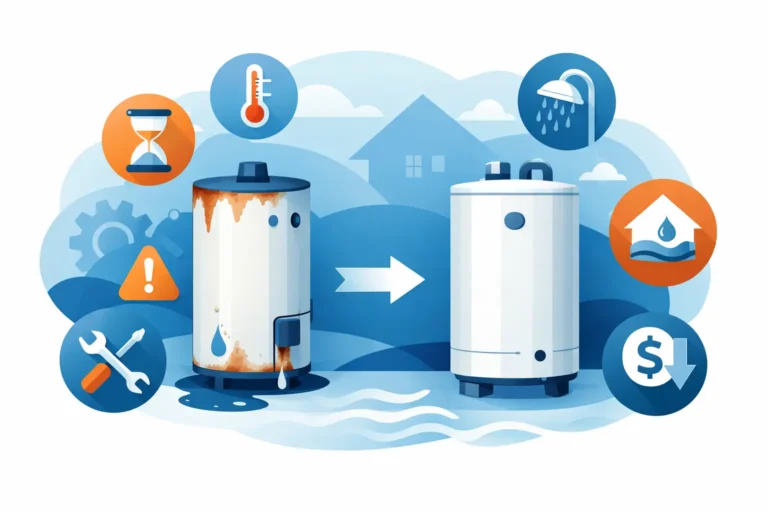

A cold shower is rarely the first sign of a failing water heater. More often, the clues show up gradually: rusty water at one faucet, a new rumbling sound in the garage, or hot water that runs out sooner than it used to. If you are asking, “when should water heaters be replaced?” the answer depends on the unit’s age, condition, repair history, and the risk you are willing to take with an aging tank.
For homeowners, landlords, and property managers in Orange County and the Inland Empire, waiting until a tank fails can mean more than an inconvenient morning. A leaking water heater can damage flooring, walls, stored belongings, and nearby equipment. Knowing when to plan a replacement gives you more control over cost, timing, and the type of system you choose.
When Should Water Heaters Be Replaced?
Most traditional tank-style water heaters last about 8 to 12 years. Some units reach 15 years with excellent maintenance, favorable water conditions, and a working anode rod. Others fail sooner, especially in areas with hard water, where sediment can build up quickly inside the tank.
Tankless water heaters generally have a longer service life, often 15 to 20 years or more when they are maintained correctly. They do not store water in a large tank, so they avoid one major source of failure: tank corrosion. Still, they need periodic flushing and may eventually require repairs to valves, sensors, or heat exchangers.
Age alone does not automatically mean replacement is necessary. A well-maintained 10-year-old water heater with no leaks, no corrosion, and dependable performance may have useful life left. But once a conventional tank passes the 10-year mark, it is wise to have it evaluated and begin considering replacement before an emergency makes the decision for you.
7 Signs Your Water Heater May Be Nearing the End
1. The tank is 10 years old or older
Start with the serial number on the manufacturer’s label. Many brands encode the production date in the first letter and following numbers, although the format varies by manufacturer. If the date is unclear, a qualified plumber can identify the unit’s age.
An older tank is not necessarily unsafe, but its internal lining and corrosion protection have had years of wear. A proactive replacement can be especially sensible if the water heater is installed in an attic, closet, upper floor, or finished area where a leak could cause significant damage.
2. There is water around the base of the tank
Water pooling beneath a tank is a warning sign that deserves prompt attention. It may come from a loose connection, a leaking temperature and pressure relief valve, condensation, or a failing drain valve. Those problems can sometimes be repaired.
However, water seeping from the tank itself is different. As a steel tank ages, the inside can corrode and develop small fractures. Once the tank body is leaking, replacement is typically the only practical solution. Do not ignore a small puddle simply because it comes and goes. Heat can cause the metal to expand enough for a damaged tank to leak intermittently.
3. Your hot water looks rusty or discolored
Brown, red, or rusty hot water can point to corrosion inside the water heater. To narrow down the cause, compare the hot and cold water at several fixtures. If discoloration appears only on the hot side, the heater is a likely source. If both hot and cold water are affected, the issue may be in the plumbing supply or pipes instead.
A corroded anode rod can sometimes be replaced before tank damage develops. But if rust has already reached the tank lining, replacement may be the more dependable choice. A professional inspection can distinguish between a serviceable part and a tank that is approaching failure.
4. The unit makes popping, rumbling, or banging sounds
Southern California water can contain minerals that settle at the bottom of a tank over time. That sediment hardens with repeated heating cycles. Water trapped beneath it can create popping or rumbling noises as it heats and escapes.
Flushing the tank may help if buildup is caught early. On an older unit, though, heavy sediment can reduce efficiency, strain the burner or heating elements, and contribute to overheating at the tank bottom. A noisy heater is not always an emergency, but it should not be treated as normal.
5. Hot water is inconsistent or runs out too quickly
If a household that once had enough hot water now runs out halfway through the morning routine, the water heater may be losing capacity. Sediment can take up space in the tank, while aging heating elements or burners can slow recovery.
This is also a good time to assess whether the existing unit is properly sized. A growing family, additional bathroom, larger soaking tub, or new high-flow fixtures can change hot-water demand. Replacing a failing unit with the same size may solve the immediate problem but leave the household with the same frustrating shortage.
6. Repairs are becoming frequent or expensive
Not every repair means it is time for a new water heater. Replacing a thermostat, pilot assembly, gas control valve, heating element, or pressure relief valve can be a smart and cost-effective repair on a relatively young unit.
The calculation changes when the tank is near the end of its expected lifespan and repair needs keep returning. If a major repair costs a meaningful portion of a replacement, investing in an older tank may only delay a larger expense. A technician should explain the condition of the tank, the repair options, and the likely trade-off rather than pushing a one-size-fits-all answer.
7. Energy bills are rising without another clear reason
A water heater that has to work harder to heat the same amount of water uses more energy. Sediment buildup, aging components, and heat loss can all contribute to reduced efficiency. This may be harder to notice with gas bills that vary by season, but a gradual increase without a change in household use deserves attention.
A newer high-efficiency tank water heater, heat pump water heater, or properly sized tankless system may lower operating costs. The best fit depends on available space, electrical capacity, gas service, household demand, installation requirements, and upfront budget. Efficiency matters, but dependable hot water and proper installation matter just as much.
Repair or Replace: How to Make a Practical Decision
The right decision usually comes down to three questions: Is the tank leaking? How old is it? Is the repair likely to provide reliable service for long enough to justify the cost?
A leaking tank should be replaced promptly. For a non-leaking unit under about eight years old, repair is often reasonable if the issue is isolated and the unit has otherwise performed well. Between eight and 12 years, the decision is more case-specific. Consider the repair price, maintenance history, water quality, location of the unit, and the consequences of an unexpected failure.
For rental properties and commercial spaces, downtime can carry an added cost. Tenants, employees, guests, and customers all rely on reliable hot water. Planning a replacement during a convenient window can be far less disruptive than responding to a failure after hours.
Choosing the Right Replacement Water Heater
A replacement is an opportunity to correct problems with capacity, energy use, or installation. Conventional tank units remain a dependable choice for many homes because they are straightforward, familiar, and available in a range of sizes. Tankless units provide hot water on demand and can save space, but they must be sized carefully for simultaneous use and may require gas-line, venting, or electrical upgrades.
Heat pump water heaters are another option for homes with suitable installation space and electrical service. They can be highly efficient, though they work differently from standard electric tanks and may create some ambient cooling and sound in the surrounding area. A professional assessment should account for your household’s peak demand, fuel type, local code requirements, and long-term operating goals.
Proper installation is not a detail to overlook. Expansion tanks, drain pans, earthquake strapping, venting, shutoff valves, and safety controls all affect the performance and protection of the system. Experienced plumbing professionals can also identify related issues, such as excessive water pressure or a failing pressure regulator, that could shorten the life of a new heater.
Do Not Wait for a Full Failure
A water heater rarely fails on a convenient day. If yours is aging, noisy, rusty, leaking, or no longer meeting demand, an inspection can replace uncertainty with a clear plan. Just Right Services helps homeowners and property managers evaluate repair and replacement options with straightforward communication, dependable workmanship, and responsive service when hot water cannot wait.
A planned replacement may not feel urgent, but it can prevent a far more urgent problem. Address the warning signs early, choose a system that fits how your property uses hot water, and give yourself the comfort of knowing the next shower will be warm.