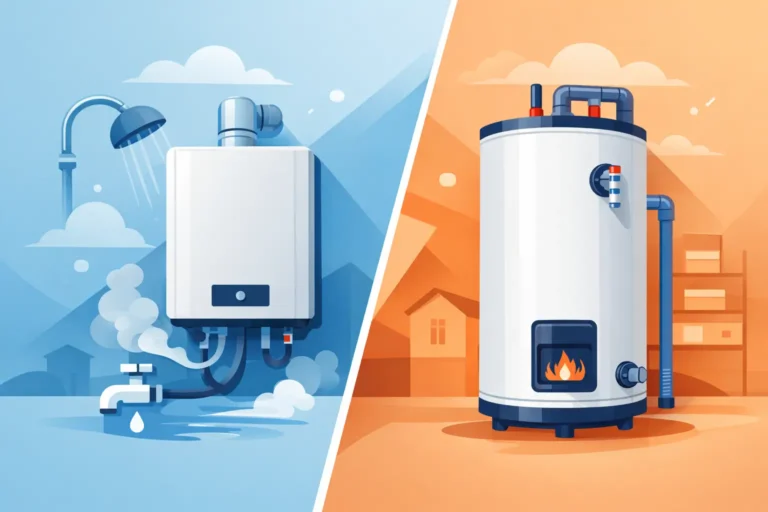

If your water heater is aging, leaking, or struggling to keep up with back-to-back showers, the tankless vs tank water heater question gets real fast. For homeowners and property managers in Orange County and the Inland Empire, the right choice often comes down to more than efficiency. It depends on your household size, plumbing setup, budget, and how you actually use hot water day to day.
Tankless vs tank water heater: the real difference
A traditional tank water heater stores a set amount of hot water, usually 40 to 75 gallons, and keeps it heated so it is ready when you turn on a faucet. A tankless unit does not store hot water. Instead, it heats water on demand as it flows through the system.
That one difference changes almost everything. A tank system is simpler and usually less expensive to install. A tankless system can save space and reduce standby energy loss, but it often costs more upfront and may require gas line, venting, or electrical upgrades.
For many homes, this is not a question of which option is better in every case. It is a question of which option is the better fit.
When a tank water heater makes more sense
A standard tank water heater is still a solid choice for plenty of Southern California homes. If you want dependable hot water, a lower initial investment, and a more straightforward replacement, a tank system often checks the right boxes.
This is especially true if your current setup already supports a tank model and you want to avoid major modifications. In many replacement jobs, swapping one tank for another is faster and less disruptive than converting to tankless. That can matter if your old heater fails unexpectedly and you need hot water restored as soon as possible.
Tank units also tend to work well for homes with predictable hot water habits. If your household spreads out showers, laundry, and dishes instead of running everything at once, a properly sized tank can perform just fine.
The trade-off is recovery and storage. Once the stored hot water is used up, you wait for the tank to heat more. That is where some larger families start to feel the limits.
Best fit for tank systems
Tank water heaters are often a practical choice for smaller to mid-size households, rental properties, and budget-conscious replacements. They can also be the better option when installation conditions make tankless upgrades expensive.
When a tankless water heater is worth it
Tankless systems appeal to homeowners who want longer-term efficiency, more compact equipment, and hot water that does not run out the same way a tank can. If several people in your home shower one after another, a correctly sized tankless unit can be a major improvement.
Because it heats water as needed, a tankless system avoids the energy loss that comes from keeping a large tank hot all day. Over time, that can lower utility costs, though the actual savings depend on your usage patterns and fuel type.
Tankless units also take up less room. In homes where garage, closet, or utility space matters, that smaller footprint can be a real advantage.
Still, the installation is often more involved. Some homes need upgraded gas piping, new venting, or electrical work to support the unit. The sticker price is only part of the cost. The full installation scope matters just as much.
Best fit for tankless systems
Tankless water heaters often make sense for larger households, homes with high hot water demand, and owners planning to stay in the property long enough to benefit from the efficiency and lifespan advantages.
Cost matters more than the unit price
One of the biggest mistakes people make when comparing a tankless vs tank water heater is looking only at equipment cost. Installation conditions can shift the math quickly.
A tank water heater usually wins on upfront affordability. The unit costs less, and replacement labor is often more straightforward. If your goal is to restore hot water quickly without stretching the budget, a tank model may be the smarter move.
A tankless water heater usually costs more to buy and install. But that does not automatically make it too expensive. If you are already remodeling, upgrading gas service, or planning to stay in the home for years, the longer lifespan and lower operating costs may justify the investment.
There is also a value question. Some homeowners are happy to pay more now for better space savings and steady hot water. Others would rather keep the project simple and affordable. Both approaches can be completely reasonable.
Performance depends on your home, not just the brochure
Manufacturers love big promises. Real-life performance is more specific.
A tank water heater delivers hot water until the stored supply runs low. If your home has moderate demand and the tank is sized correctly, performance is usually predictable. Problems show up when the tank is too small or the household demand increases over time.
A tankless unit offers continuous heating, but only within its flow rate capacity. That means it can still struggle if too many fixtures run at once. For example, if multiple showers, a dishwasher, and a washing machine are all calling for hot water together, an undersized tankless system may not keep everyone happy.
That is why sizing matters so much. The better question is not, “Does tankless give endless hot water?” It is, “Can this specific unit meet this home’s peak demand?”
Energy efficiency and lifespan
Tankless systems usually win on efficiency. They heat water only when needed, which reduces standby losses. For households with significant daily hot water use, that can translate into meaningful savings over time.
Tank water heaters are less efficient by design because they maintain stored hot water around the clock. Newer models are better than older ones, but they still do not operate the same way as an on-demand system.
Lifespan is another point in favor of tankless. A well-maintained tankless unit often lasts longer than a standard tank model. Tank water heaters typically have a shorter service life because the tank itself is vulnerable to corrosion and wear.
That said, longer life does not mean no maintenance. Tankless systems need regular service, especially in areas where mineral buildup can affect performance. A neglected high-efficiency system can become an expensive frustration.
Space, maintenance, and replacement timing
Space is one of the clearest practical differences. Tank water heaters are larger and require floor space. Tankless units mount on the wall and free up room for storage or easier access in utility areas.
Maintenance is a little more nuanced. Tank systems benefit from flushing and inspection, but many owners skip service until there is a problem. Tankless units reward routine maintenance more directly. They are high-performing systems, but they need proper care to stay that way.
Timing also matters. If your current tank water heater is already leaking, you may not have the luxury of a long planning process. Emergency replacement often pushes homeowners toward the fastest reliable option. If your system is old but still working, you have more time to compare installation costs, fuel requirements, and long-term goals.
Tankless vs tank water heater for Southern California homes
Local conditions can influence the decision. Many homes in Orange County and the Inland Empire benefit from relatively mild groundwater conditions compared with colder regions, which can support efficient tankless operation. But local code requirements, venting paths, gas capacity, and home layout still play a big role.
In older homes, converting to tankless may require more updates than expected. In newer homes or recent remodels, the transition can be more straightforward. Condos, rental units, and commercial spaces each bring their own installation and usage considerations too.
This is where a site-specific recommendation matters. The best answer is usually not based on a national average. It is based on your home, your demand, and your budget.
How to choose without overthinking it
If you want the simplest path, lower upfront cost, and reliable everyday performance, a tank water heater is often the right answer. If you want better efficiency, a smaller footprint, and stronger long-term value, tankless may be worth the added installation cost.
A few questions usually bring clarity. How long do you plan to stay in the property? Does your family regularly run out of hot water? Is installation cost your top priority, or are you thinking more about long-term savings? Do you have the gas, venting, or electrical capacity for a tankless upgrade without major added expense?
For homeowners who want honest guidance instead of a sales pitch, that conversation should feel straightforward. A good contractor will explain the trade-offs clearly, size the system correctly, and tell you when the more expensive option is not actually the better one. That is the kind of customer-first approach Just Right Services believes in.
Hot water should fit your life without becoming a constant project. The right water heater is the one that gives you reliable performance, fair value, and one less thing to worry about tomorrow morning.