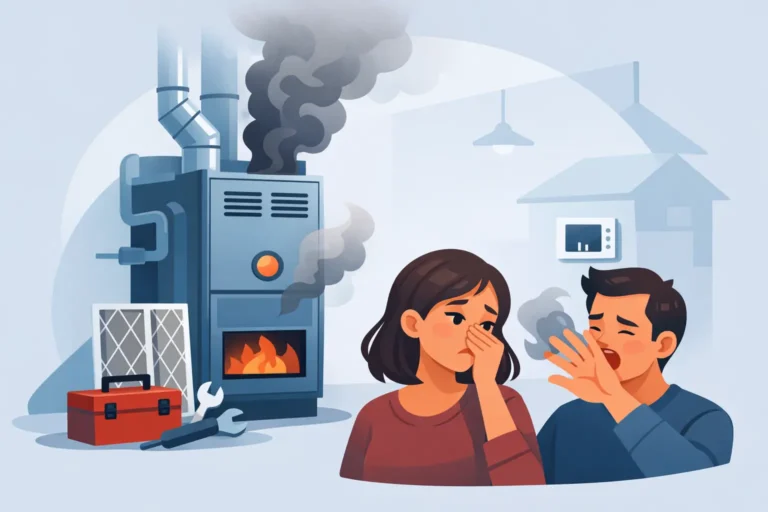

A furnace that smells burnt can make an otherwise comfortable home feel uncertain fast. If you are asking, “why does furnace smell burnt,” the answer may be as simple as dust burning off after a long Southern California cooling season. But some burning odors point to an electrical issue, an overheated component, or a problem that deserves immediate professional attention.
The key is noticing what the odor resembles, how long it lasts, and whether it appears with other warning signs. A brief dusty smell is usually expected. A sharp electrical smell, visible smoke, or a furnace that repeatedly shuts down is not something to ignore.
Why Does Furnace Smell Burnt When You First Turn It On?
The most common and least concerning explanation is dust. During warmer months, dust settles on the heat exchanger, burners, blower compartment, and supply vents. When the furnace starts for the first time, that dust heats up and creates a dry, burnt smell.
This odor should fade within a few minutes to a few heating cycles. Opening a window briefly can help clear the smell, especially in a tightly sealed home. Replacing a dirty air filter before heating season also reduces the amount of dust circulating through the system.
A normal dust-burnoff smell should not come with smoke, sparking, loud buzzing, or an odor that gets stronger each time the system runs. If it does, turn the furnace off and arrange for service. What begins as a minor airflow or electrical concern can become a larger repair if the equipment keeps operating under stress.
Burnt Furnace Smells That Need Attention
Not every burnt odor smells the same. Paying attention to the character of the smell can help you decide whether to monitor the system or stop using it.
A dusty or dry burning smell
A dusty odor that appears only at the beginning of the season is usually the normal explanation described above. It should be short-lived. If it hangs around for several days, the filter may be heavily loaded, the ductwork may contain significant dust, or the system may need a more complete inspection and cleaning.
A burning plastic, rubber, or electrical smell
This is more concerning. Electrical wiring insulation, a failing blower motor, a worn capacitor, a loose connection, or an overheating circuit board can create a sharp odor similar to hot plastic or melting rubber. The furnace may also make a humming sound, cycle off unexpectedly, or have weak airflow.
Shut the system off at the thermostat. If the odor is strong, smoke is present, or you see any sign of scorching near the furnace, turn off power at the breaker as long as it is safe to do so. Do not restart the furnace to “see if it goes away.” An experienced HVAC technician should identify the source before the unit runs again.
A burning oil smell
Oil-fired furnaces are uncommon in Orange County and the Inland Empire, but a burning oil odor in any heating system should be taken seriously. It can indicate a fuel or burner issue. Turn the system off and call for professional help rather than attempting to clean or adjust burner components yourself.
A smoky smell or visible smoke
Smoke is never a normal part of furnace operation. A blocked blower, overheated motor, damaged wiring, or debris inside the cabinet can all be possible causes. Turn off the furnace, leave the area if smoke is building, and contact emergency services if there is an active fire risk. Once the immediate danger has passed, have the heating system inspected before using it again.
A Dirty Filter Can Cause More Than a Musty Smell
Your furnace needs steady airflow to operate safely and efficiently. When an air filter is clogged, the blower has to work harder to pull air through it. Restricted airflow can cause heat to build up inside the furnace, which may produce a hot or burnt smell and trigger the high-limit safety switch.
Check the filter monthly during periods of regular heating use. A filter that looks gray, packed with debris, or visibly bowed should be replaced. The right replacement interval depends on the filter type, pets, household dust, renovations, and whether anyone in the home has allergies. Many homes need a new filter every one to three months.
Do not install a highly restrictive filter just because it has a high efficiency rating. Some systems are not designed for the added resistance. A technician can recommend a filter that supports your indoor air quality goals without putting unnecessary strain on the equipment.
When a Burnt Smell Could Be a Blower Problem
The blower motor moves heated air through your ducts and into the rooms you use every day. If it is failing, overheating, or struggling against a dirty filter, it can generate a burning electrical odor. Older motors may also develop worn bearings that create friction and excess heat.
You may notice other clues: reduced airflow from vents, a squealing or scraping sound, a furnace that runs but does not distribute heat well, or a system that shuts off before the home reaches the thermostat setting. These symptoms are worth addressing promptly. Continuing to run an overheating motor can damage connected electrical components and leave you without heat when you need it.
Could the Furnace Smell Be Coming From Somewhere Else?
Sometimes the furnace gets blamed for an odor that originates elsewhere. A forgotten item near a floor register, debris in a return vent, a dusty space heater, or construction materials warming up near ductwork can create a similar smell. Homes with attached garages can also pull in odors if there are duct leaks or pressure imbalances.
Start by checking that nothing is sitting against or near the furnace cabinet, supply registers, or return grilles. Never store paint, gasoline, cleaning chemicals, cardboard, or other combustible items near heating equipment. Then note whether the smell appears only when the furnace blower runs. That detail gives a technician a useful starting point if service is needed.
What to Do When Your Furnace Smells Burnt
Your response should match the severity of the odor. For a light, dusty smell during the first use of the season, replace the filter if needed and give the system a short period to clear. Keep an eye on it rather than assuming every odor is harmless.
For a persistent burning smell, a plastic or electrical odor, unusual sounds, poor airflow, frequent cycling, or any smoke, stop using the furnace. Turn it off at the thermostat and contact a qualified HVAC professional. If you suspect a gas leak because you smell sulfur or rotten eggs, leave the building immediately, avoid switches and flames, and call your gas utility or emergency services from a safe location. A gas smell is different from a burnt smell, but it requires urgent action.
For homeowners, landlords, and property managers, a professional inspection is often the fastest way to protect the property and restore confidence in the system. A NATE-certified technician can check airflow, electrical connections, blower performance, safety controls, burners, and the condition of the heat exchanger without guesswork.
Prevent Burnt Odors With Routine Heating Care
Annual heating maintenance is not just about avoiding a breakdown on a chilly night. It gives a technician the opportunity to remove dust buildup, check for overheated wiring, test safety controls, inspect the blower assembly, and catch worn parts before they create an odor or a no-heat call.
This matters even in areas where furnaces sit unused for much of the year. Long periods of inactivity allow dust to collect, filters to be forgotten, and small issues to go unnoticed until the first cool evening. Scheduling maintenance before regular heating use gives you time to make a repair decision without the pressure of an emergency.
Just Right Services provides dependable heating inspections and repairs for homes and businesses throughout Orange County and the Inland Empire. If the smell is anything more than a brief dust burnoff, having a trained technician inspect the system is the safest next step. A furnace should provide quiet, reliable warmth, not leave you wondering whether it is safe to turn on.