A cold morning in Orange County or the Inland Empire usually starts with one question: why is the heater running but the house still feels chilly? When people search for furnace repair near me, they are rarely planning ahead. They want heat back quickly, clear answers, and a technician who shows up ready to fix the problem without turning a simple repair into a confusing sales pitch.
That urgency makes sense. A furnace problem can affect comfort, safety, indoor air quality, and even your utility bill. For homeowners, it can mean cold bedrooms, uneven temperatures, or a system that keeps turning on and off. For landlords and property managers, it can mean unhappy tenants and a repair that cannot wait until next week. For commercial spaces, it can disrupt staff, customers, and day-to-day operations.
When “furnace repair near me” means act now
Some heating issues can wait a day. Others should not. If your furnace will not start at all, is blowing cold air, smells like something is burning, makes loud banging or screeching noises, or keeps shutting off before the space warms up, it is time to take the problem seriously.
There is also a difference between inconvenience and risk. If you notice a gas smell, shut the system off, leave the area, and call for help right away. The same goes for signs of overheating, visible soot, or a tripped carbon monoxide detector. A working furnace should not make you guess whether it is safe.
Even less dramatic symptoms can point to a bigger repair. Short cycling, weak airflow, rising energy bills, and rooms that never seem to reach the thermostat setting often start as manageable service calls. Left alone, they can turn into more expensive failures.
What to check before you call for furnace repair near me
Not every heating issue is a major mechanical failure. A few basic checks can save time and help you explain the problem clearly when you schedule service.
Start with the thermostat. Make sure it is set to heat, not cool or fan-only, and that the temperature is set high enough to trigger the system. If it uses batteries, replace them. It sounds simple, but thermostat settings cause more no-heat calls than most people expect.
Next, check the air filter. A clogged filter can restrict airflow enough to overheat the system and cause it to shut down early. If the filter looks dusty, gray, or packed with debris, replace it. This is one of the easiest ways to protect both comfort and efficiency.
You should also check the breaker panel. If the furnace has lost power, the issue may be electrical rather than mechanical. If a breaker has tripped once, reset it. If it keeps tripping, stop there and call a professional. Repeated electrical faults need proper diagnosis.
Finally, look at the vents and return grilles. Closed or blocked vents can strain the system and create uneven heating. Open them up and move furniture or rugs away from returns. Good airflow matters more than many people realize.
If those steps do not solve the issue, the problem is likely inside the furnace itself.
What usually causes furnace problems
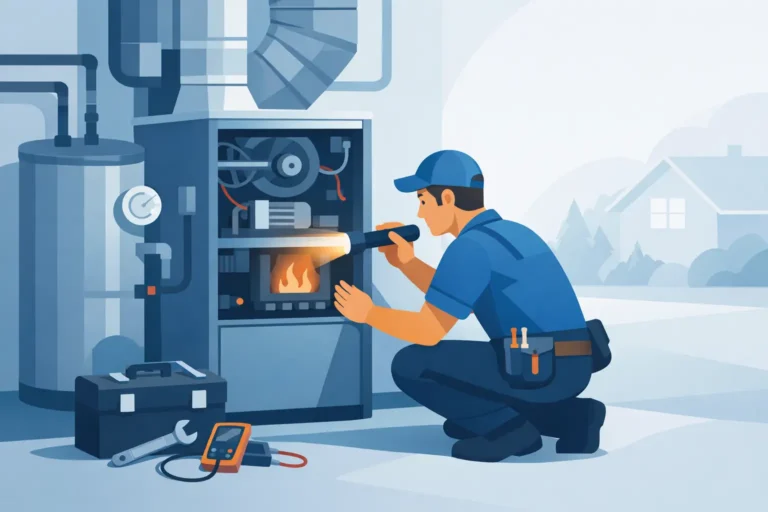
Most furnace repairs come down to a handful of components. Ignition problems are common, especially in older systems. If the burner will not ignite consistently, the furnace may blow cool air or fail to start. Dirty flame sensors are another frequent issue and can cause the system to shut off soon after it fires up.
Blower motor problems often show up as weak airflow, no airflow, or unusual noises. If the blower is failing, your furnace may still generate heat but struggle to distribute it through the home or building. That can make rooms feel uneven and force the system to run longer than it should.
Limit switches and other safety controls can also trigger shutdowns. These components are designed to protect the system from overheating or unsafe operation. When they fail, or when another problem causes them to trip, the furnace may act unpredictably.
There is also the issue of neglect. Furnaces that go years without maintenance tend to collect dust, wear down key parts, and lose efficiency slowly. Many emergency breakdowns start with small issues that routine service could have caught earlier.
Why local experience matters
Searching for a local heating company is not just about proximity. It is about getting someone who understands the area, shows up on time, and can work on the kinds of systems commonly found in Southern California homes and commercial properties.
Heating service in this region can be a little different from colder parts of the country. Some systems sit idle for long stretches and only get noticed when the first cold snap arrives. That means the first few winter calls often involve neglected filters, ignition issues, dirty burners, or thermostats that have not been touched since last season. A technician with broad HVAC experience can spot those patterns quickly.
It also helps to work with a company that can handle the bigger picture. Sometimes a furnace issue is not just a furnace issue. Duct leakage, poor airflow, thermostat communication problems, or aging HVAC components can all affect heating performance. If the provider only handles one narrow repair, you may end up with a temporary fix instead of a lasting solution.
Repair or replace? It depends
This is where honest guidance matters most. Not every struggling furnace needs to be replaced. If the repair is straightforward and the system still has good years left, repairing it is often the right call. That is especially true when the issue involves a sensor, ignitor, capacitor, thermostat, or airflow problem.
But there are times when replacement makes better financial sense. If the furnace is older, needs frequent repairs, or has a major component failure, another repair may only delay the inevitable. Higher utility bills can also be a clue. An aging furnace may still run, but it can cost more each month while delivering less comfort.
The right answer depends on age, condition, repair history, parts availability, and your goals. A homeowner planning to stay long term may prioritize efficiency and reliability. A landlord may need the most practical path to restore dependable heat quickly. A business owner may care most about minimizing downtime. Good service means looking at the situation honestly, not forcing the same answer every time.
What good furnace service should feel like
When you call for heating help, you should not have to chase updates or wonder what comes next. Good service starts with responsiveness and continues with clear communication, clean workmanship, and accurate diagnosis.
A qualified technician should inspect the system thoroughly, explain what failed, and tell you what the repair involves in plain language. You should know whether the issue is urgent, whether additional wear is showing up elsewhere, and what your options are before work begins.
That is especially important for families with children, older adults, tenants, or employees depending on a safe indoor environment. Trust is built when the process feels straightforward. It is one reason many local property owners look for experienced, NATE-certified technicians and a company with the depth to handle both emergency repairs and longer-term HVAC planning.
For many customers across Irvine, Mission Viejo, Laguna Hills, Lake Forest, Rancho Cucamonga, Ontario, and surrounding areas, that means choosing a provider like Just Right Services that combines fast response with honest recommendations and just-right pricing.
How to avoid another midseason breakdown
The best time to think about furnace repair is before you need it. Annual heating maintenance gives technicians a chance to clean components, test safety controls, check airflow, inspect ignition performance, and catch wear before it turns into a no-heat call.
Changing filters on schedule also makes a real difference. So does paying attention to early warning signs. If the furnace starts making new noises, heating unevenly, or taking longer to warm the space, do not wait for a total shutdown. Early service is usually easier, less disruptive, and less expensive.
For homes and commercial properties with older HVAC equipment, it also helps to have a plan. That might mean budgeting for future replacement, improving duct performance, or asking about maintenance options that keep the system more dependable through the season.
A reliable furnace should do its job quietly in the background. If yours is not, getting the right help early can restore comfort, protect your system, and spare you from a much bigger problem on the next cold morning.