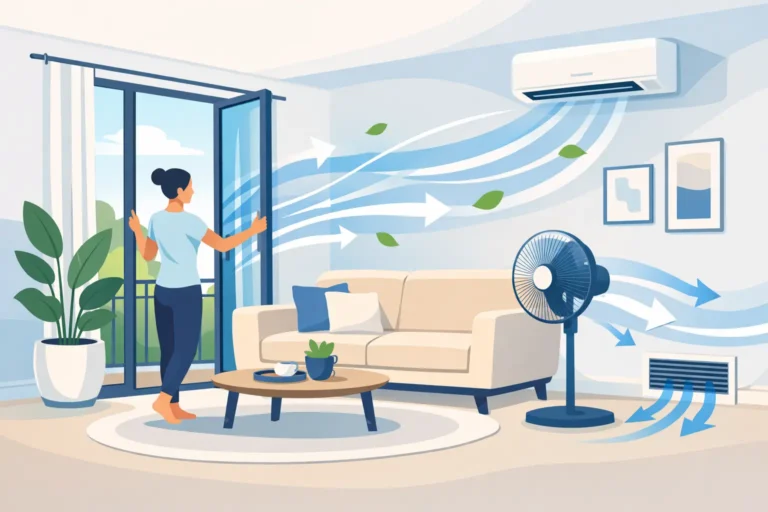

A bedroom that stays stuffy while the living room feels fine is more than a minor comfort issue. Uneven airflow can make your HVAC system work harder, raise energy costs, and leave parts of your home feeling warm, cold, dusty, or humid. Knowing how to improve indoor airflow helps you address the simple causes first and recognize when a larger HVAC issue needs professional attention.
For Orange County and Inland Empire homes, airflow matters year-round. Strong cooling is essential during hot stretches, but heating, ventilation, filtration, and duct performance all affect how comfortably your home feels in every season.
Start With the Air Filter
Your HVAC filter is designed to catch dust, pollen, pet dander, and other particles before they enter the system. But when it is overdue for replacement, it can restrict the amount of air moving through your return ducts and out of your supply vents.
Check the filter every month, especially during periods of heavy AC or heating use. Many standard filters should be changed every one to three months, although homes with pets, allergies, construction dust, or frequent system use may need more frequent changes.
Filter selection matters, too. A higher MERV rating can capture smaller particles, but not every system is designed to handle a highly restrictive filter. Installing the densest filter available can reduce airflow if the equipment cannot accommodate it. The right filter is one that supports your indoor air quality goals without straining the system. When in doubt, ask an HVAC technician which filter type fits your equipment.
Keep Supply and Return Vents Clear
Supply vents deliver conditioned air into rooms. Return vents pull indoor air back to the HVAC system to be filtered, heated, or cooled again. Both need open space to do their jobs.
Walk through your home and look for vents covered by furniture, rugs, curtains, storage boxes, or wall décor. Even a sofa placed directly in front of a return grille can limit circulation throughout the house. Open supply registers fully unless an HVAC professional has recommended a specific balancing adjustment.
Closing several vents to force more air into one room usually does not solve the underlying problem. In some systems, it can increase pressure in the ductwork, create noise, reduce efficiency, and contribute to equipment strain. A better approach is to identify why the weak room is not receiving enough airflow in the first place.
Do Not Forget Interior Doors
Closed bedroom, bathroom, or office doors can interrupt the path air needs to take back to a central return vent. If a room feels stuffy with the door shut but improves when it is open, the room may not have enough return-air pathway.
A door undercut, transfer grille, jump duct, or dedicated return can sometimes help. The right solution depends on the home’s layout and HVAC design, so this is worth discussing during an airflow evaluation rather than guessing.
Use Ceiling Fans the Right Way
Ceiling fans do not lower the room temperature, but they make people feel cooler by moving air across the skin. In summer, set the fan to rotate counterclockwise so it pushes air downward. In winter, a low clockwise setting can gently circulate warm air that has collected near the ceiling.
Turn fans off when rooms are empty. They improve comfort for people, not the temperature of an unoccupied space. Using fans while slightly adjusting your thermostat can help reduce demand on your air conditioner, but it will not correct a duct or equipment problem.
Improve Circulation Without Bringing in Poor Outdoor Air
Opening windows can be an effective way to refresh indoor air on mild days. Create cross-ventilation by opening windows on opposite sides of the home, then use a window fan if needed to encourage air movement. Early morning or evening often offers the most comfortable outdoor conditions in Southern California.
Still, fresh air is not always better. During wildfire smoke, high pollen periods, nearby construction, heavy traffic, or very hot weather, opening windows may bring more pollutants and heat indoors. On those days, keep windows closed, use properly maintained HVAC filtration, and consider indoor air quality equipment designed for your specific concerns.
Bathroom and kitchen exhaust fans also play an important role. Run the bathroom fan during showers and for about 20 minutes afterward to remove moisture. Use the kitchen hood while cooking, particularly when boiling water, frying, or using gas appliances. Removing moisture and airborne contaminants at the source helps the rest of the home feel less stale.
Check Thermostat Fan Settings
Most thermostats offer an “Auto” setting and an “On” setting for the blower fan. In Auto mode, the fan runs only while the system is actively heating or cooling. In On mode, it runs continuously to circulate air through the filter and around the home.
Running the fan continuously can make temperatures feel more even in some homes, especially those with a second floor or rooms far from the thermostat. The trade-off is higher electricity use, more filter loading, and potentially more humidity circulation during cooling season. If your thermostat has a circulating or intermittent fan mode, that can provide a useful middle ground.
If the fan runs but airflow is weak at every vent, the issue may involve the blower motor, blower wheel, evaporator coil, duct system, or a restriction elsewhere in the equipment. That is not a problem to solve by simply leaving the fan on longer.
Look for Duct Problems That Waste Airflow
Ductwork is hidden behind walls, ceilings, crawl spaces, attics, or garages, so it is easy to overlook. Yet damaged, disconnected, undersized, poorly designed, or leaky ducts can be a major reason one room never feels comfortable.
Warning signs include rooms that are consistently hotter or colder than the rest of the home, weak airflow from certain vents, whistling or rattling sounds, excessive dust, and unusually high utility bills. In homes with ducts in hot attics, leaks can send cooled air into the attic instead of into your living space. Duct sealing can reduce that waste, while duct cleaning may be appropriate when there is meaningful dust buildup or debris affecting the system.
Duct cleaning and duct sealing solve different problems. Cleaning removes accumulated material inside ducts. Sealing addresses air leaks at joints, connections, and damaged sections. A qualified technician should inspect the system before recommending either service, because the best solution depends on what is actually causing the airflow loss.
Consider Room-by-Room Balancing
A properly sized HVAC system should deliver the right amount of air to each area of the building. If an addition, remodeled room, converted garage, or upstairs bedroom has always been uncomfortable, the existing system may not have been designed for the new load.
Professional air balancing measures airflow at registers and identifies pressure or distribution issues. Solutions can range from damper adjustments and duct modifications to zoning, a ductless mini-split, or an HVAC replacement designed for the home as it is used today. For property managers and commercial buildings, balancing is especially valuable when different offices, suites, or tenant areas have different comfort needs.
Maintain the HVAC System Before Small Problems Grow
Airflow is closely tied to routine HVAC maintenance. A dirty blower wheel, clogged indoor coil, worn capacitor, failing motor, or neglected drain system can reduce performance long before the system stops completely. Seasonal maintenance gives a technician a chance to inspect these components, confirm safe operation, and catch restrictions early.
Schedule service promptly if you notice burning smells, frequent cycling, new noises, ice on refrigerant lines, water around the indoor unit, rapidly rising energy costs, or a sudden drop in airflow. If you have gas heating, take combustion safety seriously. Never block combustion air openings, and make sure carbon monoxide detectors are installed and working.
For homes and businesses across Orange County and the Inland Empire, Just Right Services can evaluate airflow concerns from the filter and blower to the ducts and full HVAC system. A clear inspection helps separate quick homeowner fixes from repairs or upgrades that will make a lasting difference.
Comfort should not depend on which room you happen to be sitting in. Keep filters and vents maintained, pay attention to changes in how air moves through the building, and have persistent hot, cold, or stuffy areas checked before they turn into a larger system problem.