
A glass of water can look perfectly clear and still carry chlorine, minerals, sediment, or other contaminants that affect its taste, smell, and usefulness around the house. This guide to whole home water filtration helps Southern California homeowners understand what these systems do, where they make the biggest difference, and how to choose one based on real water conditions rather than marketing claims.
For homes in Orange County and the Inland Empire, water quality concerns can vary by neighborhood, water source, plumbing age, and whether the home uses municipal water or a private well. The right solution is not always the largest or most expensive system. It is the system that addresses the issues in your water while fitting your household’s plumbing, water use, and maintenance expectations.
What Whole Home Water Filtration Does
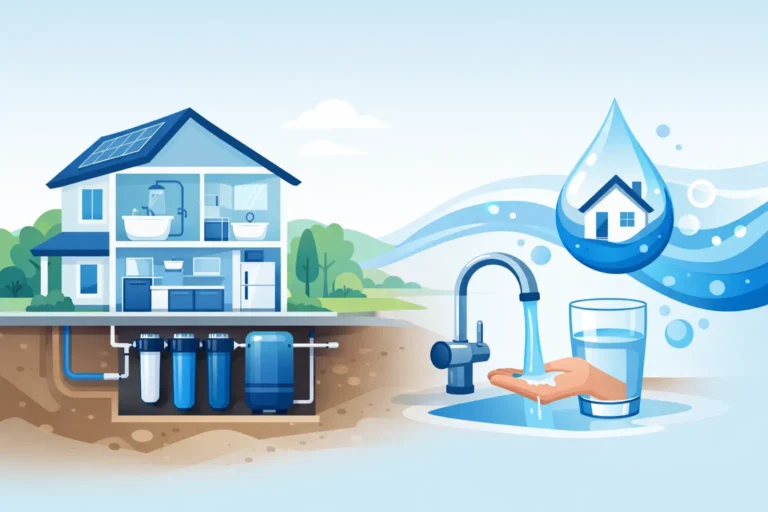
A whole home water filtration system, also called a point-of-entry system, treats water as it enters the house. That means filtered water reaches showers, sinks, toilets, washing machines, dishwashers, and outdoor plumbing lines, depending on how the system is installed.
This differs from a drinking-water filter installed under one kitchen sink. An under-sink system may be an excellent choice for improving drinking and cooking water, but it does not protect water-using appliances, reduce chlorine exposure in the shower, or keep sediment out of fixtures throughout the home.
Whole-home filtration can be designed to reduce sediment, chlorine, unpleasant odor, certain metals, scale-causing hardness minerals, and other concerns identified through testing. The exact result depends on the media and equipment selected. No one system removes everything, which is why matching the equipment to the water matters.
Start With Your Water, Not a System
The first step is identifying the problem you are trying to solve. Some homeowners are tired of chlorine odor after a shower. Others see white mineral spots on glassware, deal with dry skin and stiff laundry, or notice sediment clogging faucet aerators. A landlord or property manager may be more concerned about protecting water heaters, ice makers, and tenant fixtures from premature wear.
A professional water test provides a more useful starting point than assumptions based on a neighbor’s experience. Municipal water quality can change by area and season, while older plumbing can introduce concerns that are not present at the incoming water main. A proper assessment may look at hardness, pH, total dissolved solids, sediment, chlorine or chloramine, iron, manganese, and other factors relevant to the property.
It also helps to separate aesthetic concerns from health-related concerns. Chlorine taste is often an aesthetic issue, even though many water systems use disinfectants for a reason. Hard water is usually not a health threat, but it can be costly for plumbing and appliances. If testing identifies a contaminant with a potential health impact, the treatment plan may need a specialized system or a dedicated drinking-water solution in addition to whole-house filtration.
The Main Parts of a Whole Home Water System
Many effective systems use more than one stage of treatment. Each component has a specific job, and the best combination depends on the test results.
Sediment filtration
A sediment filter captures physical particles such as sand, silt, rust, and debris. It is particularly helpful where water is visibly cloudy, plumbing is older, or construction activity has disturbed local lines. Sediment protection can also extend the life of other filters, valves, and appliances.
The trade-off is maintenance. Cartridge-style sediment filters need periodic replacement, and a heavily loaded filter can reduce water pressure if it is ignored. Larger systems or reusable options may reduce how often service is needed, but they still require regular attention.
Carbon filtration
Activated carbon is commonly used to reduce chlorine, unpleasant tastes, odors, and some organic compounds. For many municipal-water households, carbon filtration is the feature that makes shower water smell better and drinking water more appealing.
Not all carbon systems are identical. Chloramine, a disinfectant used by some water providers, can require specialized carbon media and adequate contact time. A properly sized tank matters just as much as the filter media. An undersized system may work briefly but lose effectiveness before the advertised service life.
Water softening or conditioning
Hard water is common in many Southern California communities. It can leave scale on shower doors and fixtures, reduce soap lather, and contribute to mineral buildup in tank and tankless water heaters. A traditional ion-exchange water softener removes hardness minerals through a regeneration process that uses salt.
Salt-free conditioners are another option. They generally do not remove hardness minerals, but may help alter how minerals form scale. They can make sense for certain homes, but homeowners should understand the distinction. If the goal is truly soft water and reduced hardness, a conventional softener is usually the more dependable answer.
Specialized media and reverse osmosis
Some water concerns require targeted treatment. Iron, manganese, sulfur odor, low pH, or certain contaminants may call for specialty media, oxidation equipment, neutralizers, or other solutions. Reverse osmosis is often used at a kitchen sink for highly purified drinking water. It is not usually the first choice for treating every gallon entering a typical home because it can be more complex and produces wastewater during filtration.
How to Size a System for Your Home
A system should be sized for flow rate as well as filtration capacity. A household with two bathrooms, a large soaking tub, a high-flow shower, and a family doing laundry while the dishwasher runs needs more flow than a small condo with one occupant.
If a filtration system is too small, water pressure can drop when multiple fixtures run at once. If it is oversized without a reason, the homeowner may pay more upfront without gaining meaningful performance. A qualified plumbing professional can estimate demand by reviewing fixture count, household size, pipe configuration, incoming pressure, and peak use patterns.
Installation location matters, too. The system needs room for service access and should be placed where it can protect the intended plumbing lines. Softeners also need a drain connection and power, while some systems require bypass valves to make future maintenance easier. In a tight garage, side yard, utility closet, or commercial mechanical room, layout decisions can affect the equipment choice.
What Maintenance Really Looks Like
A whole home system is not a set-it-and-forget-it purchase. The maintenance may be simple, but it is still part of protecting your investment.
Sediment cartridges may need changing every few months to once a year, depending on water conditions and filter size. Carbon media in tank systems often lasts for years, though actual lifespan depends on the water chemistry and household usage. A softener requires salt checks, periodic cleaning, and occasional service to confirm the regeneration cycle is working correctly.
Keep an eye out for lower pressure, returning odors or tastes, cloudy water, salt bridging in a softener tank, or unexplained changes in appliance performance. These are not always signs of a major plumbing problem, but they are a reason to have the system inspected before minor issues become expensive repairs.
Cost, Value, and Common Missteps
Whole-home filtration costs vary widely because the equipment and installation needs vary widely. A basic sediment and carbon setup will cost less than a high-capacity system combining filtration, softening, specialty treatment, and an under-sink reverse osmosis unit. Access to the main water line, drainage requirements, permits, electrical needs, and required plumbing modifications also affect pricing.
The lowest quoted system is not automatically the best value. Look at what contaminants it is designed to address, its rated flow, replacement-media costs, warranty coverage, installation quality, and expected maintenance. A system that cannot keep up with the home or does not treat the actual problem can become a frustrating expense, no matter how attractive the initial price looks.
Avoid buying based only on a single claim such as “removes 99% of contaminants.” That statement is incomplete without knowing which contaminants, under what test conditions, and at what flow rate. It is also wise to be cautious about systems presented as a universal answer for every home. Water treatment should be specific, not one-size-fits-all.
Choosing Help You Can Trust
A dependable installer should explain the water test results in plain language, recommend equipment that fits those findings, and clearly outline maintenance before work begins. You should know where the system will be installed, what the installation includes, and what ongoing service will be needed.
For homeowners who want straightforward guidance and clean, professional plumbing work, Just Right Services can assess your water concerns and help build a treatment plan that makes sense for your home. The goal is not to sell more equipment than you need. It is to provide water that works better for your family, fixtures, appliances, and daily routine.
Better water starts with better information. Test first, ask practical questions, and choose a system you can confidently maintain for years to come.