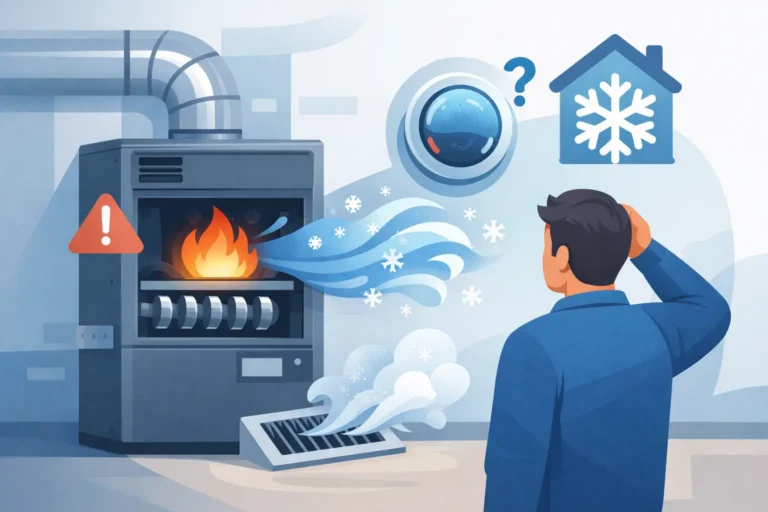

You set the thermostat, wait for that familiar rush of warm air, and instead your furnace blowing cold air turns a cool morning into a frustrating one. In Orange County and the Inland Empire, heating problems may not show up every day, but when they do, they need attention fast. A furnace that runs without heating properly can point to anything from a quick thermostat issue to a repair that should not wait.
The good news is that not every cold-air call means a major breakdown. Some causes are simple, and some are signs your system needs professional service before the problem gets worse. The key is knowing the difference.
Common reasons a furnace is blowing cold air
One of the most common reasons is also the easiest to overlook – thermostat settings. If the fan is set to ON instead of AUTO, the blower can keep moving air even when the furnace is not actively heating. That air often feels cold or room temperature coming through the vents, which makes it seem like the furnace has stopped working when the issue is really the fan setting.
A dirty air filter is another frequent cause. When the filter is clogged, airflow drops and the furnace can overheat. Many systems respond by shutting off the burners as a safety measure while the blower continues to run. That means you feel cool air from the vents even though the equipment is technically still operating. In homes with pets, dust, or ongoing remodeling, filters can clog faster than people expect.
Pilot and ignition problems can also interrupt heating. Older furnaces may have a standing pilot light, while newer models rely on electronic ignition. If the flame does not light correctly, the system cannot create heat. The blower may still cycle on, which makes the problem feel confusing from the homeowner side.
Sometimes the issue is with the flame sensor. This small component confirms that the burners are lit. If it gets dirty, the furnace may start and then shut the burners off within seconds. The blower can continue, but the air will not stay warm for long.
Condensate drain issues are another possibility on high-efficiency furnaces. If the drain line clogs, the system may shut down parts of the heating cycle to protect itself. This is one of those cases where the cause is not obvious unless the system is inspected.
And then there is the gas supply. If the gas valve is closed, partially closed, or interrupted, the burners will not fire. This is less common, but it is a serious enough issue that it should be handled carefully.
What you can safely check first
Before assuming the worst, start with the basics. Check the thermostat and make sure it is set to HEAT. Then look at the fan setting. If it says ON, switch it to AUTO and give the system a few minutes. That simple change solves more cold-air complaints than most people realize.
Next, check the air filter. If it looks dark, packed with dust, or overdue for replacement, install a clean one. A neglected filter can affect comfort, efficiency, and equipment life all at once. Once the filter is changed, turn the system back on and see whether heating returns normally.
You can also confirm that the furnace has power. If the system is completely unresponsive or acting erratically, check the breaker panel and the furnace switch. Sometimes a switch near the unit gets bumped accidentally, especially in garages, utility closets, or service areas.
If you have an older furnace, look to see whether the pilot light is out. If you are not comfortable relighting it, it is better to call for service than to guess. If you smell gas at any point, leave the area and contact your gas utility and HVAC professional right away.
When furnace blowing cold air means you should call a pro
If you have checked the thermostat, replaced the filter, and the furnace is still blowing cold air, the next step is professional diagnosis. Modern heating systems have multiple safety controls, sensors, and electrical components. When one part fails, the symptoms can overlap. What seems like a blower problem could actually be an ignition issue, a limit switch problem, or restricted airflow.
Short cycling is one sign to take seriously. If the furnace starts, runs briefly, then shuts off and repeats the pattern, that usually points to an underlying fault rather than a temporary glitch. Strange smells, rattling, booming, or squealing sounds also deserve prompt attention.
Age matters too. An older furnace may still run, but as key parts wear out, performance can become inconsistent. If repairs are becoming more frequent and heating is unreliable, it may be more cost-effective to look at replacement options instead of continuing to patch an aging system.
For property managers and business owners, fast action matters even more. Tenant complaints, comfort issues, and operational disruptions can escalate quickly when heat is inconsistent. A dependable HVAC partner can help you determine whether the issue is a repair, a maintenance matter, or a sign the system is no longer meeting the building’s needs.
Why cold air does not always mean the same thing
Not all “cold air” feels the same, and that matters when diagnosing the problem. Air can feel cool because it is truly unheated, because the furnace burners are shutting off too soon, or because the airflow is stronger than expected and feels colder against your skin. In Southern California, where winter temperatures are milder than in many parts of the country, people sometimes notice this difference more sharply. When a system is only slightly underperforming, it may still run, but comfort drops enough that the problem becomes noticeable.
There is also a difference between a gas furnace and a heat pump. Heat pumps can sometimes feel like they are blowing cool air because the supply air is not as hot as a furnace’s. If your home uses a heat pump instead of a traditional furnace, the diagnosis changes. That is one reason it helps to have a technician who can work across the full range of HVAC equipment rather than taking a one-size-fits-all approach.
How regular maintenance helps prevent this problem
A lot of no-heat calls start with small issues that built up over time. Dirty filters, worn ignition components, loose electrical connections, and neglected sensors do not always fail all at once. They usually get worse step by step until the system finally stops heating the way it should.
Routine heating maintenance gives technicians a chance to catch those problems early. During service, they can inspect burners, clean key components, test safety controls, check airflow, and make sure the system is operating as intended. That is especially valuable before the coldest stretch of the season, when repair demand tends to spike and homeowners want service right away.
Maintenance also protects efficiency. A furnace that struggles to heat can run longer cycles, waste energy, and create uneven temperatures from room to room. Even if the system eventually produces warm air, it may be costing more than it should to do the job.
Choosing the right response for your home or building
If your furnace is blowing cold air once, then returns to normal after a filter change or thermostat adjustment, you may have caught the problem early. If it keeps happening, or if the system is making noise, shutting down, or failing to keep the space comfortable, it is time for a closer look.
That is where experience matters. A trained technician should not just restore heat for the moment. They should explain what failed, why it happened, and whether the fix is likely to hold up. At Just Right Services, that kind of clear communication is part of the job. Homeowners and commercial clients alike deserve straightforward answers, clean workmanship, and repairs that make sense for the age and condition of the equipment.
When your heating system is not doing its job, comfort can go downhill fast. A careful inspection now can prevent a bigger repair later, and sometimes it can save you from replacing a system before you actually need to. If the air coming through your vents does not feel right, trust that instinct and get it checked before a small issue turns into a cold night and a more expensive call.