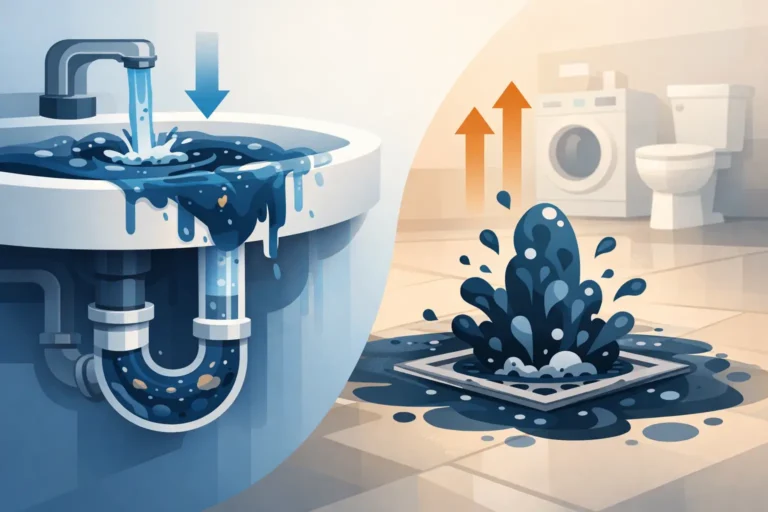

You run the sink, flush the toilet, or start a load of laundry – and instead of water going where it should, it rises back up. If you’re asking, “why is my drain backing up,” the short answer is that something is slowing or blocking the path water needs to leave your home or building. The bigger question is where the problem is, how serious it is, and whether it’s safe to keep using your plumbing.
A backed-up drain can be a small, localized clog, or it can point to a sewer line problem that affects multiple fixtures at once. Knowing the difference matters. It can help you avoid water damage, sanitation issues, and the frustration of making the problem worse with the wrong fix.
Why is my drain backing up in the first place?
Drain backups happen when wastewater meets resistance. That resistance might be grease stuck inside a kitchen line, hair packed into a bathroom drain, tree roots pushing into a sewer pipe, or even a venting problem that throws off how water moves through the system.
In a healthy plumbing system, water flows out quickly and air moves properly through the vent system to keep that flow steady. When either part of that process gets disrupted, you may notice slow drainage, gurgling sounds, bad odors, or water coming up where it definitely should not.
The most common cause is a blockage that has built up over time. Many clogs start small. Soap residue catches hair. Grease cools and hardens. Food particles collect around rough spots inside the pipe. Over months or years, that narrow passage gets smaller until regular water use pushes it over the edge.
The most common causes of a drain backup
A single slow sink does not always mean a major plumbing emergency. But the cause still needs attention, especially if the symptom keeps returning.
Grease, soap, and food buildup
Kitchen drains are frequent trouble spots because they handle more than water. Grease is one of the biggest culprits. It may go down warm as a liquid, but it cools inside the pipe and sticks to the walls. Over time, it traps food scraps and creates a stubborn blockage.
Soap can cause trouble too, especially older soap products that leave behind a thick residue. In bathroom sinks and tubs, that residue often mixes with hair and turns into a dense clog.
Hair and personal care products
Bathroom drains back up all the time because hair binds together and catches on pipe joints or rough interior surfaces. Add shaving cream, toothpaste, or heavy products, and the drain starts slowing down. This type of clog is usually closer to the fixture, which is why one shower or sink may be affected while the rest of the home seems fine.
Flushed items that should not be flushed
Toilets are designed for human waste and toilet paper. That’s it. Wipes labeled flushable, paper towels, hygiene products, cotton swabs, and similar items can create serious blockages. In homes with older plumbing or lower-flow fixtures, these problems can show up even faster.
If the toilet bubbles when another fixture runs, or if flushing one toilet affects a tub or shower nearby, the issue may be deeper in the drain system.
Sewer line blockage or damage
This is the problem homeowners and property managers worry about most, and for good reason. A sewer line serves the whole property. If it becomes blocked, cracked, offset, or crushed, wastewater has nowhere to go. It can start backing up through floor drains, tubs, toilets, or lower-level fixtures.
Tree roots are a common reason, especially in older neighborhoods. Roots naturally seek moisture and can work their way into tiny openings in underground pipes. Once inside, they expand and catch debris. Sewer lines can also fail because of age, corrosion, soil movement, or poor installation.
Drain vent problems
Plumbing systems need air to drain correctly. Vent pipes help regulate pressure so wastewater flows smoothly. If a vent is blocked by debris or damage, drains may gurgle, empty slowly, or smell unpleasant. This issue is less obvious than a standard clog, but it can still affect performance across the property.
Signs the problem is bigger than one drain
If only one sink is draining slowly, the clog is often local to that fixture. If several drains act up at the same time, the problem is usually farther down the line.
That distinction helps you judge urgency. If your shower backs up when the washing machine drains, or the toilet gurgles when the bathroom sink runs, those are signs the system is connected to a larger blockage. Water often finds the lowest open point, which is why tubs and floor drains commonly show backup first.
Warning signs of a main drain or sewer issue
Pay closer attention if you notice more than one of these symptoms:
- Water backing up in multiple fixtures
- Gurgling sounds from drains or toilets
- Sewage odors indoors or outside
- Frequent clogs that keep returning
- Water around a floor drain or the base of a toilet
- Slow drainage throughout the building
At that point, using more water can make the situation worse.
What you should do right away
If you think a drain is backing up, the first step is simple – stop adding water to that line. Do not keep flushing, running the dishwasher, or doing laundry to “see if it clears.” That can quickly turn a manageable problem into overflow and water damage.
If the issue seems isolated to a sink or tub, you can try a basic plunger or remove visible debris near the drain opening. A simple hair clog near the surface may come out easily. Beyond that, it pays to be careful.
Chemical drain cleaners are one of the most common mistakes. They rarely solve a heavy blockage, and they can damage certain pipes, create fumes, and make professional service more difficult and hazardous later. For recurring clogs or any sign of sewage backup, skipping the chemicals is usually the better call.
Why drain backups keep coming back
A drain that backs up once and then seems fine is often not actually fixed. It may be partially open, not fully cleared. Water can get through for now, but buildup remains inside the pipe.
That is why recurring backups matter. They usually point to one of three things: a clog that was only temporarily relieved, pipe damage that keeps catching debris, or a larger sewer problem that was never fully diagnosed.
This is where proper inspection makes a difference. Clearing the symptom is one thing. Finding the reason it happened is what helps prevent repeat calls, repeat messes, and repeat expense.
When it’s time to call a professional plumber
If wastewater is coming back up into your home or commercial property, it is time to treat the problem seriously. The same goes for any backup involving multiple fixtures, foul odors, or lower-level drains.
Professional drain and sewer service can identify whether the issue is a routine clog, a branch line blockage, or a main sewer line problem. Depending on the cause, the fix might involve snaking, hydro jetting, or camera inspection to see what is happening inside the pipe.
That last part matters more than many people realize. A camera inspection can reveal roots, collapsed sections, grease buildup, offsets, or recurring trouble spots. Without that visibility, it is easy to keep treating the same symptom over and over.
For homeowners in Orange County and the Inland Empire, speed matters too. A backup does not wait for a convenient time. When plumbing problems threaten flooring, drywall, cabinets, or tenant comfort, responsive service becomes part of protecting the property.
How to lower the chances of another backup
No plumbing system is completely maintenance-free, but a few habits can reduce risk. Avoid pouring grease down the kitchen sink. Use drain screens where hair is a problem. Only flush toilet paper. Pay attention to early warning signs instead of waiting for a full backup.
For older homes or commercial properties with a history of drain trouble, periodic professional cleaning can make sense. It is not necessary for every property at the same schedule, because pipe age, landscaping, usage, and past repairs all matter. Still, if you have had repeated clogs, preventive service is often cheaper and less disruptive than emergency cleanup.
Just Right Services works with homeowners, landlords, and businesses that need clear answers and dependable plumbing support when drainage problems interrupt daily life. In many cases, the most helpful step is not guessing – it is getting the line checked before a small backup becomes a much larger repair.
If you are still wondering, “why is my drain backing up,” trust what your plumbing is telling you. Slow drains, gurgling, odors, and repeat clogs are early warnings, not random annoyances. The sooner you address the cause, the better your chances of avoiding damage, downtime, and a much messier day.