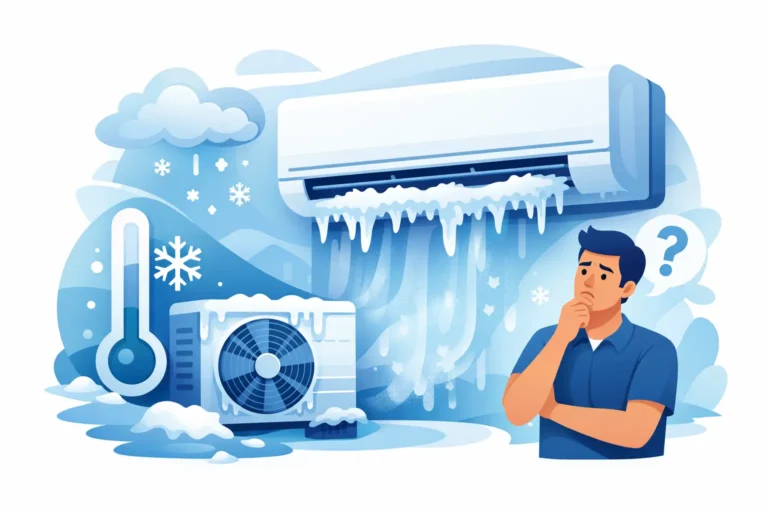

You lower the thermostat, expect cool air, and then notice ice on the indoor unit or refrigerant line. If you’re asking, “why is my AC freezing,” the short answer is this: your system is not getting the airflow or heat transfer it needs to operate normally. When that balance is off, the evaporator coil can get too cold, moisture freezes on it, and your air conditioner starts working against itself.
That can feel backwards in the middle of a Southern California heat wave. An AC that is freezing is not a sign that it’s cooling extra well. It usually means something is wrong, and continuing to run it can lead to higher energy bills, poor comfort, water damage, or a more expensive repair.
Why is my AC freezing if it’s hot outside?
This is one of the most confusing parts for homeowners and property managers. Even when outdoor temperatures are high, the indoor evaporator coil can still freeze if the system cannot absorb enough heat from your home’s air. Air conditioners depend on proper airflow, correct refrigerant charge, and clean components. If one part of that equation slips, the coil temperature can drop below freezing.
Once ice starts forming, the problem often snowballs. Ice blocks airflow even more, which makes the coil colder, which creates more ice. That is why an AC can go from “not cooling quite right” to a frozen system in a surprisingly short time.
The most common reasons an AC freezes up
In most cases, the cause comes down to restricted airflow, refrigerant issues, or a part that is no longer doing its job.
Dirty air filter
A clogged air filter is one of the simplest and most common reasons for a frozen AC. When the filter is packed with dust and debris, less air moves across the evaporator coil. That means the coil cannot absorb heat the way it should, and its temperature can drop too low.
This is especially common during long cooling seasons when filters are not checked often enough. If you’ve been running the AC heavily in Irvine, Mission Viejo, or Laguna Niguel, a neglected filter can become a real bottleneck.
Blocked or closed vents
Supply and return vents matter more than many people realize. If too many vents are closed, furniture is blocking returns, or ductwork is crushed or leaking, airflow can drop enough to trigger freezing.
Some homeowners close vents in unused rooms to save money. Sometimes that helps very little and can create bigger airflow problems instead. It depends on the system design, but in many homes, closing multiple vents puts unnecessary strain on the equipment.
Dirty evaporator coil
Even with a decent filter, the indoor coil can still collect dirt over time. When that buildup acts like insulation, the coil cannot transfer heat properly. The AC runs longer, cooling drops off, and freezing becomes more likely.
This is not usually a do-it-yourself cleaning job. The coil is delicate, hard to access, and easy to damage without the right tools and training.
Low refrigerant
Low refrigerant is another major cause. If refrigerant levels are too low, pressure in the system drops, and that can cause the evaporator coil to get abnormally cold. Ice forms, performance falls off, and the unit may run constantly without properly cooling the space.
Low refrigerant does not mean the system simply “used it up.” In a sealed system, low refrigerant usually points to a leak. That makes professional diagnosis important, because topping it off without fixing the leak is only a temporary patch.
Blower problems
If the indoor blower motor is weak, failing, or not moving enough air, the same freezing pattern can happen. You may notice weak airflow from vents, rooms cooling unevenly, or strange sounds from the air handler before the coil freezes.
Capacitor issues, motor wear, control board problems, and even a slipping blower wheel can all reduce airflow enough to cause trouble.
Drainage or thermostat issues
Sometimes the cause is less obvious. A thermostat that keeps the system running too long, a dirty condensate system, or a sensor issue can contribute to freezing conditions. These are not the first things most people think of, but they do show up in real service calls.
What to do first if your AC is freezing
If you see ice on the refrigerant line, indoor unit, or evaporator coil, turn the cooling mode off. Running a frozen AC can damage the compressor, and that is one of the most expensive parts to replace.
Set the thermostat to off for cooling, and if your system allows it, switch the fan to “on.” That can help thaw the ice faster by circulating room-temperature air across the coil. Depending on how much ice has built up, thawing may take several hours.
Then check the air filter. If it’s dirty, replace it. Walk through the property and make sure vents and returns are open and not blocked by furniture, rugs, or boxes. If the filter was badly clogged and airflow was clearly restricted, that may have been the trigger.
Once the system has fully thawed, you can try turning the AC back on. If it cools normally and does not freeze again, the issue may have been airflow-related and now corrected. If it freezes again, blows warm air, or struggles to keep up, it’s time for a professional inspection.
When you should not try to fix it yourself
If you suspect low refrigerant, hear hissing, notice repeated freezing, or see water around the indoor unit after thawing, skip the trial-and-error approach. AC systems are complex, and the wrong fix can waste time or make the problem worse.
Refrigerant handling requires proper tools, licensing, and accurate diagnosis. Electrical problems and blower issues also need safe testing. For commercial properties, larger systems and tenant comfort concerns raise the stakes even more. A fast, accurate repair is usually the most cost-effective path.
How a technician diagnoses a frozen AC
A good service call should go beyond removing the ice. The real job is finding out why it happened.
That usually starts with checking airflow, inspecting the filter, testing static pressure, and evaluating blower performance. The technician may inspect the evaporator coil, duct condition, and return airflow, then measure refrigerant pressures and temperature differences across the system.
If refrigerant is low, the next step is identifying the source of the leak instead of just adding more. If airflow is the problem, the fix could involve a filter change, coil cleaning, blower repair, duct correction, or a combination of issues. The goal is to solve the root cause so the freezing does not come right back.
Why this problem should not be ignored
A frozen AC rarely fixes itself. Even if it thaws and starts running again, the underlying issue is still there. That can mean repeated comfort problems, longer run times, and extra wear on major components.
Over time, that strain can shorten equipment life. It can also raise utility costs and create moisture issues around the indoor unit. If ice melts faster than the drain system can handle, you may end up with water where you do not want it – on ceilings, flooring, or walls.
In rental properties and commercial spaces, delays can also lead to complaints, lost productivity, or more urgent repair calls when temperatures spike.
How to help prevent your AC from freezing again
The best prevention is regular maintenance and paying attention to early warning signs. Change filters on schedule, keep vents open, and do not ignore weaker airflow or uneven cooling. If the system starts running longer than usual, that is worth checking before it turns into a freeze-up.
Professional maintenance matters here because many freeze-related problems build slowly. A coil may be getting dirtier each season. A blower motor may be weakening. Refrigerant loss may start small. Catching those issues early is usually much easier on your budget than waiting for a mid-summer breakdown.
For homes and businesses across Orange County and the Inland Empire, that kind of preventive care is part of keeping comfort dependable when your system is working hardest. At Just Right Services, we see this issue often enough to know that quick action usually makes a big difference.
If your AC is freezing, the best next step is simple: shut it down, let it thaw, check the basics, and do not wait too long to get answers if the problem comes back. A cooling system should keep you comfortable, not leave you staring at ice in the middle of summer.