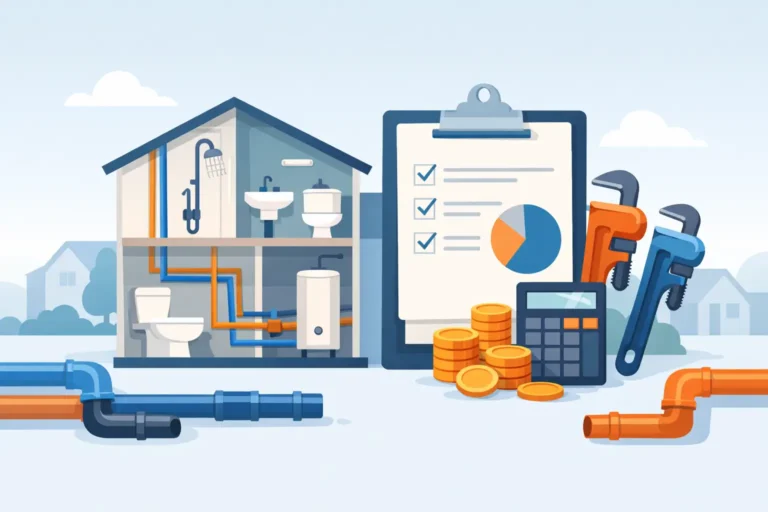

If your home has low water pressure in multiple rooms, rusty-looking water, recurring slab leaks, or pipes that seem to need one repair after another, the question usually stops being whether to repipe and becomes how much the project will cost. Whole house repiping cost can vary quite a bit, but there are clear reasons why one estimate comes in lower or higher than another.
For homeowners in Orange County and the Inland Empire, repiping is often a long-term investment rather than a quick fix. Older homes in places like Irvine, Mission Viejo, Laguna Hills, Pomona, and Rancho Cucamonga may have aging galvanized piping, worn copper lines, or hidden leak history that makes patchwork repairs less practical over time. A good repipe should solve the underlying problem, protect your walls and finishes as much as possible, and leave you with a plumbing system you can trust.
What is the typical whole house repiping cost?
In many cases, whole house repiping cost for a single-family home falls somewhere between $6,000 and $20,000 or more. That is a wide range, but it reflects how much the scope can change from one property to the next.
A smaller one-story home with easy access, fewer fixtures, and a straightforward layout will usually cost less than a larger two-story home with multiple bathrooms, premium finishes, difficult access points, and extensive wall repairs after the piping work is complete. If the project also includes replacing shut-off valves, supply lines, hose bibs, water pressure regulators, or sections of damaged drywall, the total will move upward.
That range is why phone quotes are rarely reliable for this kind of job. Repiping is one of those services where the details matter. A careful in-home evaluation gives a much more realistic picture of labor, materials, access challenges, and repair work afterward.
What drives whole house repiping cost the most?
The biggest factor is usually the size and layout of the home. More square footage generally means more pipe, more labor, and more time. But square footage alone does not tell the full story. A compact home with difficult routing can be more labor-intensive than a larger home with open access.
The number of plumbing fixtures matters too. Kitchens, bathrooms, laundry rooms, wet bars, and outdoor plumbing connections all add to the system. Every sink, shower, toilet, dishwasher, washing machine, and hose bib creates more connection points and more installation time.
Access is another major pricing factor. Homes with crawl spaces, accessible attics, or exposed utility areas are often easier to repipe than homes with limited access behind tile, custom cabinetry, plaster walls, or finished ceilings. If plumbers have to work around delicate finishes or tight framing conditions, labor costs increase.
Then there is the condition of the existing system. If the home has active leaks, code issues, corrosion, outdated shut-offs, or poor previous repairs, a repipe may need to include corrective work beyond simply replacing pipe runs. That can add value to the project, but it also adds cost.
Pipe material makes a difference
When homeowners compare estimates, they often focus on the bottom-line number first. That makes sense, but pipe material deserves just as much attention because it affects both price and long-term performance.
PEX repiping
PEX is often the more budget-friendly option for whole-home repipes. It is flexible, efficient to install, and well-suited to many residential layouts. Because it requires fewer fittings in some applications and can be easier to route through walls and ceilings, labor can be lower than with rigid piping systems.
For many homes, PEX offers solid value. It is a practical choice when you want dependable performance and a lower upfront cost. Still, local code requirements, water quality conditions, and installer experience all matter. The material itself is only part of the equation.
Copper repiping
Copper usually costs more than PEX, both in material and labor. It has a long track record and remains a preferred choice for some homeowners who want a traditional, durable piping material.
Copper repipes can be an excellent option, but they do tend to raise the project total. In some homes, that premium is worth it. In others, PEX may offer the more sensible balance of cost and performance. This is where a trustworthy plumbing contractor should explain the trade-offs clearly instead of pushing a one-size-fits-all answer.
Why one estimate can be thousands apart
It is normal to see large differences between repipe bids. That does not always mean one company is overcharging or another is giving you a bargain. Sometimes they are simply pricing different scopes of work.
One estimate may include permits, drywall access and patching, fixture reconnections, pressure testing, and final cleanup. Another may price only the pipe installation itself and leave wall repair, painting, or code upgrades to someone else. On paper, the cheaper bid looks appealing. In practice, the final cost may end up much closer once everything is added back in.
There is also a workmanship factor. Repiping is invasive work, and your home will feel that while the project is underway. Experienced installers plan routes carefully, protect surfaces, communicate clearly, and organize the work to reduce disruption. That level of service has value, especially in occupied homes.
Costs that homeowners sometimes miss
Whole house repiping cost is not always just about new pipes. There are a few related costs that can surprise homeowners if they are not discussed upfront.
Drywall cutting and patching is a common one. Plumbers often need to open walls or ceilings to run new lines. Some companies include rough patching, some offer full repair, and some leave it to a separate contractor. Knowing which version is in your estimate matters.
Permits and inspections can also affect price, depending on local jurisdiction and project scope. These are not glamorous line items, but they help ensure the work is done properly and to code.
You may also need upgrades to valves, supply stops, pressure regulation, or water heater connections. If the existing plumbing system has weak points beyond the pipes themselves, replacing only the main lines may not fully solve the problem.
When repiping is smarter than repeated repairs
A single leak does not always mean you need a full repipe. But repeated leaks in different areas, discolored water, inconsistent pressure, or a home with old galvanized piping often point to a larger system problem.
At that stage, continuing to repair sections one at a time can become the more expensive path. You pay for repeated diagnostics, repeated wall access, repeated restoration, and ongoing inconvenience. A planned repipe may cost more upfront, but it can stop the cycle of emergency calls and water damage risk.
This is especially true in older Southern California homes where plumbing systems have simply reached the end of their useful life. If you are already budgeting for leak repair every few months, it is worth asking whether that money would be better applied to a full replacement.
How to budget for a repipe without guessing
The most useful approach is to think in terms of scope, not just price. Ask what pipe material is being proposed, what repair work is included, how long the project should take, whether permits are handled, and what happens if hidden issues are uncovered once walls are opened.
It also helps to ask how the crew will protect your home and maintain water service during the project. Good planning reduces stress. In many cases, homeowners can remain in the home while the work is completed in phases, though there may be short periods when water is turned off.
If financing is available, that can make a full repipe more manageable, especially when compared with the unpredictable cost of recurring leaks and interior damage repairs. The right contractor should be transparent about pricing and realistic about what the job involves.
Choosing value, not just a low price
A repipe is not a cosmetic upgrade. It is a behind-the-walls system replacement that affects your daily comfort, water reliability, and property protection. That is why the lowest number is not always the best deal.
Look for a plumbing company with a strong local reputation, clear communication, and experience handling full-home projects. Homeowners want clean workmanship, honest recommendations, and a crew that respects the property while getting the job done right. That is the kind of service Just Right Services has built its reputation on across Orange County and the Inland Empire.
If you are weighing the cost of one more repair against the cost of replacing the system for good, the right next step is a thorough evaluation. A solid estimate should leave you with fewer questions, not more. When the plumbing in your home has become a constant source of stress, clarity is worth a lot.