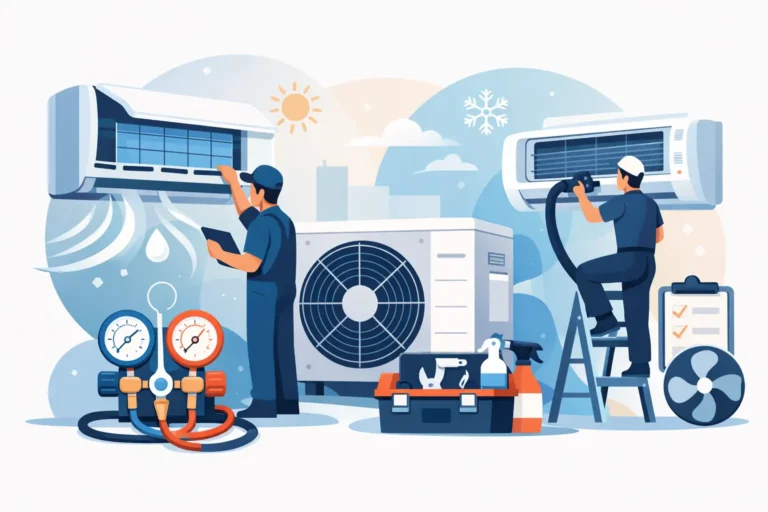

When your AC is running day and night through a Southern California heat wave, small issues do not stay small for long. If you have ever wondered what is included in air conditioner maintenance, the short answer is this: a professional tune-up is meant to keep your system clean, safe, efficient, and less likely to fail when you need it most.
For homeowners, landlords, and property managers, maintenance is not just a box to check. It is a practical way to protect comfort, control energy costs, and avoid the frustration of a breakdown in the middle of summer. A good maintenance visit should feel thorough, not rushed, and it should give you a clear picture of how your system is performing.
What is included in air conditioner maintenance service?
Air conditioner maintenance usually includes inspection, cleaning, testing, and adjustment of the key parts that affect performance. That often starts with the thermostat, because if the control is off, the rest of the system cannot operate the way it should. Your technician will check temperature readings, system response, and whether the unit is cycling properly.
From there, attention shifts to the indoor and outdoor components. On the indoor side, the evaporator coil, blower components, condensate drain, and air filter all play a role in airflow and cooling. On the outdoor side, the condenser coil, fan motor, electrical parts, and refrigerant performance are major priorities. Maintenance is not only about looking for obvious damage. It is about catching wear, buildup, and imbalance before they turn into expensive repairs.
That does not mean every visit is identical. What is included can vary a little depending on the age of the equipment, whether you have a central AC, heat pump, or ductless system, and how heavily the system has been used.
The cleaning work that makes the biggest difference
A large part of AC maintenance is cleaning. Dust, debris, and grime affect system efficiency more than many people realize. When the condenser coil outside gets coated with dirt, the unit has a harder time releasing heat. That can force it to run longer, increase electrical demand, and put more strain on the compressor.
Inside the home, the evaporator coil and blower assembly matter just as much. If these parts are dirty, airflow drops and cooling performance suffers. In some cases, restricted airflow can even contribute to coil freezing. Your technician may clean accessible components, inspect for heavy buildup, and recommend deeper cleaning if conditions call for it.
The condensate drain line is another common maintenance item. Air conditioners remove humidity as they cool, and that moisture has to drain away properly. If the line starts to clog, water can back up and cause leaks, water damage, or system shutoffs. Clearing and checking the drain is a simple step that can prevent a very inconvenient service call later.
Air filters are part of this conversation too. Some homeowners replace filters regularly, while others forget until airflow feels weak. During maintenance, the filter is checked for condition, correct sizing, and whether replacement is needed. A clean filter supports better airflow, helps protect internal components, and can improve indoor air quality.
Electrical and safety checks are a big part of the job
When people think about maintenance, they often picture cleaning first. That matters, but electrical inspection is just as important. Your AC relies on capacitors, contactors, wiring, relays, and connections that experience wear over time. A failing capacitor or loose electrical connection may not be obvious from the thermostat, but it can lead to poor performance or a sudden no-cool call.
During maintenance, a technician will typically inspect electrical components for signs of overheating, corrosion, or deterioration. They may test voltage and amperage readings to make sure motors and other parts are operating within expected ranges. Safety controls should also be checked, because those built-in protections help prevent damage when something goes wrong.
This part of maintenance is especially valuable for older systems. Equipment can keep running while certain parts slowly weaken in the background. Catching those warning signs early gives you more options. Instead of reacting to a breakdown on the hottest day of the year, you can plan a repair on your schedule.
Refrigerant and cooling performance checks
Another key part of what is included in air conditioner maintenance is checking how well the system is actually cooling. That goes beyond asking whether cold air is coming from the vents. A trained technician evaluates temperature split, refrigerant pressures, and overall system operation to see whether performance is where it should be.
Refrigerant is not something that should need routine topping off in a properly sealed system. If levels are low, that usually points to a leak or another issue that needs attention. A maintenance visit helps spot those concerns before they become compressor problems, comfort complaints, or much larger repair bills.
There is some nuance here. Not every system needs invasive refrigerant testing at every appointment, and responsible technicians do not add refrigerant without a reason. Good maintenance is not about selling extras. It is about verifying performance and recommending the next step only when the readings support it.
Airflow, moving parts, and overall system condition
Airflow is one of the biggest drivers of comfort and efficiency, so maintenance should include a close look at how air moves through the system. That means checking the blower, return and supply conditions, and general operation of the indoor unit. If airflow is weak, the cause could be something simple like a clogged filter or something more involved like duct leakage, blower wear, or coil buildup.
Moving parts also need attention. Fan motors and other components may be inspected for wear, unusual noise, or signs that bearings and mechanical parts are struggling. Modern systems vary, so not every unit has the same lubrication or service requirements, but the goal is the same: identify early signs of trouble before they cause a shutdown.
This is also the time to look at the unit as a whole. Is the equipment cabinet in good condition? Is the outdoor unit level and clear of debris? Are there signs of rust, vibration, pest intrusion, or insulation damage on refrigerant lines? These details may seem minor on their own, but together they shape system reliability.
What maintenance does not include
It helps to know what a standard maintenance visit usually does not cover. Full repairs, major part replacement, leak repair, duct reconstruction, and deep coil restoration are generally separate services if a problem is discovered. Maintenance is preventive by design. It is meant to inspect, clean, test, and tune the equipment, not rebuild the system in a single appointment.
That said, a thorough maintenance call should not leave you guessing. If a technician finds a worn capacitor, drainage issue, damaged insulation, or declining motor performance, you should get a clear explanation of the problem, the urgency, and your options. Honest communication matters just as much as the tune-up itself.
Why regular AC maintenance is worth it
The biggest benefit of regular maintenance is reduced risk. No service can guarantee your air conditioner will never fail, especially if the system is older. But maintenance can reduce strain, improve efficiency, and catch developing issues before they become emergencies.
That matters in places like Orange County and the Inland Empire, where cooling systems often work hard for long stretches of the year. A neglected AC may still run, but it usually runs less efficiently and with more wear. Higher utility bills, uneven cooling, short cycling, and surprise repairs often follow.
Routine service can also support better equipment life. When coils stay cleaner, airflow stays stronger, and electrical parts are monitored, the system has a better chance of aging normally. For property owners managing multiple units, that kind of consistency can make budgeting and planning much easier.
How often should air conditioner maintenance be done?
For most systems, once a year is the baseline recommendation, ideally before peak cooling season starts. Homes with pets, heavy AC use, dusty conditions, or indoor air quality concerns may benefit from closer attention. Commercial properties or high-demand systems often need a more customized maintenance schedule.
Older equipment also deserves a little more caution. If your AC is already showing signs of wear, annual service becomes even more valuable because small performance changes can reveal bigger problems on the horizon.
At Just Right Services, the goal of maintenance is simple: help customers stay comfortable without surprises. A quality tune-up should leave you with a cleaner system, a better understanding of its condition, and confidence that your AC is ready for the season ahead.
If you have been putting maintenance off because the system seems to be working fine, this is usually the best time to schedule it. Air conditioners rarely choose a convenient day to ask for help.