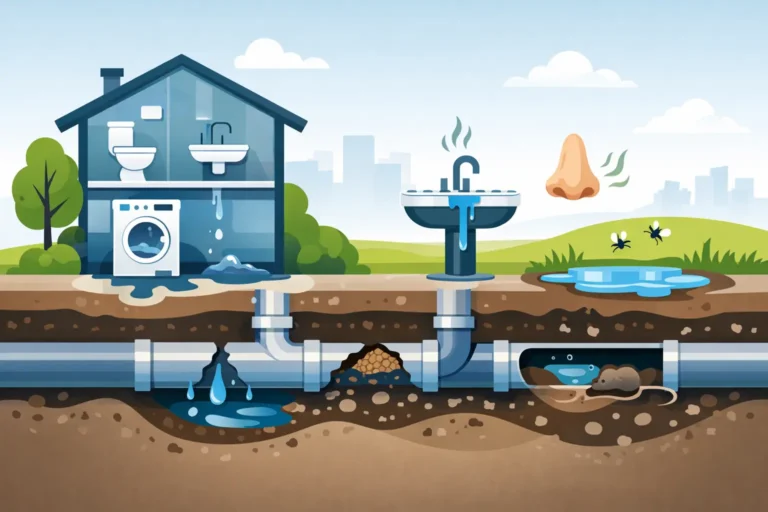

A sewer line problem rarely starts with a dramatic backup. More often, it begins with one drain running slower than usual, a toilet that gurgles after a shower, or a patch of lawn that never seems to dry out. Knowing the top signs sewer line damage can save you from a much bigger repair, especially if you catch the issue before wastewater has nowhere to go but back inside.
For homeowners and property managers, the hard part is that sewer line trouble can look like an ordinary clog at first. A blocked sink trap and a damaged main sewer line can both cause slow drainage. The difference is scale. When multiple fixtures start acting up at once, or the problem keeps coming back after clearing a drain, it is time to think beyond a simple clog.
Top signs sewer line damage is getting worse
The clearest warning sign is when more than one plumbing fixture is affected at the same time. If the shower backs up when the washing machine drains, or the toilet bubbles when you run the bathroom sink, that points to a problem deeper in the system. A main sewer line carries wastewater from the whole property, so when it is restricted or broken, symptoms often show up across several drains.
Slow drains throughout the building are another common red flag. One slow sink can mean hair, grease, or soap buildup in that branch line. But if tubs, toilets, and floor drains all seem sluggish, that is a different story. The issue may be a collapsed pipe, root intrusion, or a blockage in the sewer line itself.
Frequent backups deserve immediate attention. A single overflow is bad enough, but repeat sewage backups suggest the line is not moving wastewater the way it should. This is especially true if the lowest drains in the home, such as a first-floor shower or garage floor drain, are the first to overflow. Wastewater follows the path of least resistance, and low fixtures often show the problem first.
Gurgling sounds can also tell you a lot. Plumbing systems are designed to move water and air in a controlled way. When you hear bubbling from a toilet or a drain after using another fixture, trapped air may be pushing backward through the system. That often happens when a sewer line is partially blocked.
Smells, soggy spots, and other outdoor clues
Not every sewer line problem shows up indoors. In fact, some of the top signs of sewer line damage appear outside before a major indoor backup happens.
A persistent sewer odor around the yard, driveway, or foundation is one of the most obvious clues. Sewer lines should be sealed, so you should not smell wastewater outdoors. If that odor sticks around, especially near the line route from the house to the street or septic connection, there may be a crack, separation, or break in the pipe.
Soft, wet, or unusually green patches of grass can also point to trouble. Southern California properties do not always show the same soggy yard symptoms you might see in wetter parts of the country, but a leaking sewer line can still create a localized area that looks healthier, greener, or muddier than the surrounding lawn. Wastewater acts like a fertilizer. That may sound harmless, but it usually means the pipe is leaking below the surface.
Pest activity is another sign people do not always connect to sewer damage. Rats, insects, and other pests are attracted to moisture and waste. If you notice an increase in activity near drains, crawl spaces, or yard areas above the sewer line, it may be worth investigating further.
Foundation cracks or sink-like depressions in the yard are less common, but more serious. These can happen if a damaged sewer line leaks long enough to wash away soil. It depends on the age of the pipe, the soil conditions, and how long the leak has been there, but once the ground starts shifting, repair costs can rise quickly.
Why these problems happen
Sewer lines fail for a few main reasons, and the cause often affects the repair approach.
Tree root intrusion is a major one. Roots naturally grow toward moisture, and even a small crack or loose pipe joint can draw them in. Once inside, roots expand and catch debris, which turns a minor obstruction into a major blockage. Older homes in established neighborhoods are especially prone to this issue.
Pipe age matters too. Older clay, cast iron, or Orangeburg pipes are more vulnerable to cracking, corrosion, shifting, or collapse. Newer materials tend to hold up better, but no line is immune to poor installation, heavy ground movement, or years of buildup.
Grease, wipes, paper products, and hygiene items also cause damage over time. Some blockages start with everyday flushing or rinsing habits, then put enough pressure on weak sections of pipe to reveal larger structural issues. In that case, clearing the clog may restore flow for the moment, but it does not fix the underlying damage.
Ground settling and construction activity can play a role as well. If soil shifts under the line, joints may separate or sections may lose proper slope. A sewer line needs the right pitch to carry waste effectively. Too flat, and solids settle. Too steep, and liquids outrun solids. Either condition can lead to chronic problems.
When it is a clog and when it is likely sewer line damage
This is where many property owners wait too long. A basic drain clog usually affects one fixture, develops gradually, and often improves with straightforward cleaning. Sewer line damage tends to involve multiple fixtures, recurring symptoms, and signs outside the home.
Still, there is some overlap. A main line clog from roots or heavy buildup may look a lot like structural pipe damage at first. That is why a professional inspection matters. A sewer camera can show whether the issue is grease, roots, a belly in the line, cracked pipe walls, or a full collapse. Without that view, you are guessing.
Guessing gets expensive when the wrong fix is repeated. Snaking the same line again and again may bring short-term relief, but if the pipe is broken, the problem keeps returning. On the other hand, not every sewer issue means full replacement. Some lines can be cleaned, spot repaired, or rehabilitated depending on the condition and location of the damage.
What to do if you notice these warning signs
If you suspect sewer line trouble, the first step is simple – stop putting extra strain on the system. Avoid running large amounts of water, doing laundry, or using multiple fixtures until the issue is checked. If wastewater is already backing up, keep people and pets away from the area. Sewage can carry bacteria and create a real health risk.
Next, pay attention to patterns. Did the problem start after heavy root growth, recent landscaping, or ongoing slow drains? Are all bathrooms affected or just one side of the building? That information helps narrow down whether the issue is local or in the main line.
Then schedule a professional inspection. For homes and commercial properties in Orange County and the Inland Empire, speed matters. Sewer problems usually do not correct themselves, and the damage tends to spread the longer wastewater sits or leaks underground. A qualified plumbing team can inspect the line, explain what they found clearly, and recommend the most practical repair instead of pushing a one-size-fits-all answer.
At Just Right Services, that customer-first approach matters because sewer line concerns are stressful enough without vague answers or surprise pricing. Most people do not need a technical lecture. They need to know what is wrong, how urgent it is, and what the next step should be.
Don’t wait for a full backup
The biggest mistake with sewer line issues is treating early signs like a nuisance instead of a warning. A gurgling toilet, recurring drain problem, or unexplained sewer odor may not feel urgent today, but those are often the moments when the repair is still manageable.
If something about your plumbing system feels off, trust that instinct. Catching sewer line damage early can protect your home, your health, and your budget – and it gives you more repair options before the problem turns into a cleanup job.