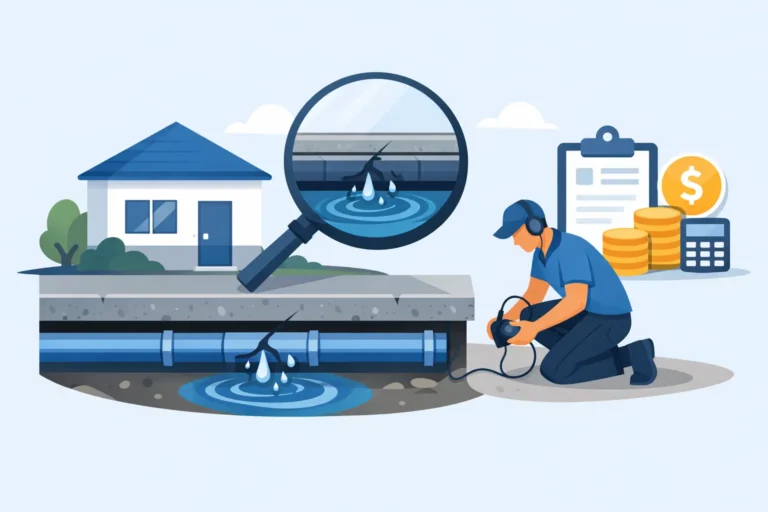

If your water bill suddenly jumps, you hear running water when everything is off, or warm spots start showing up on your floor, the next question is usually immediate: what is slab leak detection cost, and how much more will the repair add? That concern is real, especially in Southern California, where homes often sit on concrete slabs and small plumbing problems can turn expensive if they go unchecked.
A slab leak happens when a water line under the concrete foundation develops a leak. Finding it is not always simple. Unlike a dripping faucet or a visible pipe leak, the plumbing is hidden below the floor, so detection takes specialized tools, trained technicians, and a careful process. The good news is that paying for accurate detection early is often much cheaper than waiting for foundation damage, flooring replacement, mold issues, or a major pipe failure.
What affects slab leak detection cost?
Slab leak detection cost usually depends on access, technology, and how difficult the leak is to pinpoint. In many cases, homeowners can expect a few hundred dollars for standard detection, but that number can rise if the property is larger, the plumbing layout is complex, or multiple tests are needed.
One major factor is the type of leak. A pressurized water line leak is often easier to isolate than a slow drain line issue. Hot water slab leaks may leave clearer clues, such as warm flooring, but they can still require confirmation with acoustic listening equipment, pressure testing, or thermal imaging.
The size and layout of the property also matter. A single-story home with clear plumbing access is usually more straightforward than a large custom home, a commercial suite, or a property with additions and rerouted lines. If cabinets, flooring materials, or finished spaces make access more difficult, the diagnostic process may take longer.
Location matters too. Pricing can vary by region, and in Orange County and the Inland Empire, labor rates and response times may be different from national averages you see online. Emergency service, after-hours calls, and same-day dispatch can also affect the final price.
Typical slab leak detection cost range
For many homeowners, slab leak detection cost falls somewhere between $150 and $600 for a standard residential diagnostic visit. In more complex situations, especially when advanced equipment or extended testing is needed, the price can move higher.
That range is broad because detection is not a one-size-fits-all service. Some leaks are obvious once pressure testing starts. Others require a more layered approach, using electronic amplification equipment, infrared tools, line tracing, and experience to separate a true slab leak from other plumbing issues.
A lower-cost visit may cover a straightforward inspection where the source is found quickly. A higher-cost diagnostic may involve a larger structure, multiple possible leak locations, or the need to rule out irrigation lines, wall leaks, or fixture-related problems before confirming the issue under the slab.
If you are comparing estimates, make sure you understand what is included. Some companies charge a flat diagnostic fee. Others bill based on time, tools used, or whether the detection fee is applied toward repair work. Transparent pricing matters here because the cheapest initial number is not always the best value if it leads to guesswork or unnecessary demolition.
Why detection is separate from repair
Homeowners are sometimes surprised to learn that slab leak detection cost is usually separate from slab leak repair cost. That separation makes sense because finding the leak and fixing it are two different jobs.
Detection identifies the source with as little disruption as possible. Repair may involve breaking through concrete, rerouting pipes, tunneling, epoxy solutions in select cases, or replacing damaged sections of line. Until the exact leak location and pipe condition are known, it is hard to quote repair accurately.
This is actually better for the customer. A proper detection visit reduces uncertainty. Instead of opening up large sections of flooring or guessing at the leak path, the technician can recommend a targeted repair approach based on what is really happening under the slab.
What goes into a professional leak detection visit?
A quality slab leak inspection is more than listening for water. The technician usually starts by reviewing symptoms, checking your water usage patterns, and inspecting visible plumbing fixtures and shut-off points. From there, they may isolate sections of the system and perform pressure testing to confirm whether the leak is in the supply line.
Acoustic leak detection tools are often used to hear water movement or vibration beneath the slab. In some cases, infrared imaging helps identify temperature differences that point to hot water leaks. Line location tools can trace the pipe path so the technician can narrow the search area.
The value is not just in the equipment. It is in knowing how to interpret the readings. A reliable diagnosis should help you understand where the leak is, how urgent it is, and what repair options make the most sense for your property.
When a lower slab leak detection cost is not the better deal
It is tempting to shop for the lowest possible slab leak detection cost, but the lower number is not always the smarter choice. If a provider uses limited equipment or relies on assumptions instead of confirmed testing, you can end up paying more later through repeated visits, unnecessary concrete cutting, or missed leak locations.
Accurate detection protects your home and your budget. It can reduce repair time, minimize property damage, and help avoid tearing into floors that are not part of the problem. For homeowners with tile, hardwood, finished basements, or expensive interior finishes, that precision matters.
This is especially true for landlords and property managers. Lost time means frustrated tenants, possible business interruption, and a higher risk of water damage claims. Paying for a careful diagnosis up front often keeps the overall project more controlled.
Signs you should not wait on testing
Some slab leaks move slowly, but that does not mean they are harmless. Even a small underground leak can waste water for weeks or months while eroding soil beneath the foundation.
You should schedule testing if you notice unexplained increases in your water bill, the sound of running water when fixtures are off, damp flooring, warm spots on the slab, low water pressure, cracks in flooring, or mildew odors with no clear source. In commercial spaces, signs may also include unexplained moisture near walls, utility cost spikes, or complaints about water pressure in multiple units.
The longer you wait, the more the math can change. What begins as a moderate slab leak detection cost can become a much larger repair if flooring, drywall, cabinetry, or foundation stability are affected.
Questions to ask before approving service
Before you move forward, ask whether the quoted price includes pressure testing, acoustic detection, or thermal imaging if needed. Ask whether the fee is flat-rate or variable, and whether any part of it can be credited toward repair.
You should also ask what happens after the leak is located. Will you receive repair options? Will the technician explain whether spot repair, rerouting, or repiping is the better long-term move? Good service is not just about finding the leak. It is about giving you a clear path forward.
If the home is older, it is worth asking whether the detected leak may be part of a larger piping issue. In some houses, one slab leak is an isolated problem. In others, aging copper or shifting conditions can make repeat leaks more likely. That is where experience matters, because the lowest repair today may not be the most cost-effective choice over the next few years.
How local conditions can influence price
In Southern California, slab leak concerns are common enough that homeowners should take them seriously. Concrete slab construction, aging pipes in some neighborhoods, soil movement, and high property values all make early detection worthwhile.
A company serving Orange County and the Inland Empire also needs to understand the practical side of local service: fast dispatch, clear communication, and respect for your home or property. When water is moving under a slab, you do not want vague answers. You want a technician who can identify the issue, explain the pricing, and help you make a confident next decision.
That is why many homeowners look beyond the sticker price alone. They want just-right pricing, but they also want clean workmanship, honest recommendations, and a team that shows up prepared. For a problem as disruptive as a slab leak, that balance matters.
A fair slab leak detection cost is really about value, not just the invoice. If the testing is accurate, the pricing is clear, and the next steps are explained in plain language, you are in a much better position to protect your property before a hidden leak turns into a much bigger repair.