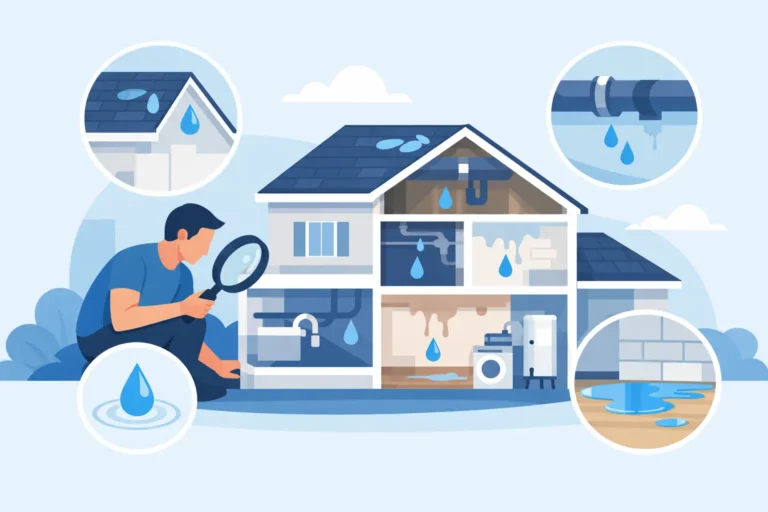

A higher water bill is often the first clue. You have not changed your routine, no one is taking extra showers, and yet the numbers jump. That is exactly why a homeowner guide to leak detection matters. Small leaks rarely stay small for long, and in Southern California homes, they can damage drywall, flooring, cabinets, foundations, and even indoor air quality before the source is obvious.
The good news is that not every leak turns into a major repair. Early detection gives you options. It can mean the difference between a quick fixture fix and a much larger restoration project.
Why leak detection matters more than most homeowners expect
Water does not need a dramatic burst pipe to cause expensive problems. A slow drip behind a wall or under a slab can go unnoticed for weeks. By the time you see staining, warped flooring, or peeling paint, the leak may have been active much longer than you think.
Leaks also create secondary issues. Moisture can lead to mold growth, wood damage, musty odors, and higher utility bills. If the leak is in a hot water line, you may also be paying to heat water you never use. For homeowners, landlords, and property managers, that adds up quickly.
There is also a practical trade-off here. Some leaks are easy to spot and monitor, while others are hidden in walls, ceilings, crawl spaces, irrigation lines, or underground piping. Knowing when to investigate yourself and when to bring in a professional is what saves time and money.
Homeowner guide to leak detection: the warning signs to watch
Most hidden leaks leave a trail, just not always an obvious one. The first sign could be a sound, a smell, a stain, or a shift in water pressure.
A sudden increase in your water bill is one of the most common red flags. If your usage habits have stayed the same, your plumbing system may be losing water somewhere. You might also hear running water when no fixture is on, notice damp spots on flooring, or see bubbling paint on a wall or ceiling.
Some leaks show up as subtle changes around the home. A room may start to smell musty. Baseboards may swell. Tile or hardwood may feel slightly warm or soft in one area. Outside, you might notice an unusually green patch of lawn, soggy soil, or pooling near the foundation even when irrigation is off.
None of these signs prove the exact source on their own. But they do tell you not to ignore the problem.
Simple leak checks you can do at home
Homeowners can catch a surprising number of leaks with a careful walkthrough. Start with the fixtures you use every day. Check under sinks for moisture, corrosion, or water stains. Look behind toilets and around supply lines. Open the cabinet below your kitchen sink and feel for dampness along drain connections and shutoff valves.
Next, inspect visible plumbing around your water heater, washing machine, dishwasher, and refrigerator water line. Appliance leaks are often slow and intermittent, which makes them easy to miss. A little moisture near a hose connection today can become damaged flooring tomorrow.
If you have outdoor plumbing, check hose bibs, irrigation valves, and exposed lines. In many Southern California properties, outdoor water use is significant, so irrigation leaks can waste a lot of water without being noticed right away.
One of the best at-home tests is the water meter check. Turn off all faucets, appliances, and irrigation. Make sure no water is being used anywhere on the property, then look at your water meter. If the meter is still moving, there is a good chance water is escaping somewhere in the system.
You can also try a toilet dye test. Add a few drops of food coloring to the tank and wait about 15 minutes without flushing. If color appears in the bowl, the flapper is leaking. It is a simple problem, but one that can waste a surprising amount of water over time.
The leaks homeowners miss most often
The hardest leaks to catch are the ones hidden behind finished surfaces or below the home. Slab leaks are a common example. Because the water line runs under the foundation, the leak may only reveal itself through warm floor spots, reduced water pressure, damp flooring, or unexplained water use.
Wall leaks can be just as tricky. Water may travel along framing before it appears, so the visible stain is not always directly beneath the source. Ceiling leaks also create confusion because homeowners often assume the roof is to blame, when the issue could actually be plumbing from a bathroom or laundry room above.
Some leaks are not active all the time. A drain line might only leak when a sink is running. A washing machine hose may drip during the fill cycle. An HVAC issue such as clogged condensate drainage can even mimic a plumbing leak in certain areas of the home. That is why accurate diagnosis matters. Guessing can lead to fixing the wrong problem first.
When to call a professional for leak detection
If you have clear signs of a leak but cannot find the source, it is time to call a pro. The same applies if your water meter suggests a leak, but all visible fixtures and appliances appear dry. Hidden leaks require the right tools and experience, especially when the goal is to locate the problem with as little disruption as possible.
Professional leak detection can involve acoustic listening equipment, pressure testing, thermal imaging, and other non-invasive methods that help narrow down the source. That is especially valuable when the leak may be under concrete, behind tile, or inside a wall cavity.
It also makes sense to call right away if you notice water damage spreading, ceiling sagging, moldy odors, or signs of a slab leak. Waiting for confirmation in those situations usually costs more than acting quickly. A dependable local company like Just Right Services can help identify the issue and explain the next step clearly, which matters when you are trying to make a fast decision without adding more stress.
What to do while you wait for service
If the leak is active and visible, shut off the nearest fixture valve if you can do so safely. For a larger or unknown leak, turn off the home’s main water supply. That one step can prevent a lot of additional damage.
Move rugs, furniture, and stored items away from the wet area. If water is near electrical outlets or appliances, avoid contact and use caution. Taking photos of visible damage can also help with documentation if repairs become more extensive.
What you should not do is start opening walls or flooring unless you are confident about the source. Homeowners sometimes make a small repair problem larger by cutting into the wrong area or damaging nearby plumbing.
Preventing future leaks without overreacting
A good homeowner guide to leak detection should also talk about prevention, because the best leak is the one you never have to repair. That does not mean constant worry or replacing every pipe in sight. It means paying attention to the parts of your plumbing system that age, loosen, corrode, or wear out.
Check supply lines and shutoff valves from time to time, especially under sinks and behind toilets. Replace old washing machine hoses before they fail. Keep an eye on your water heater for rust, moisture, or pooling around the base. If your home is older, ask about the condition of the piping material and whether proactive upgrades make sense.
It also helps to know your home’s normal baseline. If you understand what your water bill usually looks like, how your flooring feels, and where your shutoff valves are located, changes are easier to catch early. For landlords and property managers, regular inspections between tenants can prevent a small unnoticed leak from turning into a much bigger turnover expense.
Leak detection is not really about chasing worst-case scenarios. It is about staying ahead of the kind of problem that gets more expensive the longer it hides. If something feels off, trust that instinct, check what you can, and get expert help before water has more time to spread.