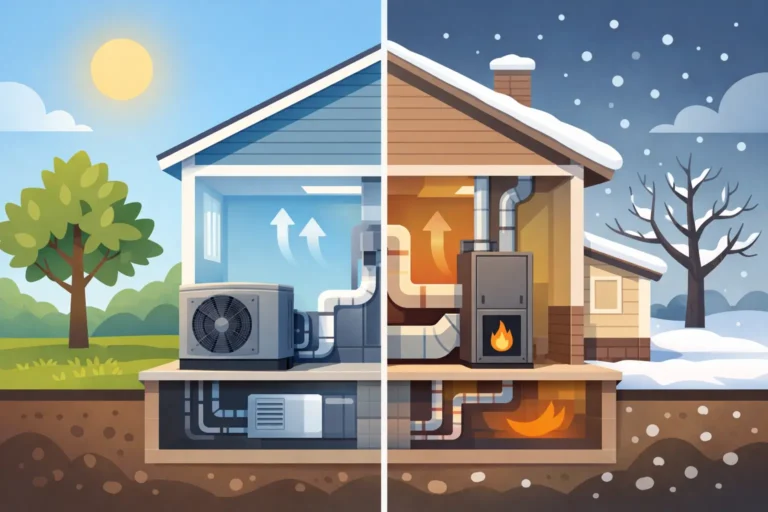

A heating system usually gets your attention on the first cold morning when the house feels off and the thermostat keeps climbing. If you’re weighing a heat pump vs furnace decision, the right answer depends less on hype and more on how your home is built, how you use it, and what kind of comfort you expect during Southern California winters.
For homeowners and property managers in Orange County and the Inland Empire, this question comes up most often during a replacement. Maybe the old furnace is aging out, maybe energy bills are creeping up, or maybe you’re replacing both heating and cooling equipment at the same time. Those details matter, because a furnace and a heat pump solve the same problem in very different ways.
Heat pump vs furnace: the basic difference
A furnace creates heat. In most homes, that means burning natural gas and pushing warm air through the ductwork. When the thermostat calls for heat, the furnace fires up and delivers a strong burst of warm air fairly quickly.
A heat pump works differently. It does not create heat by burning fuel. It moves heat from the outdoor air into your home. In cooling mode, it reverses direction and acts like an air conditioner. That dual-purpose design is a big reason many homeowners take a close look at heat pumps when it’s time for an HVAC upgrade.
The biggest practical difference is this: a furnace is heating-only, while a heat pump handles both heating and cooling. If your air conditioner and heater are both near the end of their service life, a heat pump can be an especially attractive option.
How each system feels day to day
Comfort is not just about the number on the thermostat. It is about how the air feels, how evenly temperatures hold from room to room, and how often the system cycles on and off.
A furnace usually delivers hotter supply air. When it turns on, you feel a stronger blast of warmth from the vents. Many people like that immediate response, especially on chilly mornings. Furnaces also tend to perform very well when outdoor temperatures drop suddenly.
A heat pump generally heats more gradually. The air coming from the vents may feel warm, but not as hot as furnace air. That does not mean it is underperforming. It simply means the system is designed to maintain comfort steadily rather than hit the house with short, intense bursts of heat.
In Southern California, that steady operation often fits the climate well. Winters in Irvine, Mission Viejo, Laguna Niguel, and nearby communities are usually mild compared with colder parts of the country. A quality heat pump can often maintain indoor comfort very efficiently in these conditions.
Energy efficiency and utility costs
This is where the conversation gets more nuanced.
Heat pumps are known for efficiency because they transfer heat rather than generate it directly. In mild climates, they can be very cost-effective to run. Since they also provide cooling, upgrading to a modern heat pump can improve year-round efficiency if you’re replacing older equipment.
A gas furnace can still make strong financial sense, especially if natural gas rates are favorable and your home already has a well-designed gas heating setup. High-efficiency furnaces have come a long way, and in some households they remain the lower-cost heating choice during winter.
The catch is that utility costs are local and change over time. The better question is not which system is universally cheaper. The better question is which system is more cost-effective for your specific home, ductwork, insulation levels, square footage, and usage patterns.
If a home has poor duct sealing, inadequate insulation, or major air leakage, either system will work harder than it should. That is why equipment choice and home performance should always be considered together.
Installation cost and replacement timing
For many families, the budget conversation starts before efficiency does.
If you already have a gas furnace and central AC, replacing the furnace with another furnace may be the simpler path. The infrastructure is already there, and the decision may be straightforward if the air conditioner still has useful life left.
If both systems are aging, a heat pump may offer better long-term value because it replaces both heating and cooling with one integrated system. In some cases, that can simplify equipment planning and reduce the number of major replacements you face over time.
That said, installation cost is not just about the equipment. It may also involve duct modifications, electrical upgrades, thermostat compatibility, refrigerant line considerations, and whether the system is properly sized for the building. A lower sticker price does not always mean a better overall outcome.
What works best in Southern California
In this region, climate usually tilts the conversation in favor of heat pumps more than it would in colder states.
A heat pump is often a strong match for homes in Orange County where winter heating demand is moderate and air conditioning is used more heavily across the year. Homeowners who want all-electric operation or are looking to move away from gas may also prefer this route.
A furnace still has advantages. In some Inland Empire locations, winter nights can get colder, and some homeowners simply prefer the stronger heat delivery of a gas system. Larger homes with existing gas infrastructure may also be good candidates to stay with a furnace, especially if the current setup has performed well.
There is no one-size-fits-all answer. The best choice depends on the home, the budget, the age of the current system, and whether your priority is lower operating costs, stronger heat, lower upfront disruption, or a more all-in-one solution.
Heat pump vs furnace for older homes and rental properties
Older homes often come with their own set of realities. Ductwork may be undersized or leaky. Insulation may be inconsistent. Rooms may heat unevenly. In these cases, replacing the equipment without addressing airflow or duct performance can leave comfort problems unresolved.
For rental properties, landlords usually want a balance of reliability, reasonable operating costs, and manageable replacement expense. A furnace can be a practical option if the home already has gas service and a separate AC system that still works well. A heat pump may be attractive when both heating and cooling need replacement and the goal is to modernize the property with a single high-efficiency system.
Property managers also have to think about serviceability. Choosing equipment that is sized correctly, installed cleanly, and supported by a dependable local HVAC team matters just as much as the equipment type itself.
Maintenance and repair considerations
Neither system is maintenance-free.
Furnaces need regular inspection for safe operation, burner performance, airflow, and heat exchanger concerns. Because they involve combustion, professional maintenance is important for both efficiency and safety.
Heat pumps also need routine service. Since they operate for both heating and cooling, they work across more of the year. That means coil condition, refrigerant charge, electrical components, filters, and outdoor unit performance all need attention.
From a homeowner’s perspective, the key is consistency. A well-maintained furnace can last a long time. A well-maintained heat pump can deliver efficient comfort for years. Neglect either one, and energy waste and repair risk go up.
When a heat pump is the better fit
A heat pump often makes the most sense when you want one system for heating and cooling, your climate is relatively mild, and energy efficiency is a top priority. It is also a smart option when your current furnace and AC are both nearing replacement age.
It can be especially appealing for homeowners planning longer-term upgrades. If you’re thinking about indoor air quality improvements, duct sealing, zoning, or a broader HVAC refresh, a heat pump can fit well into that plan.
When a furnace is the better fit
A furnace is often the better fit when you want fast, stronger-feeling heat and your existing gas heating system has worked well for your household. It can also make sense if the air conditioner is still in good shape and you’re only replacing the heater.
For some homes, keeping a furnace avoids unnecessary changes to a setup that already matches the building. That can be the most practical decision, especially when comfort expectations are high and the home responds well to gas heat.
The decision comes down to the house, not just the equipment
The smartest heat pump vs furnace decision usually comes from an honest evaluation, not a sales pitch. That means looking at insulation, duct condition, utility costs, square footage, comfort complaints, and how long you plan to stay in the property.
A trustworthy HVAC contractor should be willing to talk through trade-offs clearly. If a heat pump is the right fit, you should hear why. If a furnace is the better move, that should be explained just as plainly. At Just Right Services, that kind of straightforward guidance is part of what homeowners expect when they’re making a major comfort investment.
If you’re deciding between the two, focus on what will feel right in your home five winters from now, not just what sounds good on paper today.