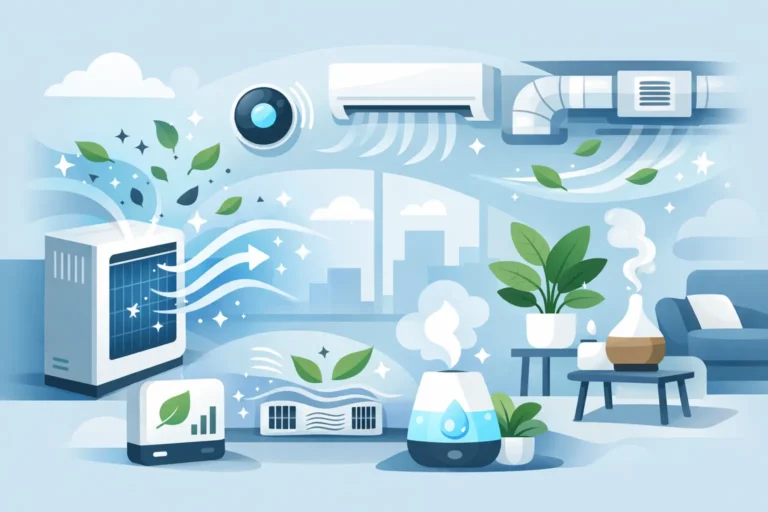
If your home smells dusty when the AC kicks on, your allergies never quite settle down, or one room always feels stale, your air system may be working harder than it should. The best indoor air quality upgrades do more than make the air feel fresher – they help reduce airborne particles, improve comfort, and support a healthier indoor environment for your family or tenants.
In Southern California, indoor air quality can be affected by more than just what happens inside your home. Wildfire smoke, dry air, traffic pollution, pet dander, older ductwork, and tightly sealed newer homes all play a role. That is why the right upgrade is not always the most expensive one. It is the one that matches your space, your HVAC system, and the way the building is actually used.
How to choose the best indoor air quality upgrades
A lot of homeowners assume indoor air quality starts and ends with changing the filter. Filters matter, but they are only one part of the picture. Good air quality depends on how air is filtered, moved, balanced, and controlled.
The first step is identifying the real issue. If you are dealing with allergy symptoms, filtration may be the priority. If your home feels muggy, dry, or musty, humidity control may be more important. If dust builds up fast or some rooms never seem comfortable, the problem may be leaking ducts or poor airflow instead of dirty air alone.
That is why a professional evaluation often saves money in the long run. It keeps you from paying for add-ons that sound good but do not address the source of the problem.
1. Upgraded media air filtration
For many homes and light commercial spaces, this is the smartest place to start. A high-efficiency media filter captures smaller airborne particles than a basic one-inch filter, including dust, pollen, lint, and some mold spores. It can make a noticeable difference for people with allergies or asthma, especially during seasons when outdoor air quality is poor.
The key is choosing a filter your system can handle. Higher filtration is not automatically better if it restricts airflow too much. An oversized or poorly matched filter can strain the HVAC system, reduce efficiency, and create comfort issues. The goal is better filtration without choking the equipment.
A properly selected media cabinet and filter setup usually offers a strong balance of performance, maintenance, and value. For many properties, it is one of the best returns on investment.
2. Whole-home air purifiers
When standard filtration is not enough, a whole-home air purifier can add another layer of protection. These systems are installed in the HVAC system and treat air as it circulates through the home or building.
Different technologies serve different purposes. Some focus on capturing ultrafine particles, while others are designed to reduce odors, chemical vapors, or biological contaminants. That is where homeowners need to be careful. Not every purifier marketed as advanced is the right fit, and some low-quality products make big promises without much real-world benefit.
The best use case is usually a home with pets, recurring odors, high sensitivity to airborne irritants, or concerns during wildfire season. In those situations, an air purifier can be a meaningful upgrade, especially when paired with strong filtration and proper duct performance.
3. Duct sealing for cleaner, more consistent air
This is one of the most overlooked indoor air quality improvements. If your ductwork has leaks, gaps, or disconnected sections, it can pull in dust, insulation particles, and attic or crawlspace air before sending it through your vents. That means the air entering your rooms may already be contaminated before it ever reaches you.
Leaky ducts also waste conditioned air and create uneven temperatures. You may notice one room feels fine while another stays stuffy or dusty no matter how much the system runs.
Sealing ducts helps in two ways. It keeps pollutants out of the air stream, and it improves airflow delivery throughout the property. For older homes in Orange County and the Inland Empire, this upgrade can make a bigger difference than many people expect.
4. Professional duct cleaning when it is actually needed
Duct cleaning is useful, but it is not something every building needs on a fixed schedule. If the duct system contains heavy dust buildup, post-remodel debris, pet hair, or signs of contamination, cleaning can improve both air quality and system cleanliness. It can also help after a long period of deferred maintenance.
That said, duct cleaning is not a cure-all. If the ducts are still leaking, dirty coils are left untouched, or filtration is inadequate, dust will come back quickly. Cleaning works best when it is part of a larger plan, not a one-time fix for every air quality complaint.
A trustworthy contractor should tell you when duct cleaning makes sense and when another repair or upgrade is the better investment.
5. Humidity control that matches the home
Southern California does not always get talked about as a humidity-control market, but indoor moisture still matters. Bathrooms without proper ventilation, coastal humidity, poor airflow, and tightly sealed homes can all contribute to damp areas and musty smells. On the other hand, very dry indoor air can irritate sinuses, skin, and throats.
Humidity control is one of the best indoor air quality upgrades because comfort and air quality are closely connected. Too much moisture can encourage mold and mildew. Too little can make the air feel harsh and uncomfortable.
Depending on the property, the right solution might be improved ventilation, a whole-home dehumidifier, or a humidification strategy during the driest parts of the year. This is very much an it-depends category. The local climate, the age of the home, and the way the HVAC system is set up all matter.
6. UV air treatment in the right application
UV technology is often discussed for indoor air quality, and it can be helpful in the right place. In HVAC systems, UV lights are commonly used near the indoor coil to reduce biological growth on damp surfaces where mold and bacteria are more likely to develop.
That matters because a dirty or contaminated coil can affect both air quality and system efficiency. Keeping that area cleaner can support better airflow and reduce musty odors.
UV is not a replacement for filtration, maintenance, or duct repairs. It is a targeted upgrade. For homes with recurring microbial growth near HVAC components or moisture-related concerns, it may be worth considering. For others, better filtration or duct sealing may deliver a more noticeable result first.
7. Ventilation upgrades for fresh-air balance
Some buildings have the opposite problem of older drafty homes – they are sealed so tightly that stale indoor air lingers. Cooking fumes, cleaning product odors, off-gassing from furniture, and everyday household pollutants can build up when there is not enough controlled fresh-air exchange.
Ventilation upgrades can help bring in outdoor air in a more intentional way, rather than relying on random leaks or constantly opening windows. This can be especially helpful in commercial spaces, rentals, and newer homes where occupancy is high and air turnover matters.
Of course, ventilation has to be handled carefully in Southern California. On poor outdoor air quality days, bringing in outside air without proper filtration may create a new problem. That is why balanced ventilation and smart system design matter more than a one-size-fits-all approach.
What usually gives the best results first
If you want the biggest impact without overcomplicating the project, start with the fundamentals. In many homes, the best path is a combination of upgraded filtration, duct sealing, and HVAC inspection or maintenance. Those three steps often solve the most common issues tied to dust, uneven airflow, and stale indoor air.
After that, it makes sense to look at targeted upgrades. A purifier may help with pets or wildfire smoke concerns. UV treatment may help with coil contamination. Humidity control may be the missing piece in homes that feel damp or overly dry.
This is where working with an experienced HVAC team matters. A good recommendation should be based on what your system is doing, not on a generic sales package. Just Right Services helps homeowners and property managers across Orange County and the Inland Empire sort through those choices with a practical approach that fits the property, the budget, and the real air-quality issue.
Clean indoor air is not about chasing every add-on on the market. It is about making the right improvements in the right order, so your home or building feels healthier, more comfortable, and easier to live in every day.