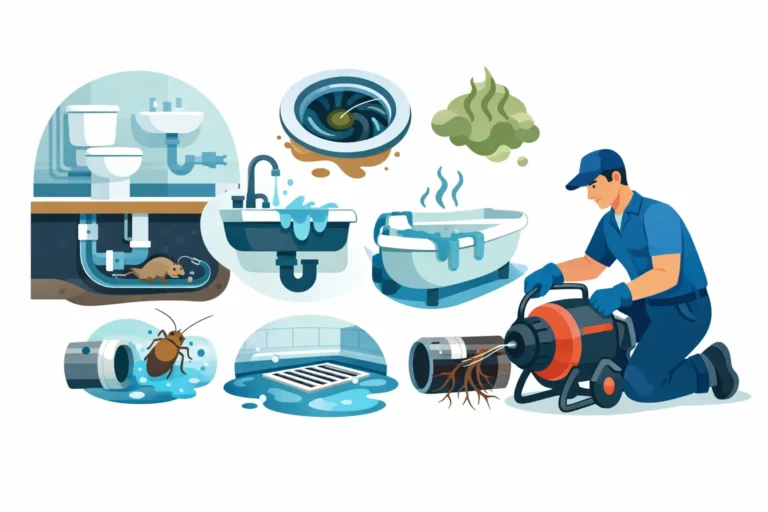

A toilet that bubbles when the washing machine drains is more than an odd plumbing quirk. It can be one of the clearest signs you need sewer cleaning. Because every fixture in a home or commercial property connects to a main sewer line, a blockage there can affect far more than one sink or shower.
In Orange County and the Inland Empire, sewer line problems may develop from grease buildup, aging pipes, tree roots, scale, or debris that should never have gone down a drain. The earlier you recognize the warning signs, the better your chance of clearing the line before wastewater backs up into the property.
7 Signs You Need Sewer Cleaning
1. Multiple drains are slow at the same time
One slow bathroom sink may be caused by hair or soap buildup in that fixture’s drain. But when the kitchen sink, shower, tub, and toilets all begin draining slowly, the issue may be farther down the system. A partial blockage in the main sewer line restricts how quickly wastewater can leave the property.
Pay attention to the pattern. If several drains are sluggish, especially on the lowest floor of the home, a basic plunger or store-bought drain cleaner is unlikely to solve the real problem. Professional sewer cleaning can remove the buildup and help identify whether roots, pipe damage, or another obstruction is involved.
2. Toilets bubble, gurgle, or change the water level
A healthy plumbing system moves water smoothly and allows air to vent properly. When a sewer line is partially blocked, air can get pushed back through nearby fixtures. You may hear gurgling from a toilet after running the sink, see bubbles in the toilet bowl, or notice the bowl’s water level rise and fall unexpectedly.
These symptoms are easy to overlook if they happen only once. Repeated bubbling or gurgling, however, deserves a prompt inspection. Continued use can add more water to a line that is already struggling to drain.
3. Water backs up in a tub, shower, sink, or floor drain
Sewage does not always come up where the clog began. If the main line is blocked, wastewater follows the path of least resistance, which is often a low fixture such as a shower, bathtub, laundry drain, or ground-level floor drain.
For example, flushing a toilet may cause dirty water to rise in the shower. Running the washing machine may lead to water appearing at a floor drain. This is a serious warning sign, not a wait-and-see situation. Stop using water-heavy appliances and fixtures until a qualified plumber can assess the line. Limiting water use can reduce the risk of a larger, more damaging overflow.
4. Sewer odors linger inside or outside
Your sewer system is designed to keep wastewater and sewer gases contained. Persistent odors near drains, toilets, cleanouts, crawl spaces, or the yard can mean waste is not moving through the line as it should. A buildup inside the pipe can trap material and create unpleasant odors, while a more severe blockage or damaged pipe may allow odors to escape.
A dry drain trap can also cause a temporary sewer smell, particularly in a rarely used guest bathroom. Running water in that fixture may restore the water seal. But if the odor returns, spreads through the home, or is accompanied by slow drains and gurgling, it is time for professional help.
5. The same drain clog keeps coming back
A drain that needs attention every few weeks is telling you something. Repeated clogs can happen when a local drain was never fully cleared, but they can also point to a developing sewer line obstruction. Grease, wipes, paper products, food scraps, and mineral buildup may catch on rough areas inside the pipe and continue collecting debris.
Chemical drain cleaners are not a dependable answer for recurring problems. They may fail to reach a main-line blockage, and harsh products can create heat or damage in some plumbing systems. A professional cleaning method, selected for the condition of the pipe, is a safer way to remove the obstruction rather than simply pushing a small opening through it.
6. Your yard has wet spots, unusually green patches, or a sewage smell
Not every sewer problem stays indoors. A damaged or obstructed line can contribute to damp soil, pooling water, soft areas of the yard, or patches of grass that look greener and grow faster than the surrounding lawn. These signs do not automatically mean the sewer line has failed. Irrigation leaks and drainage issues can create similar symptoms.
Still, a persistent sewer odor outdoors or unexplained wet ground should be investigated. In older neighborhoods, pipe materials and root intrusion can be factors. Tree roots naturally seek moisture, and even a small opening in a sewer pipe can attract roots that expand inside the line over time.
7. You have had a sewer backup before
A past backup raises the odds of another one, especially if the line was only temporarily opened instead of thoroughly cleaned and inspected. The cause could be a recurring root problem, heavy scale inside an older pipe, a shifted pipe section, or ongoing use habits that allow grease and non-flushable items into the system.
A camera inspection can be especially helpful after repeat issues. It allows a technician to see the condition of the line and recommend the right next step. Sometimes thorough cleaning is all that is needed. In other cases, the camera may reveal cracks, bellies, root intrusion, or deterioration that cleaning alone cannot correct.
When Sewer Cleaning Is Enough and When Repair May Be Needed
Sewer cleaning removes material that is blocking or narrowing the pipe. Depending on the situation, a plumber may use a cable machine to cut through roots or compacted debris, or hydro jetting to clear buildup from pipe walls with controlled high-pressure water. The right method depends on the pipe material, its condition, and the type of blockage.
Cleaning is often an effective solution for grease, sludge, scale, roots, and accumulated debris. It is not a permanent repair for a collapsed, severely corroded, misaligned, or broken pipe. That is why a clear diagnosis matters. A trustworthy technician should explain what was found, what cleaning can reasonably accomplish, and whether repairs should be planned to prevent future backups.
For landlords and property managers, this distinction is particularly important. A recurring backup can disrupt tenants, damage finishes, and create sanitation concerns. Addressing the underlying cause helps protect the property as well as the people using it.
What to Do Before a Plumber Arrives
If you suspect a main sewer line blockage, avoid running dishwashers, washing machines, showers, and multiple faucets. Do not keep flushing a slow or overflowing toilet. If wastewater has entered the home or business, keep people and pets away from the affected area and avoid contact with contaminated water.
If it is safe to do so, note which fixtures are affected and what was happening immediately before the backup. That information can help the technician narrow down the issue. You can also check whether an exterior cleanout is overflowing, but do not attempt to open a pressurized cleanout or clear the line yourself.
Help Prevent Future Sewer Line Clogs
A few daily habits can make a meaningful difference. Keep cooking grease, coffee grounds, food scraps, wipes, hygiene products, and paper towels out of drains and toilets. Even products labeled flushable can contribute to sewer clogs when they do not break down quickly enough.
For homes with mature trees, older sewer piping, or a history of root intrusion, scheduled maintenance and periodic camera inspections can be a smart preventive step. The right timing depends on the property and past service history. A newer home with no symptoms may not need routine cleaning as often as an older property with established root activity.
Sewer issues rarely improve by being ignored. If several fixtures are acting up, odors are lingering, or water is backing up where it should not, prompt professional service can protect your property from a much bigger mess. Just Right Services can help homeowners and businesses identify the cause and recommend a clear, practical next step – day or night.