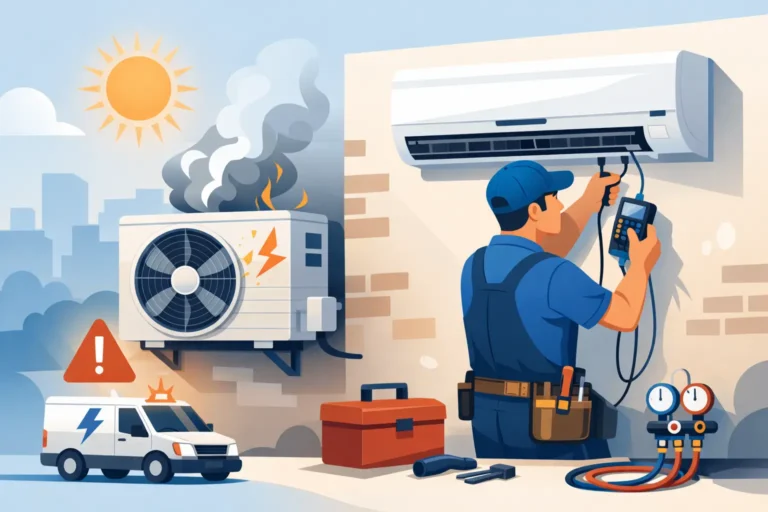

A Southern California AC failure can go from inconvenient to urgent quickly, especially when indoor temperatures climb, children or older family members are home, or a business needs to stay open. This guide to emergency AC repair explains what to do in the first few minutes, what not to touch, and when it is time to call for professional help.
The goal is not to turn a homeowner or property manager into an HVAC technician. It is to protect people, prevent additional equipment damage, and give a qualified technician the clearest possible picture of the problem when help arrives.
When an AC Problem Is a Real Emergency
Not every air conditioner issue requires a middle-of-the-night visit. A system that is running but cooling a few degrees below normal may be able to wait for a scheduled appointment, particularly if the home is safe and occupants can stay comfortable. But certain symptoms should be treated as urgent.
Call for emergency AC repair when the system has stopped cooling during extreme heat, particularly if anyone in the building is vulnerable to heat-related illness. A complete loss of cooling also deserves fast attention in server rooms, restaurants, medical offices, rental properties, and other commercial spaces where heat can interrupt operations or damage equipment.
Electrical and safety symptoms raise the urgency. Shut the system down and arrange professional service if you notice a burning smell, smoke, sparking, repeated breaker trips, unusual buzzing near electrical components, or water pooling around equipment. Likewise, turn the system off if you hear loud grinding, screeching, banging, or metal-on-metal sounds. Continuing to run it can turn a repairable issue into a major component failure.
A refrigerant concern should also be handled carefully. Hissing near refrigerant lines, oily residue around the outdoor unit, or a system that suddenly stops cooling can point to a leak or another sealed-system issue. Refrigerant work requires the proper training, equipment, and handling procedures. It is not a DIY repair.
What to Do Before You Call
A few safe checks can sometimes restore cooling or help narrow down the problem. They should take only a few minutes. If you smell burning, see smoke, hear electrical arcing, or suspect a gas-related issue from another appliance, skip these checks and call for help immediately.
First, check the thermostat. Make sure it is set to Cool, the temperature setting is below the current indoor temperature, and the fan is set to Auto. A thermostat with weak batteries, an accidental schedule change, or a setting switched to Heat or Off can look like a larger failure.
Next, look at the circuit breaker panel. If the AC breaker has tripped, turn it fully off before resetting it once. If it trips again, do not keep resetting it. Repeated trips can signal an electrical fault, a failing capacitor, a compressor issue, or another problem that needs a technician.
Then check the air filter. A severely clogged filter restricts airflow and can cause the indoor coil to freeze. If the filter is dirty, replace it with the correctly sized filter and allow the system time to recover. Do not use an overly restrictive filter unless your system has been designed for it.
Finally, inspect the outdoor unit from a safe distance. Remove loose leaves, boxes, or yard debris that block airflow around the condenser. Keep at least a couple of feet clear around the unit when possible. Do not open access panels, reach into the fan area, or spray electrical components with water.
If Your AC Is Frozen, Leaking, or Blowing Warm Air
These three problems are common, but they are not all handled the same way.
If you see ice on the refrigerant line or indoor equipment, turn cooling off at the thermostat and set the fan to On if it will run. This may help thaw the coil. Do not chip ice away or continue operating the system in cooling mode. Frozen coils often result from restricted airflow, a dirty coil, a blower issue, low refrigerant, or a combination of problems. Once the ice melts, the original cause still needs to be found.
If water is leaking from the indoor unit, turn the system off to prevent further overflow. In Orange County and the Inland Empire, clogged condensate drains are a frequent source of AC water damage. Place towels around the area if it is safe to do so, but avoid removing drain components or pouring harsh chemicals into the line. If water is near electrical equipment, shut off power at the breaker and keep clear.
If the AC is blowing warm air, check the thermostat, filter, and breaker as described above. Warm air can be caused by something simple, but it can also indicate a failed capacitor, compressor issue, refrigerant problem, or dirty coil. If basic checks do not restore cooling, turn the system off rather than letting it run for hours without results.
Why Waiting Can Cost More
An air conditioner rarely fails at a convenient time. Still, delaying service after clear warning signs can make the final repair more expensive. A struggling blower motor can overheat. A clogged drain can damage ceilings, walls, or flooring. A frozen coil can place additional strain on the compressor. And an electrical problem can become a safety concern.
There is a balance, though. Calling for emergency service is not always necessary for a minor comfort issue, and an honest provider should explain that difference. The deciding factors are safety, heat exposure, active water damage, the risk of equipment damage, and how essential cooling is for the people or business inside.
For landlords and property managers, fast communication matters as much as the repair itself. Let occupants know when help has been requested, ask them to avoid changing system settings repeatedly, and document any leaks or visible damage. For commercial properties, notify staff and protect temperature-sensitive inventory or equipment while the system is down.
What a Professional Technician Should Check
A proper emergency visit should focus on the root cause, not just a temporary restart. A trained HVAC technician may inspect electrical connections, capacitors, contactors, airflow, blower operation, filters, drain lines, coils, thermostat controls, refrigerant performance, and the outdoor unit.
The repair recommendation should be clear. You deserve to know what failed, why it likely failed, what the repair involves, and whether the condition points to a larger concern. For example, replacing a single worn electrical part can make sense on a system in otherwise good condition. On an older system with recurring breakdowns, poor efficiency, or major compressor trouble, it may be reasonable to discuss repair costs alongside replacement options.
That does not mean every emergency call should become a replacement conversation. It means the decision should be based on the condition of your equipment, the expected repair life, available financing, and your comfort needs. At Just Right Services, that customer-first approach means explaining the options plainly so you can make the choice that feels right for your home or property.
Stay Cooler While You Wait for Service
When cooling is unavailable, reduce heat gain inside the building. Close blinds and curtains on sunny windows, keep exterior doors closed, avoid using ovens or other heat-producing appliances, and use portable fans to improve air movement. Drink water regularly and move vulnerable family members, pets, or occupants to a cooler location if indoor temperatures become unsafe.
For businesses, consider shifting employees away from the hottest areas, opening only conditioned zones if possible, and monitoring rooms that contain electronics or inventory. Portable cooling can help in limited spaces, but it should not be used as a substitute for correcting an unsafe electrical or HVAC condition.
The best emergency AC repair plan starts before the next heat wave: change filters on schedule, keep the outdoor unit clear, address small performance changes early, and arrange regular maintenance. But when the system does fail, a calm response and qualified service can protect your comfort, your property, and your peace of mind.