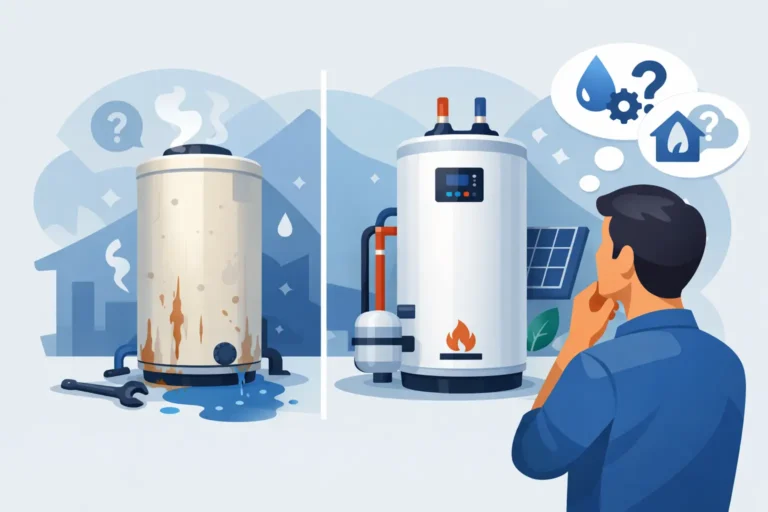

A water heater usually waits until the worst possible moment to quit – right before work, before guests arrive, or in the middle of a busy week. When that happens, it is easy to rush into a fast replacement. But asking the right questions before replacing water heater equipment can save you from buying the wrong size, overpaying for features you do not need, or missing a better long-term option.
If your current unit is leaking, making loud popping sounds, running out of hot water too quickly, or driving up utility bills, replacement may be the right move. Still, the best choice depends on more than the age of the tank. Your household size, fuel source, plumbing setup, installation space, and budget all matter.
Why the right questions matter before replacement
A water heater is one of those systems that people rarely think about until it stops working. Then the pressure is on to restore hot water fast. That urgency is real, especially for families, landlords, and property managers. The problem is that a rushed decision can leave you with a unit that is too small, too expensive to operate, or not ideal for your property.
In Southern California, many homes also have specific space constraints, older plumbing configurations, or efficiency goals that affect the decision. What works in one home in Irvine or Mission Viejo may not be the best fit for a condo in Laguna Beach or a rental property in Pomona. A dependable installation starts with a clear look at how the system will actually be used.
1. Is replacement really better than repair?
This is the first question to ask, especially if the issue seems sudden. Some water heater problems are repairable. A failed thermostat, heating element, pilot assembly, or pressure relief valve can often be fixed without replacing the whole system.
But if the tank itself is leaking, the unit is nearing the end of its expected lifespan, or repairs are stacking up, replacement is usually the better investment. Traditional tank water heaters often last around 8 to 12 years, though water quality, maintenance history, and usage patterns can shift that number. If your unit is older and the repair bill is significant, putting more money into it may only delay the inevitable.
2. What size water heater do I actually need?
Bigger is not always better. A unit that is too small will leave you with cold showers and frustrated mornings. A unit that is too large can mean unnecessary upfront cost and higher standby energy use.
The right size depends on how many people live in the home, when hot water is used most heavily, and whether multiple bathrooms, appliances, and fixtures run at the same time. A family of five with back-to-back showers has very different needs than a couple in a smaller home. For commercial properties, sizing depends even more on peak demand.
This is one of the most common mistakes homeowners make during replacement. They assume the old size was correct, but sometimes the original unit was undersized from day one.
3. Should I choose a tank or tankless system?
This is one of the biggest questions before replacing water heater equipment, and the answer depends on your priorities.
A standard tank water heater usually has a lower upfront installation cost and is a familiar choice for many homes. It stores hot water in advance, which works well for predictable daily use. If your home is already set up for a tank model, replacement can also be simpler.
A tankless water heater heats water on demand, which can improve energy efficiency and provide a more continuous supply of hot water. That sounds appealing, and for many properties it is. But tankless systems typically cost more upfront, and some homes need gas line, venting, or electrical upgrades before installation.
If your goal is the lowest initial price, a tank may make more sense. If your goal is long-term efficiency and you plan to stay in the property for years, tankless may be worth a closer look.
4. What fuel source makes the most sense for my home?
Your existing setup matters here. Many homes already have either a gas or electric water heater, and staying with the same fuel type may keep installation simpler and more affordable. Switching fuel sources can open up options, but it may also require additional work.
Gas water heaters often recover faster, which can be helpful for larger households. Electric models can be a good fit in homes where gas is not available or where installation conditions favor electricity. Heat pump water heaters can offer strong efficiency benefits, but they need the right space and environment to perform well.
This is not only about utility bills. It is also about infrastructure, venting, panel capacity, and whether the property supports the equipment you want without major modifications.
5. Will the new unit fit the available space?
This sounds basic, but it is a major issue in garages, closets, utility rooms, and older homes with tight clearances. Water heaters need enough room not just to fit, but to be installed safely and serviced properly.
A replacement may also need to meet current code requirements that did not apply when the old unit was installed. That can affect venting, earthquake strapping, drain pans, expansion tanks, and placement. In some homes, getting the old unit out and the new one in is more complicated than expected.
That is why measurements and site conditions matter. A model that looks right on paper may create installation problems once the work begins.
6. How energy efficient should I go?
Efficiency matters, but the most efficient option is not automatically the best value for every property. Some homeowners want the lowest monthly utility costs possible. Others are more focused on keeping the purchase price manageable.
A higher-efficiency unit may cost more upfront but reduce operating costs over time. Whether that trade-off makes sense depends on how long you plan to stay in the home, how much hot water you use, and whether financing or rebates help soften the initial investment.
For landlords and property managers, the math can look different. Durability, replacement speed, and practical operating costs often matter more than chasing the most advanced system available.
7. What installation updates might be required?
A water heater replacement is not always a one-for-one swap. Depending on the age of the home and the type of unit you choose, the installation may involve updates to bring the system up to current standards.
That can include venting adjustments, water line changes, gas valve upgrades, drain modifications, electrical work, or adding safety components. These items are not extras for the sake of selling more work. They are often necessary to install the system safely and correctly.
This is where transparent communication matters. You want to know what is required, what is recommended, and what is optional before work starts. Clear estimates help prevent surprises.
8. What is the real cost beyond the sticker price?
The water heater itself is only part of the total price. Installation labor, permit requirements, code updates, disposal of the old unit, and any related plumbing or electrical adjustments all affect the final number.
It is smart to ask for a full scope of work, not just a base equipment quote. A lower initial number is not always the better deal if key items are missing and appear later as add-ons. On the other hand, the most expensive option is not always the best one either.
What you want is a clear, honest breakdown. For many households, financing can also be part of the discussion if replacement is urgent and the budget is tight.
9. Who is installing it, and what happens after the job is done?
A quality water heater matters, but installation quality matters just as much. Even a good unit can underperform if it is installed incorrectly. Poor workmanship can lead to leaks, safety issues, reduced efficiency, and a shorter system lifespan.
Ask whether the technician is experienced with your type of system, whether permits are handled properly, and what kind of warranty applies to both the equipment and the labor. It also helps to know whether the company can respond quickly if there is a problem after installation.
That peace of mind is a big part of the value. For homeowners and businesses across Orange County and the Inland Empire, working with an experienced local team like Just Right Services can make the process feel a lot less stressful.
Questions before replacing water heater systems in older homes
Older homes often need a little more attention during replacement. Existing plumbing may be outdated, access may be tighter, and previous installations may not meet current code. In these cases, the cheapest path is not always the smoothest path.
That does not mean replacement has to become a major project. It just means the estimate should account for real site conditions. A careful inspection upfront usually saves time, money, and frustration later.
When speed matters most
Sometimes you do not have the luxury of comparing every option for days. If the unit has failed completely, hot water restoration becomes the priority. Even then, a few smart questions can still protect you from a bad decision.
Ask whether repair is off the table, whether the recommended size fits your actual demand, and whether the quote includes everything needed for a safe installation. Those three questions alone can prevent a lot of regret.
Replacing a water heater is not something most people do often, which is exactly why the decision deserves a little care. The right unit should fit your home, your usage, and your budget – not just your emergency. A short conversation now can lead to years of more reliable hot water and fewer surprises later.