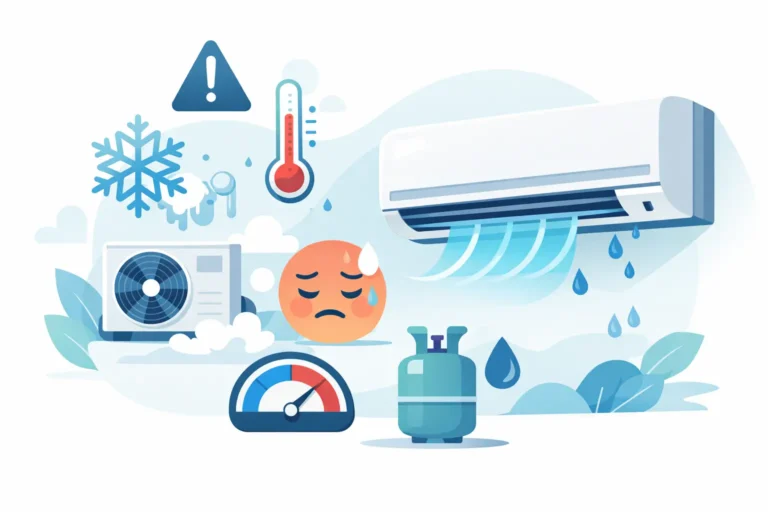

If your AC is running longer, cooling less, and your energy bill suddenly looks out of line, ac refrigerant leak symptoms may be the reason. This is one of those problems that can start quietly and get expensive fast, especially during a Southern California heat wave when your system is already working hard.
A refrigerant leak is not the same as a dirty filter or a thermostat issue. Refrigerant moves through a sealed system, absorbing heat from inside your home or building and releasing it outdoors. When that sealed system develops a leak, your air conditioner loses the ability to cool properly. The result is usually uneven comfort, rising operating costs, and extra strain on major components.
The most common AC refrigerant leak symptoms
One of the first things people notice is that the home never quite reaches the temperature set on the thermostat. The AC may run for long stretches, but the air coming from the vents feels less cool than usual. In some cases, it starts cool and then seems to lose strength as the day goes on.
Another common sign is warm or lukewarm air from the vents. That does not always mean refrigerant is the problem, but it is a strong possibility when it shows up with longer run times and weak overall cooling. If the system cannot absorb enough heat because refrigerant levels are low, comfort drops quickly.
Ice on the refrigerant line or evaporator coil is another red flag. This can seem backward at first. People assume less cooling means less chance of ice, but low refrigerant can cause pressure changes that make the coil get too cold and freeze over. If you see frost or ice around the indoor unit or copper lines, the system needs attention.
Hissing or bubbling noises can also point to a leak. A small leak may create a hissing sound as refrigerant escapes through a tiny hole or crack. A larger leak can sound more like bubbling. Not every refrigerant leak is loud enough to hear, but when these noises appear along with poor cooling, they should not be ignored.
Some property owners also notice higher electric bills without any major change in weather or thermostat settings. That happens because the AC keeps running in an attempt to reach the target temperature. More run time means more energy use, and the system still may not deliver the comfort you expect.
Why refrigerant leaks get worse over time
An AC system does not use up refrigerant like a car uses fuel. If the charge is low, there is a leak somewhere in the system. Simply adding more refrigerant may restore cooling for a while, but it does not solve the underlying issue.
Leaks can grow from minor to major. Vibration, corrosion, worn joints, and age-related wear can all make the opening larger over time. As refrigerant continues to escape, the compressor has to work harder. That can turn a repairable leak into a much more expensive breakdown.
This is where timing matters. A small leak caught early may only require locating the source, repairing the affected section, pressure testing the system, and recharging it correctly. If the leak is left alone long enough, the compressor may overheat or fail. At that point, the repair cost can change significantly.
What causes refrigerant leaks?
There is no single cause in every home or commercial space. In older systems, corrosion is a frequent culprit. Formic acid and formaldehyde corrosion can create tiny pinhole leaks in copper tubing. In other cases, loose fittings, factory defects, vibration, or physical damage to the lines are to blame.
Sometimes the location of the leak affects the repair approach. A leak in an accessible connection may be more straightforward than one buried in a coil. That is why professional testing matters. The symptom may be obvious, but the exact fix depends on where the refrigerant is escaping and how extensive the damage is.
Age matters too. If the system is already well past its prime and has a leaking evaporator coil or multiple weak points, replacement may make more sense than repeated repairs. If the unit is newer and otherwise in good shape, repairing the leak is often the better route.
AC refrigerant leak symptoms vs. other AC problems
Some cooling issues look similar from the outside. A clogged air filter, failing blower motor, dirty coil, or bad thermostat can also lead to weak airflow or poor cooling. That is why guessing usually leads to wasted time and money.
For example, frozen coils can happen from low refrigerant, but they can also happen from restricted airflow. Warm air from vents could point to a refrigerant issue, an electrical problem, or even a failing compressor. A good diagnosis separates the symptom from the cause.
That is especially important for landlords and property managers. If tenants report that the AC runs all day but the space still feels warm, the problem needs proper testing instead of a quick temporary fix. Otherwise, the same service call can keep coming back.
When you should turn the system off
If you see ice on the unit, hear unusual hissing, or notice the system is struggling badly to cool, it is often best to shut the AC off and call for service. Letting it continue to run can put more stress on the compressor and may increase damage.
That does not mean every cooling issue requires immediate shutdown. If the AC is just slightly underperforming, there could be several possible causes. But once freezing, strange sounds, or sharply reduced cooling enter the picture, running the system nonstop is rarely the smart move.
If indoor temperatures are climbing and you need help fast, this is the kind of problem that benefits from an experienced HVAC technician rather than trial-and-error troubleshooting.
How professionals confirm a refrigerant leak
A proper diagnosis usually starts with checking system pressures, inspecting the coil and line set, and looking for visible signs such as oil residue around refrigerant connections. Technicians may also use electronic leak detectors, nitrogen pressure testing, or other approved methods to pinpoint the source.
This matters because the system has to be charged accurately after the repair. Too much or too little refrigerant can both hurt performance. The goal is not just to stop the leak, but to restore the system to manufacturer specifications so it cools efficiently and reliably.
At Just Right Services, the focus is on explaining what was found, what the repair involves, and whether it makes sense compared with replacement. That kind of transparency matters when you are deciding how to spend money on an older system.
Repair or replace? It depends on the system
This is where there is no one-size-fits-all answer. If your AC is relatively new, the leak is isolated, and the rest of the equipment is in solid condition, repair is often the practical choice. If the unit is older, uses outdated refrigerant, or has a leaking coil plus other performance problems, replacement may be more cost-effective in the long run.
Homeowners in places like Irvine, Mission Viejo, Laguna Hills, and Rancho Cucamonga often face this decision during peak cooling season, when every day without reliable AC feels longer than it should. For commercial properties, the calculation can be even more urgent because comfort complaints, equipment downtime, and energy waste affect operations fast.
A trustworthy HVAC company should walk you through the trade-offs clearly. The lowest upfront option is not always the best value, and the most expensive option is not always necessary.
How to reduce the chance of future leaks
You cannot prevent every refrigerant leak, especially in aging equipment, but regular maintenance improves your odds. During tune-ups, technicians can inspect coils, connections, operating pressures, and overall system performance before a minor issue turns into a major one.
Maintenance also helps catch the other problems that can look like refrigerant leaks at first. That saves time, avoids unnecessary repairs, and helps your AC run more efficiently through the hottest months.
If your system has been acting different lately, trust that change. ACs usually give some warning before they fail completely. The sooner you respond to signs like weak cooling, ice buildup, hissing, or unexplained high utility bills, the more options you usually have for a manageable repair instead of a stressful emergency.
When your air conditioner is no longer keeping up, the right next step is not to guess. It is to have the system checked carefully, get a clear explanation, and make the fix that fits your home, your budget, and your comfort.