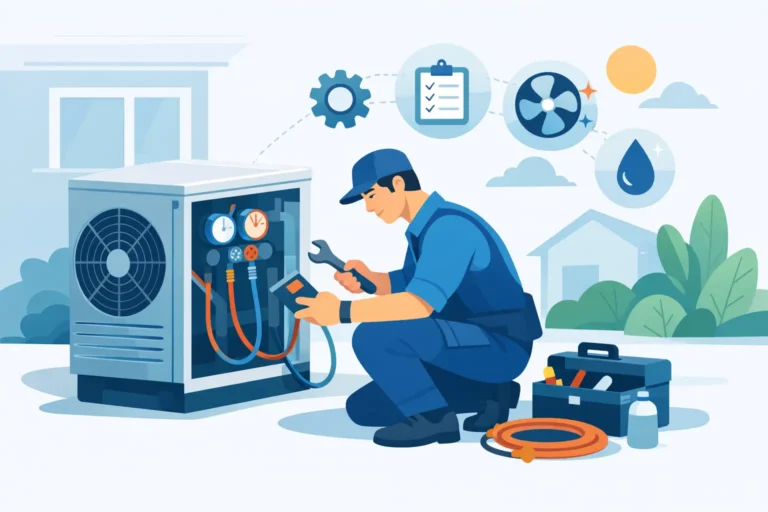

A lot of AC problems do not start with a breakdown. They start with a system that runs a little longer, cools a little less, and quietly drives up your electric bill. If you are wondering how to do ac maintenance without making things worse, the good news is that a few basic steps can make a real difference – as long as you know where DIY ends and professional service begins.
In Southern California, that line matters. Long cooling seasons in places like Irvine, Mission Viejo, Lake Forest, and Rancho Cucamonga put extra wear on air conditioning systems, especially when filters are neglected or outdoor units collect dust and debris. A little preventive care can help your AC run cleaner, steadier, and more efficiently when you need it most.
How to Do AC Maintenance at Home
Home AC maintenance is really about protecting airflow, keeping components clean, and catching warning signs early. You are not rebuilding the system. You are helping it operate under normal conditions so it does not strain itself.
The first place to start is the air filter. A dirty filter is one of the most common causes of weak airflow, higher energy use, and uneven cooling. Check it monthly during heavy-use months and replace it when it looks loaded with dust. Many homes need a new filter every one to three months, but it depends on pets, allergies, remodeling dust, and how often the system runs.
Next, check the thermostat. Make sure it is set to cooling mode, the temperature setting is accurate, and the batteries are fresh if your model uses them. If your house feels warmer than the setting suggests, the issue may be calibration, poor airflow, or a larger system problem. Still, ruling out the thermostat first can save time and frustration.
Walk through the house and inspect supply and return vents. Furniture, rugs, and closed doors can interfere with airflow more than people realize. Open blocked vents, remove dust buildup from the grilles, and make sure return vents are not obstructed. Good airflow is one of the basics of proper AC performance.
Then move outside to the condenser unit. Turn off power to the system before cleaning around it. Remove leaves, weeds, and debris from the area around the unit, and give it a few feet of open space if possible. Gently rinse the exterior coils with a garden hose to remove dirt, but avoid using high pressure. Bent fins, electrical components, and internal parts can be damaged easily.
What AC Maintenance You Should Not Do Yourself
This is where many online guides get too casual. Basic cleaning and filter changes are homeowner tasks. Electrical testing, refrigerant handling, motor diagnostics, capacitor replacement, and coil disassembly are not.
If your AC is short cycling, blowing warm air, making buzzing noises, freezing up, or leaking water indoors, that is no longer routine maintenance. It may be a failing part, a restricted drain line, a refrigerant issue, or an airflow problem that needs proper testing. Trying to guess your way through those repairs can lead to bigger damage and higher costs.
Refrigerant is a good example. Low refrigerant does not mean your system simply needs a top-off. AC systems do not consume refrigerant like fuel. If levels are low, there is usually a leak that needs to be found and repaired. That calls for professional tools, EPA-compliant handling, and experience.
A Simple Seasonal AC Maintenance Routine
If you want a practical answer to how to do ac maintenance consistently, think in seasons instead of waiting for a problem.
In spring, replace the filter, test the thermostat, clear the outdoor unit, and run the system before the first real heat wave. This gives you time to catch problems before your AC is under full demand.
During summer, keep checking the filter and pay attention to changes in airflow, cooling time, and noise. If one room stays warm, your home feels humid, or the system runs constantly in moderate weather, it is worth looking closer.
In fall, if cooling season is winding down, clean around the condenser again and note any performance concerns you want addressed before next year. If you have a heat pump, seasonal maintenance matters even more because the system works year-round.
Signs Your AC Needs More Than Maintenance
Sometimes homeowners do everything right and the system still struggles. That does not mean maintenance failed. It usually means the system has moved beyond routine upkeep.
Watch for a sudden jump in utility costs, hot and cold spots, weak airflow, unusual odors, frequent cycling, or moisture near the indoor unit. A clogged condensate drain might be simple. A failing blower motor, damaged capacitor, dirty evaporator coil, or duct issue may not be.
Age matters too. If your AC is over 10 to 15 years old, maintenance is still worthwhile, but expectations should be realistic. Older systems can lose efficiency even when they are technically operational. In some homes, especially larger properties or rentals with heavy summer demand, repeated repairs may start costing more than they should.
Why Professional AC Maintenance Still Matters
A homeowner can handle the visible basics. A trained technician handles the parts you cannot safely inspect on your own.
Professional maintenance usually includes checking electrical connections, testing capacitors and contactors, measuring refrigerant performance, inspecting the blower assembly, cleaning coils more thoroughly, flushing the condensate drain, checking temperature split, and looking for wear before it turns into a no-cool call. That kind of visit is not just about cleaning. It is about system health.
There is also a comfort factor. If your AC is running but not quite right, professional maintenance can answer why. Maybe the unit is oversized and short cycles. Maybe duct leakage is reducing airflow to certain rooms. Maybe your thermostat placement is affecting comfort. Those issues do not always show up in a quick DIY check.
For homeowners, landlords, and property managers, preventive service often makes more financial sense than reactive repair. It helps reduce surprise breakdowns, extends equipment life, and gives you a clearer picture of whether the system is worth repairing or nearing replacement.
How to Do AC Maintenance Without Voiding Warranties or Causing Damage
This part is easy to overlook. Many systems have manufacturer requirements for professional service, approved parts, and documented maintenance. If you start opening panels, replacing components, or using the wrong filter type, you can create problems that are expensive later.
Even something as simple as using an overly restrictive air filter can hurt airflow if the system was not designed for it. A filter that sounds better on paper is not always better for your equipment. The right choice depends on your system, your indoor air quality goals, and how much resistance your blower can handle.
The safest approach is to handle basic upkeep yourself and schedule professional maintenance at least once a year. In hotter inland areas or homes with long run times, twice-yearly service may be the better fit.
When It Makes Sense to Call for Help
If your system is not cooling properly, trips the breaker, makes metal-on-metal sounds, freezes at the refrigerant line, or leaks around the air handler, skip the guesswork. Those are service calls, not weekend projects.
The same goes for commercial systems, mini-splits, heat pumps, and older units with recurring issues. These setups can have different controls, components, and maintenance needs. A general online checklist may not apply to your equipment.
For local homes and businesses, having a dependable HVAC company matters because AC issues rarely happen on a convenient schedule. Just Right Services works with property owners across Orange County and the Inland Empire who need honest answers, clean workmanship, and service that solves the problem instead of stretching it out.
Knowing how to do ac maintenance is useful, and every property owner should understand the basics. But the smartest maintenance plan is not about doing everything yourself. It is about doing the simple things well, noticing changes early, and getting experienced help before a small issue turns into a major repair.